

Hey there! As a supplier of vibratory sifters, I'm super excited to share with you how these nifty machines work. Whether you're in the food industry, pharmaceuticals, or any other field that requires precise separation and classification of materials, understanding the ins and outs of a vibratory sifter can be a game - changer.
Let's start with the basics. A vibratory sifter is a device that uses vibration to separate different sized particles in a material. It's kind of like a high - tech sieve on steroids. The main components of a vibratory sifter typically include a screen or a series of screens, a motor that generates vibrations, and a frame to hold everything together.
The first step in the working process of a vibratory sifter is the feeding of the material. You can pour your raw material into the top of the sifter. This material could be anything from flour to metal powders, depending on your industry. Once the material is in the sifter, the real magic begins.
The motor in the vibratory sifter is the heart of the operation. It creates vibrations that are transferred to the screens. These vibrations cause the material to move across the screen surface. The size of the openings in the screen determines which particles will pass through and which will stay on top.
For example, if you're using a Flour Sifter Machine to sift flour, the fine flour particles will easily pass through the screen, while any lumps or larger impurities will remain on the screen. This is a great way to ensure that you get a smooth and consistent product.
The vibration also helps to prevent the screen from clogging. You see, when particles try to pass through the screen, they can sometimes get stuck in the openings. But the vibrations keep the particles moving, so they don't have a chance to block the screen. This means that the sifter can operate continuously without any major interruptions.
Now, let's talk about the different types of vibrations that a vibratory sifter can produce. There are two main types: linear and circular vibrations.
Linear vibrations are used when you need the material to move in a straight line across the screen. This is great for applications where you want a quick and efficient separation. For instance, in a Corn Flour Sifter Machine, linear vibrations can help the corn flour move rapidly across the screen, separating the fine powder from any larger pieces.
On the other hand, circular vibrations are used when you need a more thorough and gentle separation. The circular motion of the material on the screen allows for a longer contact time between the material and the screen. This is ideal for materials that are more difficult to sift, like some types of pharmaceutical powders.
Another important aspect of a vibratory sifter is the ability to adjust the vibration intensity. Depending on the type of material you're sifting and the desired level of separation, you can increase or decrease the strength of the vibrations. If you're sifting a very fine powder, you might want to use a lower vibration intensity to prevent the powder from flying off the screen. But if you're dealing with a coarser material, a higher vibration intensity can help to break up any clumps and ensure a better separation.

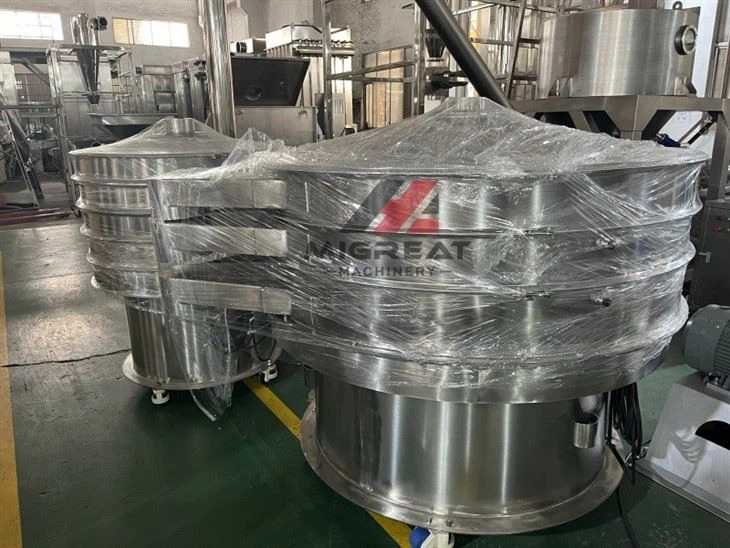
In addition to the basic separation function, some vibratory sifters can also be used for classification. This means that you can have multiple screens with different sized openings stacked on top of each other. As the material moves through the sifter, it gets separated into different size fractions. For example, you could have one screen that separates the large particles, another that separates the medium - sized particles, and a third that separates the fine particles.
Now, let's take a look at some of the benefits of using a vibratory sifter. First of all, it's a very efficient way to separate materials. It can handle large volumes of material in a relatively short period of time. This is great for industrial applications where you need to process a lot of product quickly.
Secondly, a vibratory sifter can improve the quality of your product. By removing impurities and separating particles of different sizes, you can ensure that your final product is more consistent and of higher quality. This is especially important in industries like food and pharmaceuticals, where product quality is crucial.
Thirdly, vibratory sifters are relatively easy to operate and maintain. They don't require a lot of complex machinery or specialized knowledge. Most of the time, you just need to load the material, adjust the settings, and let the sifter do its job. And when it comes to maintenance, regular cleaning and inspection of the screens and motor are usually all that's needed.
If you're in the market for an Electrical Flour Sifter or any other type of vibratory sifter, you'll find that there are many options available. You can choose from different sizes, configurations, and features to suit your specific needs.
So, if you're interested in learning more about how a vibratory sifter can benefit your business, or if you're ready to make a purchase, don't hesitate to reach out. We're here to help you find the perfect sifter for your application. Whether you have questions about the technical details or need advice on which model to choose, our team of experts is just a message away.
In conclusion, a vibratory sifter is a powerful and versatile tool that can revolutionize the way you process materials. By understanding how it works and the benefits it offers, you can make an informed decision about whether it's the right solution for your business. So, what are you waiting for? Get in touch with us today and let's start improving your production process!
References
- "Industrial Sieving and Screening Handbook"
- "Principles of Powder Technology"