

As a seasoned supplier of belt dryers, I've witnessed firsthand the critical role temperature control plays in the efficiency and effectiveness of these machines. In this blog, I'll delve into the intricacies of how temperature control works in a belt dryer, offering insights that can help you make the most of this technology.
The Basics of Belt Dryers
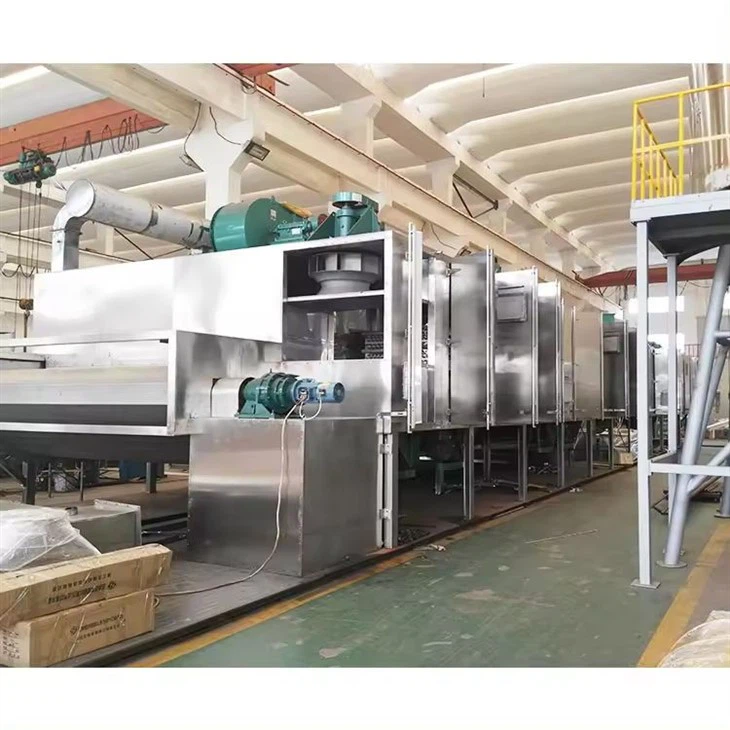
Before we dive into temperature control, let's briefly review how a belt dryer operates. A belt dryer consists of a conveyor belt that moves the material to be dried through a drying chamber. Hot air is circulated through the chamber, removing moisture from the material as it passes along the belt. The dried material is then discharged at the end of the belt.
Belt dryers are widely used in various industries, including food processing, pharmaceuticals, and chemicals. They are suitable for drying a wide range of materials, such as vegetables, herbs, and sliced fruits. For instance, our Vegetable Mesh Belt Dryer is specifically designed to handle the delicate nature of vegetables, ensuring optimal drying results.
The Importance of Temperature Control
Temperature control is crucial in a belt dryer for several reasons. First, it affects the drying rate. Higher temperatures generally lead to faster drying, but if the temperature is too high, it can cause damage to the material being dried. For example, in the case of herbs, excessive heat can destroy the essential oils and flavor compounds, reducing the quality of the final product. Our Herbs Drying Equipment is engineered to maintain precise temperature control to preserve the integrity of the herbs.
Second, temperature control helps to ensure uniform drying. If the temperature varies across the drying chamber, some parts of the material may dry faster than others, resulting in uneven moisture content. This can lead to product quality issues and may require additional processing steps to correct.
Finally, proper temperature control can improve energy efficiency. By maintaining the optimal temperature, the dryer can use less energy to achieve the desired drying results, reducing operating costs.
How Temperature Control Works in a Belt Dryer
There are several components involved in temperature control in a belt dryer. Let's take a closer look at each of these components and how they work together.
Heating System
The heating system is responsible for generating the hot air that is circulated through the drying chamber. There are several types of heating systems used in belt dryers, including gas-fired, electric, and steam-heated systems.
Gas-fired heating systems are popular because they are efficient and can provide high temperatures quickly. They burn natural gas or propane to generate heat, which is then transferred to the air using a heat exchanger.
Electric heating systems are often used in smaller belt dryers or in applications where gas is not available. They use electric resistance heaters to heat the air. Electric heating systems are easy to control and can provide precise temperature regulation.
Steam-heated systems use steam to heat the air. Steam is a clean and efficient source of heat, and it can be easily controlled to maintain a constant temperature. Steam-heated systems are commonly used in industrial applications where large amounts of heat are required.
Temperature Sensors
Temperature sensors are used to measure the temperature inside the drying chamber. They are typically placed at various locations throughout the chamber to ensure that the temperature is uniform. The sensors send signals to the control system, which adjusts the heating system as needed to maintain the desired temperature.
There are several types of temperature sensors used in belt dryers, including thermocouples and resistance temperature detectors (RTDs). Thermocouples are inexpensive and can measure a wide range of temperatures. RTDs are more accurate and stable, but they are also more expensive.
Control System
The control system is the brain of the temperature control system. It receives signals from the temperature sensors and adjusts the heating system to maintain the desired temperature. The control system can be programmed to follow a specific temperature profile, which can be customized based on the material being dried and the desired drying results.

There are several types of control systems used in belt dryers, including proportional-integral-derivative (PID) controllers and programmable logic controllers (PLCs). PID controllers are simple and effective, and they are commonly used in small to medium-sized belt dryers. PLCs are more advanced and can be used to control complex processes. They are often used in large industrial belt dryers.
Factors Affecting Temperature Control
Several factors can affect the temperature control in a belt dryer. Let's take a look at some of these factors and how they can be managed.
Material Properties
The properties of the material being dried can have a significant impact on temperature control. For example, materials with high moisture content may require lower temperatures to prevent overheating and damage. On the other hand, materials with low moisture content may require higher temperatures to achieve the desired drying rate.
The size and shape of the material can also affect temperature control. Smaller particles generally dry faster than larger particles, so they may require lower temperatures to prevent overheating. Similarly, materials with irregular shapes may require more uniform temperature distribution to ensure even drying.
Airflow
The airflow in the drying chamber is another important factor in temperature control. Proper airflow helps to distribute the heat evenly and remove the moisture from the material. If the airflow is too low, the temperature may not be uniform, and the drying rate may be slow. If the airflow is too high, it can cause the material to be blown off the belt or can lead to excessive energy consumption.
The design of the drying chamber and the placement of the air ducts can affect the airflow. It is important to ensure that the airflow is optimized for the specific material being dried and the desired drying results.
Humidity
The humidity in the drying chamber can also affect temperature control. High humidity can reduce the drying rate and make it more difficult to maintain the desired temperature. To control humidity, a dehumidification system may be used to remove moisture from the air before it enters the drying chamber.
Conclusion
Temperature control is a critical aspect of the operation of a belt dryer. By understanding how temperature control works and the factors that can affect it, you can optimize the performance of your belt dryer and achieve the best possible drying results.
At our company, we are committed to providing high-quality belt dryers with advanced temperature control systems. Our Slices Apple Mesh Belt Dryer is just one example of our innovative products that are designed to meet the specific needs of our customers.
If you are interested in learning more about our belt dryers or have any questions about temperature control, please feel free to contact us. We would be happy to discuss your requirements and provide you with a customized solution.
References
- Mujumdar, A. S. (Ed.). (2014). Handbook of industrial drying. CRC press.
- Perry, R. H., & Green, D. W. (Eds.). (2007). Perry's chemical engineers' handbook. McGraw-Hill.