
 +86 139 1520 0887
 info@migreatmachinery.com
Fluid bed dryer vs spray dryer is decided by the feed. A fluid bed dryer dries a damp solid, such as granules, crystals or damp powder, by blowing hot air up through a bed of it. A spray dryer takes a pumpable liquid, breaks it into a fine mist inside a tall chamber and turns it into dry powder in seconds.
After the feed come the product you want and the heat it can take. The Migreat GFG fluid bed dryer works in batches of 60 to 500 kg with air up to about 120 degrees C. The LPG spray dryer evaporates 5 to 2,000 kg of water an hour with inlet air of 140 to 350 degrees C and outlet air at 80 to 90 degrees C.
- Liquid feed that must end as powder points to the spray dryer
- Wet solid, granule or crystal points to the fluid bed dryer
- Spray drying gives fine powder, fluid bed drying keeps granules and crystals whole
- Heat sensitivity and capacity narrow the choice, and a trial settles it
Fluid bed dryer vs spray dryer looks like a choice between two machines, and it is really a choice between two feeds. Hand a supplier a wet cake and ask for a spray dryer, and you will be asked to make it a liquid first. Hand them a liquid and ask for a fluid bed dryer, and the same conversation runs the other way.
This page sets the two side by side on the points that decide a purchase. It explains what a fluid bed dryer is and what a spray dryer is, compares them on feed, product, heat and capacity, lists the advantages and disadvantages of each, and covers the cases where neither is the right answer. It does not repeat the working principle of either machine, which have their own pages.
Fluid bed dryer vs spray dryer in one table
The table uses the figures on the GFG, ZG and LPG pages. The ZG is the vibrating fluid bed, listed because it is the continuous version of the same idea.
The table already shows the main split. Everything in the fluid bed columns starts as a solid that holds together, and everything in the spray column starts as a liquid. The rest of the page explains what follows from that.
What is a fluid bed dryer, and what is fluid bed drying
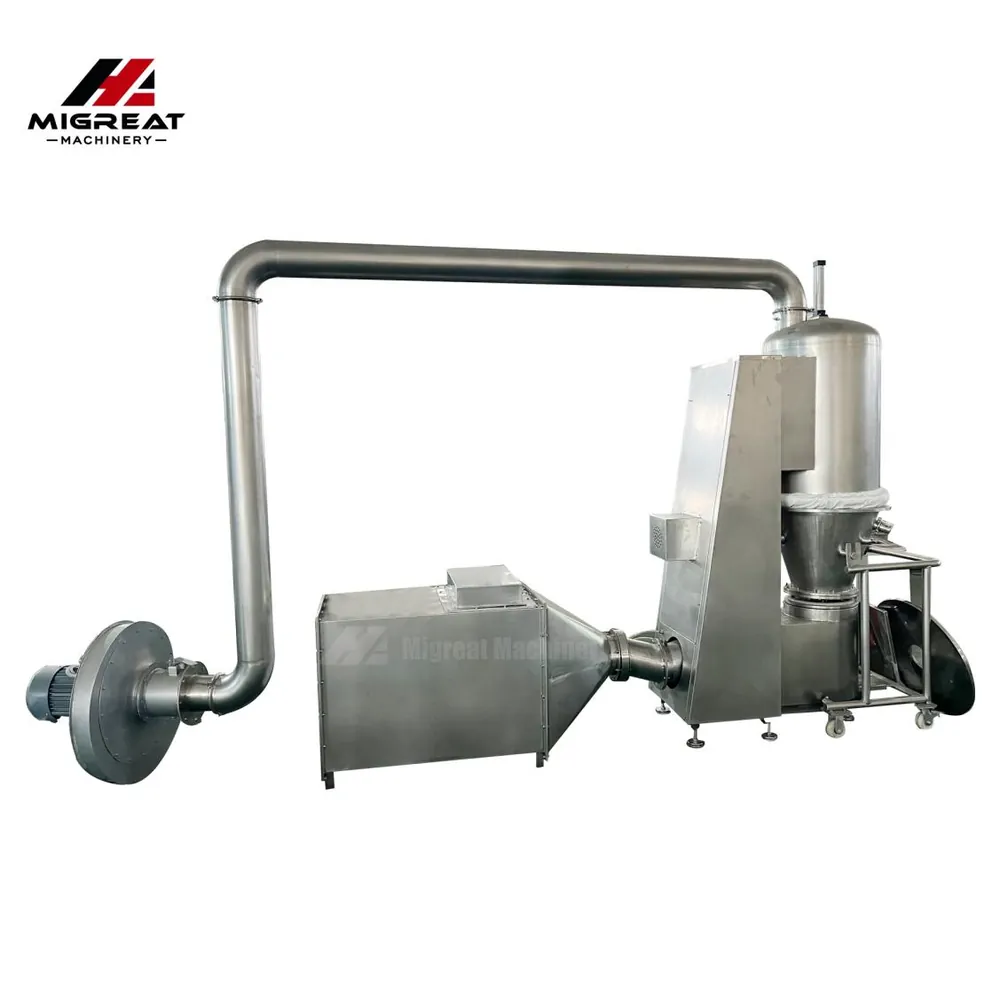
What is fluid bed dryer technology, in a sentence? It is a hot air dryer for wet solids, and fluid bed drying is the method it uses. Hot air is blown up through a bed of damp granules or powder at a speed that lifts the bed and keeps every particle moving. Each particle is surrounded by hot air and gives up its water quickly, and the moist air leaves through bags that catch the dust.
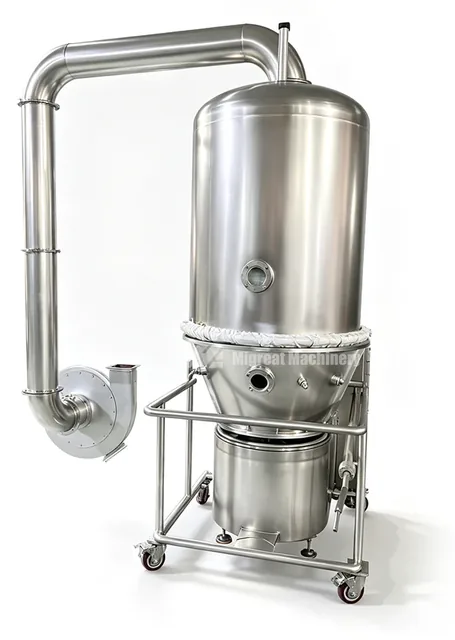
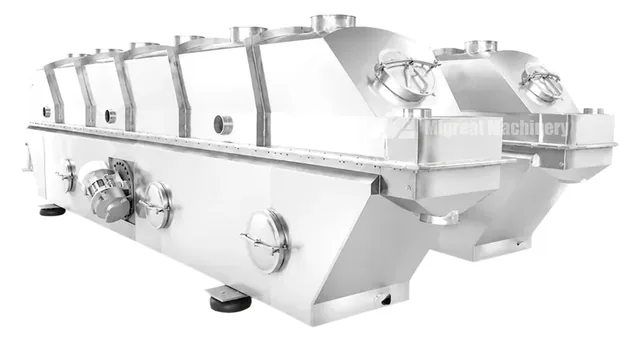
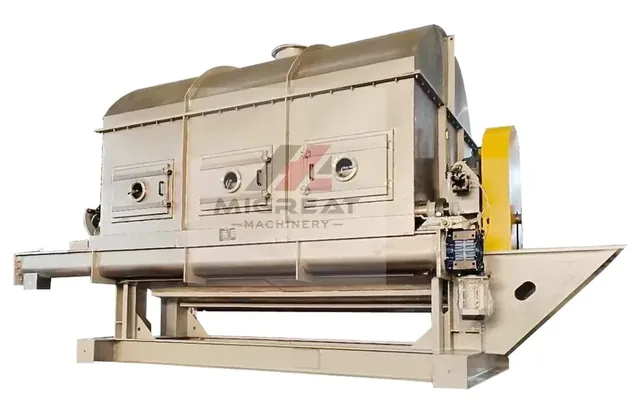
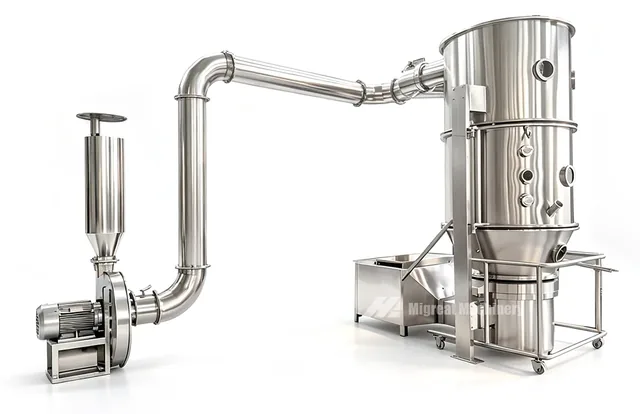
The GFG page describes a round bed on a trolley, a filter and a steam heater, a dust removing chamber with bags and a fan with a silencer. The fluid bed dryer working principle page follows the air through the machine. The ZG does the same job continuously, with vibration motors throwing the material along the bed.
What is a spray dryer, and what is spray drying
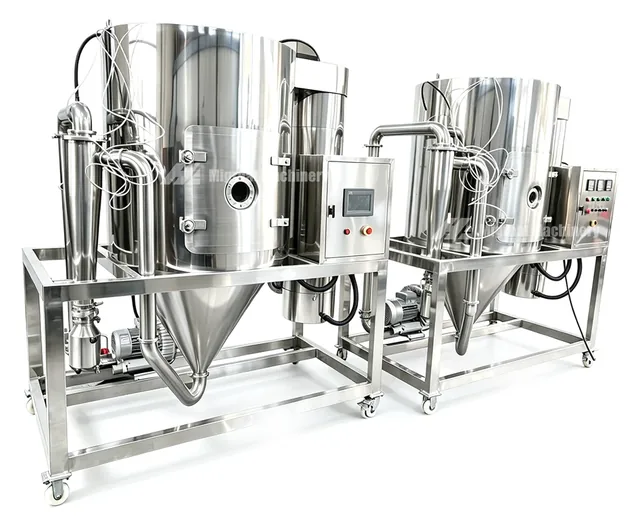
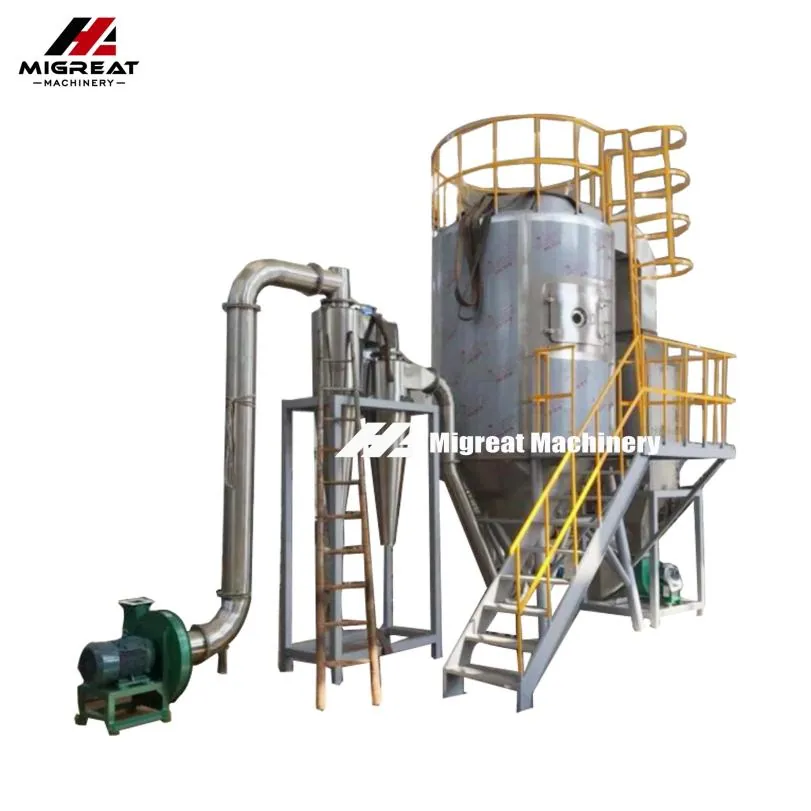
What is spray drying? It is the method of turning a liquid into a powder in one step, and a spray dryer is the machine. A pump sends the liquid to an atomizer at the top of a tall chamber, the atomizer makes a mist of fine droplets, hot air dries each droplet as it falls, and the powder is collected from the bottom of the tower and from a cyclone. The LPG is a centrifugal type, and the spray drying process page follows one droplet through the tower.
People who ask what is a spray dryer used for usually have milk, coffee or a plant extract in mind. The LPG page lists solutions, emulsions, suspensions and pumpable paste, with powder, granule or lumps as the product. The reason it works on heat sensitive liquids is that a tiny droplet dries in seconds and stays cool while water is leaving, even though the air around it is very hot.
The feed decides the machine
The difference between fluid bed dryer and spray dryer is first of all a difference of feed, and every later difference follows from it. Start with the state of the feed. A liquid that can be pumped is a spray dryer job. A solid that is damp but holds together is a fluid bed job. The grey area is the paste or slurry. If it can be pumped and thinned it can be spray dried, and if it is a wet cake that can be crumbled it can be fluid bed dried, so the question becomes what the product has to look like.
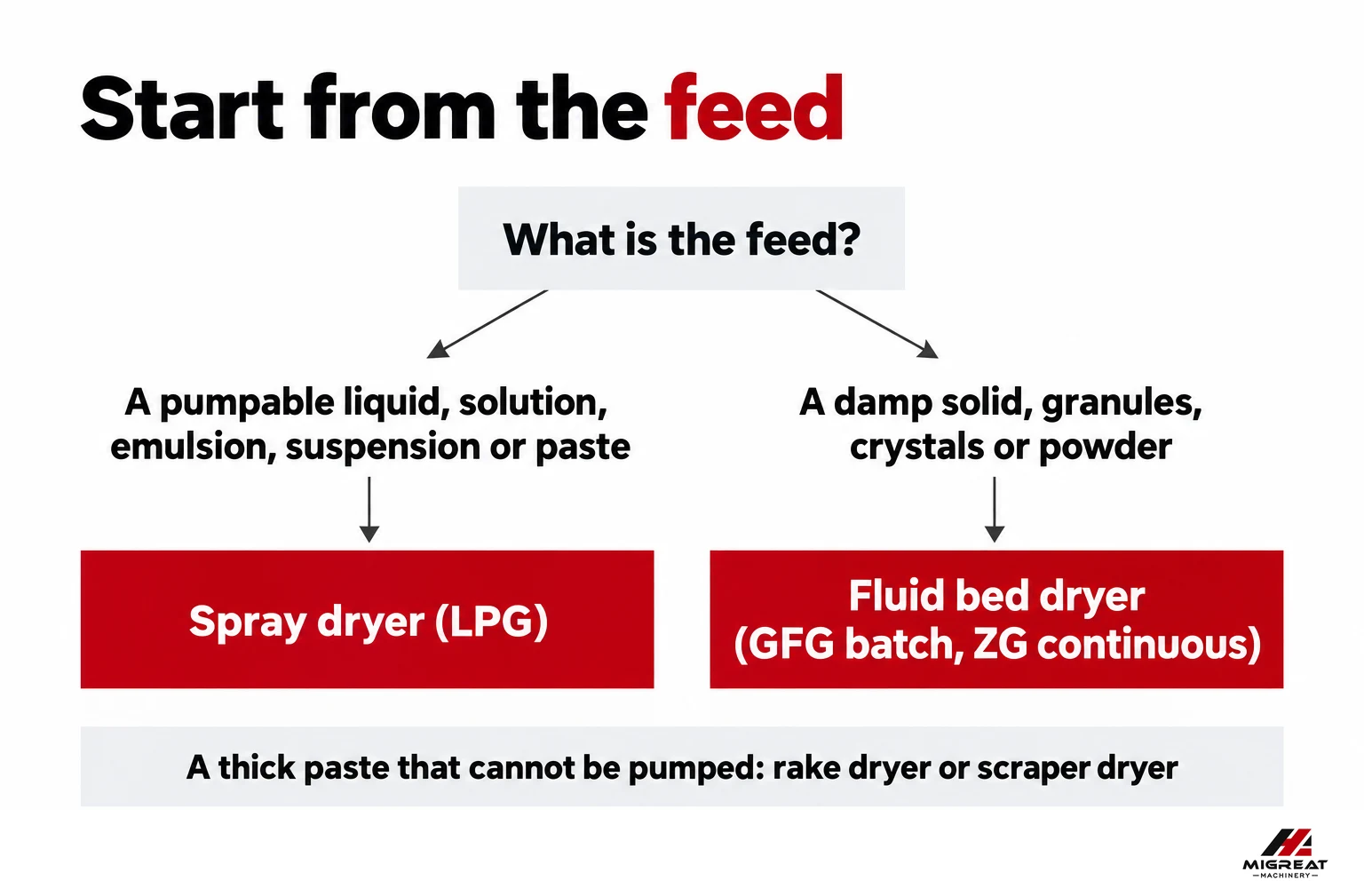
Two checks go with it. How much water has to be removed, because a feed that is 60 percent water needs far more evaporation per kilogram of product than a wet cake at 10 percent. And whether the feed can be changed. A spray dryer can often take the same material as a thick liquid, while a fluid bed cannot take a liquid at all, so the more flexible plant is sometimes the one that can accept either form.
The product you get
The two dryers make different particles. A spray dryer makes small particles, a fine powder whose size follows the droplet size from the atomizer, and the particles are often light and round. A fluid bed dryer leaves the particles as they were. Granules stay granules and crystals stay crystals, apart from some attrition, and the bed can be followed by sifting to remove fines.
That is why the two are often used in sequence. A spray dried powder can be agglomerated in a fluid bed to make it dissolve faster, and a fluid bed granulator can build granules and dry them in one machine. The wet, fluid bed and dry granulation page compares the granulation routes.
Heat and the temperature the product sees
The air temperatures look very different, and the product temperatures are closer than they look. The LPG uses inlet air of 140 to 350 degrees C and outlet air of 80 to 90 degrees C, but a droplet that is still wet stays near the wet bulb temperature, well below the air. The GFG runs at up to about 120 degrees C and the ZG at 70 to 140 with outlet 40 to 70.
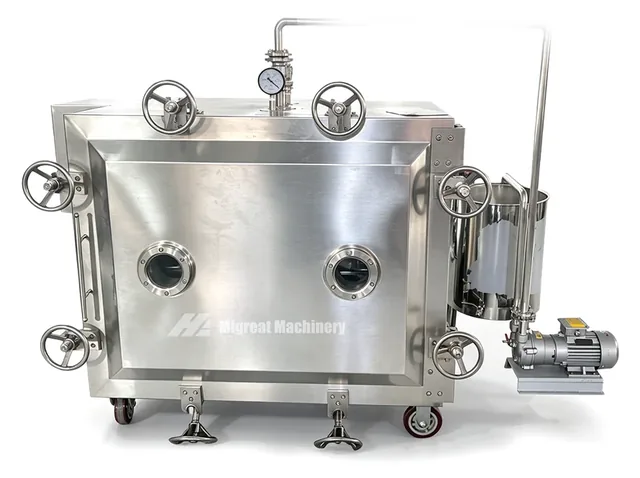
What matters is the temperature the product reaches when it is nearly dry, because that is when it can scorch, stick or lose flavor. The outlet air temperature is a good guide to it. A heat sensitive product needs a low outlet temperature, and a vacuum dryer is the answer when even that is too hot. The vacuum dryers page explains the boiling point trick.
Capacity, size and footprint
Capacity is quoted in different units. The spray dryer is rated by the water it evaporates per hour, the continuous fluid bed by the water it evaporates too, and the batch fluid bed by the weight of the batch. Do not compare them without converting. A spray dryer rated at 50 kg/h of evaporation makes about 50 kg/h of powder from a feed that is half water, and only about 25 kg/h from a feed that is two thirds water.
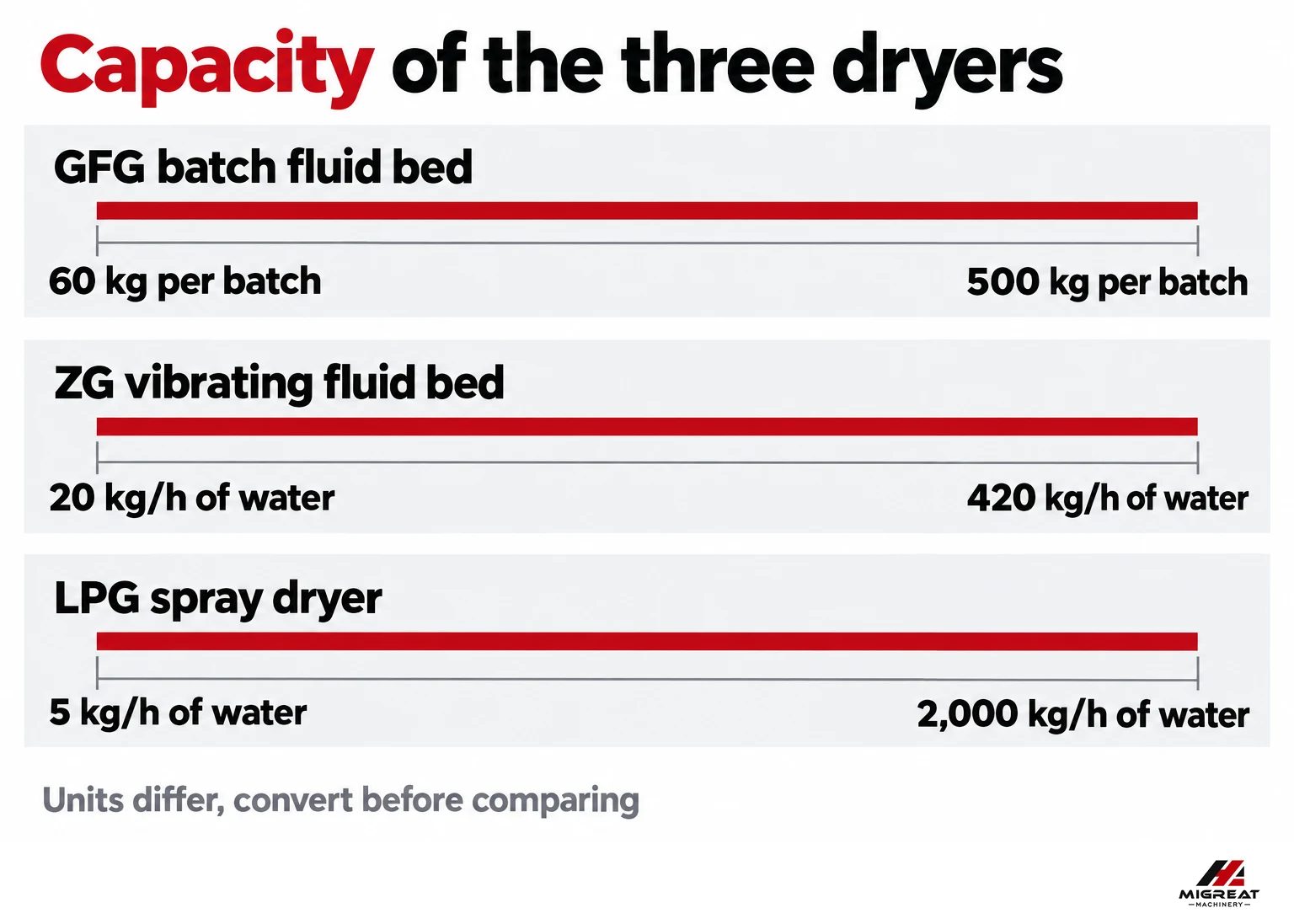
The footprints differ more than the ratings. A spray dryer is a tall tower, and the LPG-5 laboratory unit alone occupies 1.8 by 0.93 by 2.2 meters. A fluid bed is a compact box with a bed, a trolley, a filter and a fan. Check the room height, because a production spray tower is taller than many workshops.
Advantages and disadvantages of each
The advantages of a fluid bed dryer are fast, even drying of granules, good heat transfer, a smooth bed that is easy to clean and a compact machine. Its disadvantages are that it needs a feed that can fluidize, it can break fragile particles, fine dust must be caught by bags, and a batch machine does not fit a continuous line. These are the disadvantages of fluidized bed dryer use that the buyer should hear about.
The advantages of a spray dryer are that it makes powder directly from a liquid, runs continuously, dries heat sensitive material gently and controls the particle with the atomizer. Its disadvantages are high energy use per kilogram of water, a tall and costly plant, fine organic powder that can burn if handled badly, and wall deposits that need cleaning. A concentrated feed lowers the energy cost, which is why plants evaporate the liquid first where they can.
Energy and utilities
Drying is an energy problem. Every kilogram of water has to be heated and turned to vapor, and the air that carries the vapor away takes heat with it. The two dryers differ in how much water they carry and how well they use the heat. A spray dryer starts from a dilute liquid, so it evaporates a lot of water per kilogram of powder, and the exhaust leaves at 80 to 90 degrees C on the LPG, which takes heat with it. A fluid bed dries a solid that has already lost most of its water, so it evaporates less per kilogram of product.
The heat source changes the bill. The GFG page lists steam heating with a steam use figure for each model, from 0.9 to 2.35 kg/h per kilogram of batch. The LPG range uses electric heating on the small units, steam plus electric on the mid sizes, and oil, gas or a hot air furnace on the large line. Ask what your site can supply before you compare dryers, because a plant without steam changes the answer.
Product quality, color, solubility and density
The two dryers leave different products behind, and the difference shows up in use. Spray dried powder is fine and light, it dissolves quickly, and its bulk density is low, which matters for packing. Fluid bed dried granules are denser and flow better, they dust less, and they usually dissolve more slowly than a spray dried powder of the same material. Neither is better in general. The customer for the product decides which one is wanted.
Color and flavor depend on the temperature history. The short exposure in a spray dryer is gentle on many flavors, although a very high inlet temperature can still damage a delicate product. A fluid bed holds the product in warm air for minutes, which is fine for sugar and salt and less comfortable for a volatile flavor. Test the real product and compare color, flavor and moisture, not only the moisture.
Which dryer for which product
The table gives the first candidate for common products. It is a starting point, and every product still needs its own trial.
Fluid bed dryer vs spray dryer is only a fair question when the product can be made either way. For instant coffee the feed is a liquid and the answer is a spray dryer. For sugar the feed is a crystal and the answer is a fluid bed dryer. The cases in between, such as seasoning or extract powders, are where a trial earns its cost, and where the fluid bed dryer vs spray dryer question is genuinely open.
Testing before you buy
A drying trial answers questions that no table can. Ask the supplier to dry a sample of your material and report four things. The inlet and outlet temperatures used, the final moisture, the color and flavor of the result, and the rate achieved. For a spray dryer, ask also about the particle size and the wall deposit. For a fluid bed, ask about the amount of fines caught in the bags and the breakage of granules.
The laboratory spray dryer is the cheapest test route. The LPG-5 evaporates 5 kg/h and fits in a small space, which is enough to make a few kilograms of powder and check solubility and color. A small fluid bed does the same for granules. Use the trial to fix the temperatures before you scale up, and keep the records so that the full size plant starts from the same settings.
When neither is the right answer
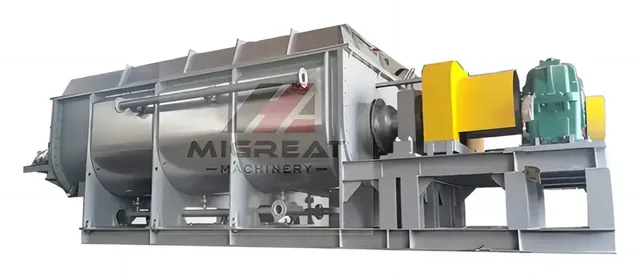
Some material suits neither. Material that cannot take hot air goes to a vacuum dryer. Paste and slurry that cannot be sprayed go to a rake dryer or a scraper dryer. Material dried in thin layers that must not be disturbed goes to a tray dryer. The table lists the other Migreat dryers and what each is seen doing in our videos.
The tray dryer page covers the batch alternative in detail, and the drying machines page shows the full range.
A worked example, four feeds
Take four feeds and the answer for each. A coffee extract at 60 percent water that must become instant powder is a spray dryer job. Damp sugar crystals at a few percent water that need drying before packing are a fluid bed job. Granules coming off a granulator at 15 percent water are a fluid bed job, batch or continuous depending on volume. A fruit paste that is too thick to pump is neither, and a rake dryer or a scraper dryer is the better start.
The first case shows the cost of the spray route. At 60 percent water, every kilogram of dry powder needs 1.5 kg of water evaporated, so a line that makes 100 kg/h of powder needs a dryer rated for 150 kg/h of evaporation. The LPG-150 is the closest model. The choosing a spray dryer page explains the calculation in detail.
Mistakes buyers make with a fluid bed dryer vs spray dryer choice
- Comparing a batch weight with an evaporation rate as if they were the same unit.
- Choosing a spray dryer for a solid that could be dried in a fluid bed at a tenth of the energy.
- Choosing a fluid bed for a feed that breaks when it moves.
- Ignoring the room height and the utilities that a tower needs.
- Skipping a drying trial on the real material.
What to ask in the quotation
- The feed, its moisture and the target moisture of the product.
- The rated evaporation or batch weight, and the temperatures it assumes.
- The heat source and the utility use per hour.
- The cleaning access and the changeover time between products.
- A drying trial on your own material, with the product checked for color, flavor and moisture.
Both dryers at work
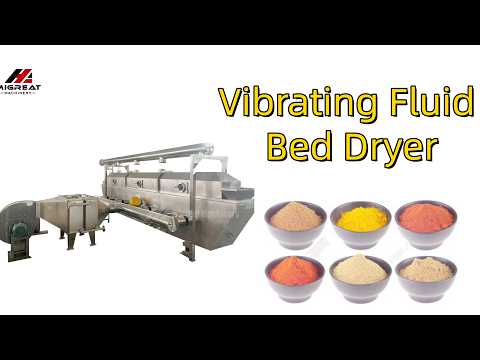
The videos show a fluid bed dryer on sugar, salt and starch, a vibrating fluid bed dryer, and a spray dryer making coffee powder.


The feed decides the dryer. Start from its state, then the product you need and the heat it can take.
Send the feed, its moisture, the target product and the capacity through the contact page, and an engineer can recommend a dryer. The GFG fluid bed dryer and LPG spray dryer pages list the models.
Dryer selection FAQ
QFluid bed dryer vs spray dryer, what is the difference between a fluid bed dryer and a spray dryer?
A fluid bed dryer dries damp solids by blowing hot air up through a bed of granules or powder. A spray dryer turns a pumpable liquid into powder by spraying it into hot air. The feed form decides, and the particle you need and the heat it tolerates refine the choice.
QWhat is a fluid bed dryer used for?
It dries wet solids such as sugar, salt, starch and granules. The GFG dries batches of 60 to 500 kg in 15 to 30 minutes at air up to about 120 degrees C, and the ZG vibrating bed dries granule, crystal and powder continuously at 20 to 420 kg/h of water.
QWhat is a spray dryer used for?
It turns liquids that can be pumped into dry powder, such as milk and coffee in our videos. The LPG page lists solutions, emulsions, suspensions and pumpable paste, with powder, granule or lumps as the product, and evaporation from 5 to 2,000 kg/h.
QIs a spray dryer only for milk?
No. The LPG page lists solutions, emulsions, suspensions and pumpable paste, and our videos also show coffee powder. It suits any liquid feed that must end up as a dry powder and can tolerate the outlet temperature of 80 to 90 degrees C.
QWhat are the disadvantages of a fluidized bed dryer?
It needs a feed that can fluidize, it can break fragile particles, fine dust must be caught by bags, and a batch machine does not fit a continuous line. A vibrating bed such as the ZG is the continuous answer, and a gentler tray or vacuum dryer suits fragile material.
QWhich dryer is cheaper to run?
A fluid bed dryer is usually cheaper per kilogram of water, because it dries a damp solid and not a dilute liquid. A spray dryer uses more energy for the water in its feed, so a more concentrated feed lowers the cost. Compare quotations at the same feed and moisture.
QCan I use both dryers in one line?
Yes. A spray dried powder can be agglomerated in a fluid bed to improve dissolving, and a fluid bed granulator builds granules and dries them in one machine. Use one dryer when a single machine does the job, and two when the product needs both steps.
