 +86 139 1520 0887
 info@migreatmachinery.com
Mesh to micron conversion turns the number of openings in one inch of screen into the opening width, and a micron is one thousandth of a millimeter.
A higher mesh number means a finer powder. 40 mesh is about 425 microns, 100 mesh is 150 microns and 200 mesh is 75 microns. A mill does not make one size. It makes a spread of sizes around the screen or classifier setting. A purchase order should state both the mesh and how much of the powder must pass it.
- Use the US sieve series for the conversion
- Hammer mills and universal grinders reach about 5 to 120 mesh
- An air classifier mill reaches 80 to 800 mesh
- Name the share that must pass, not only the mesh number
Every supplier mesh size chart says the same thing in a different layout, so this page keeps the numbers short and spends the space on what the numbers do not tell you. The mesh to micron lookup is the easy part. Choosing a mill that gives the fineness you wrote on the order is the part that goes wrong.
The guide covers the conversion table, the three ways a chart can mislead you, and the fineness range of each Migreat grinder, taken from the machine pages. It does not cover laboratory particle size analysis such as laser diffraction, which measures a different thing from a screen and has its own standards.
What is mesh size, and what is a micron
Mesh size is the number of openings per linear inch of a woven screen, and a micron is 0.001 mm. A 100 mesh screen has 100 openings in a row one inch long. The more openings fit in an inch, the smaller each one must be, and that is why the number and the size move in opposite directions.
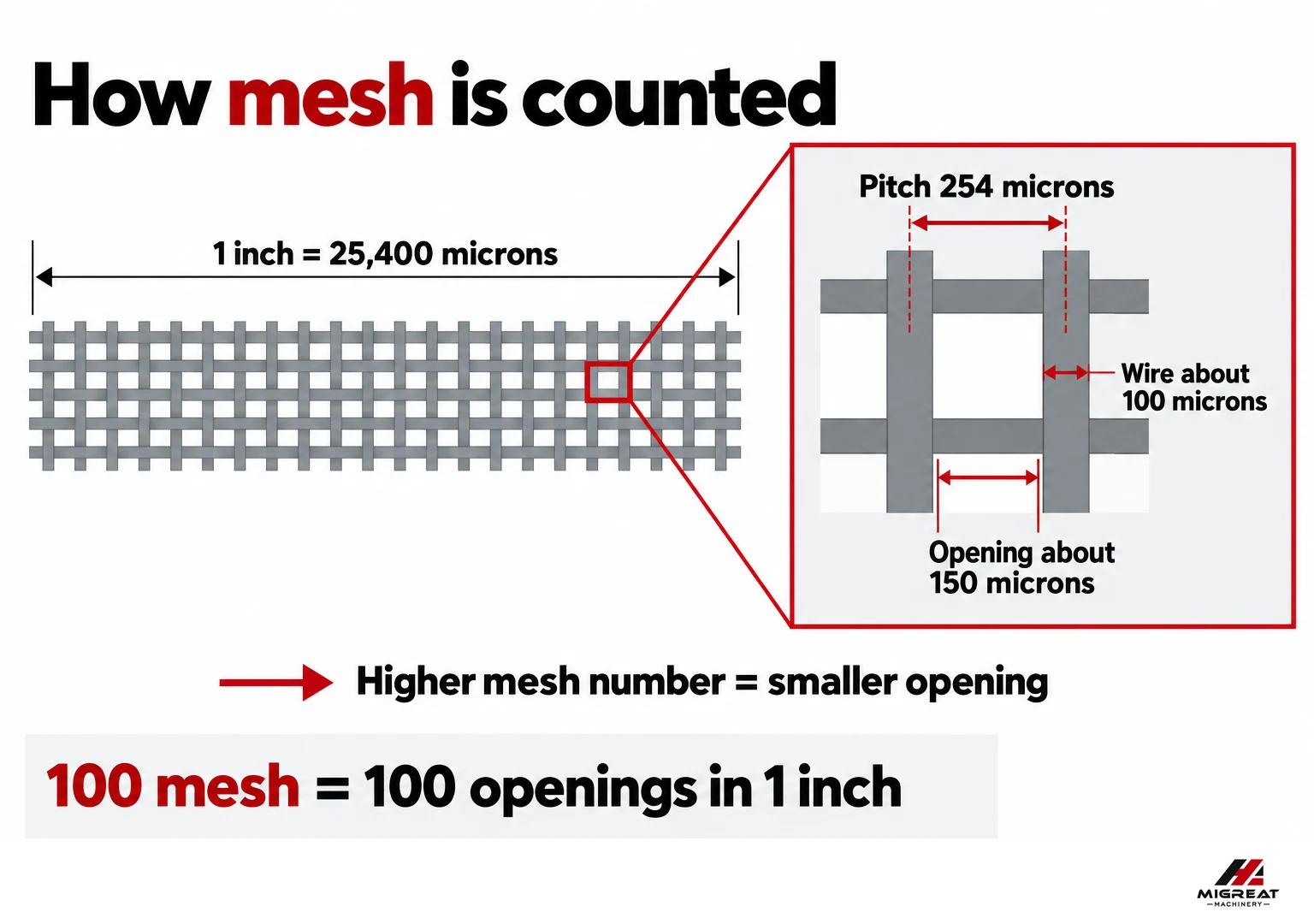
You can estimate any mesh to micron conversion by hand. One inch is 25,400 microns. Divide that by the mesh number to get the pitch, which is the opening plus one wire. For 100 mesh the pitch is 254 microns, and with a wire of roughly 100 microns the opening comes to about 150. The wire diameter is fixed in the standard for each size, and that is why a table can give one opening per mesh and a quick division cannot.
The two units describe different things. Mesh names a screen, and micron measures a length. A powder does not have a mesh. What it has is a size distribution, and the mesh number tells you which screen a stated share of that powder will pass. When a buyer writes 100 mesh powder, the sentence only becomes exact once it adds the share, for example that at least 95 percent passes a 100 mesh screen.
That detail matters because grinding always produces a range. Even a well run mill sends some particles through that are much smaller than the opening, and some that are close to it. Two powders that both pass 100 mesh can feel and flow very differently if one of them carries far more fine dust.
Mesh to micron chart for the US sieve series
The mesh size chart below uses the US sieve series, standardized as ASTM E11, which is the series most suppliers and buyers mean by mesh. The opening is the clear gap between the wires, in microns and millimeters. The last column puts each size in everyday terms.
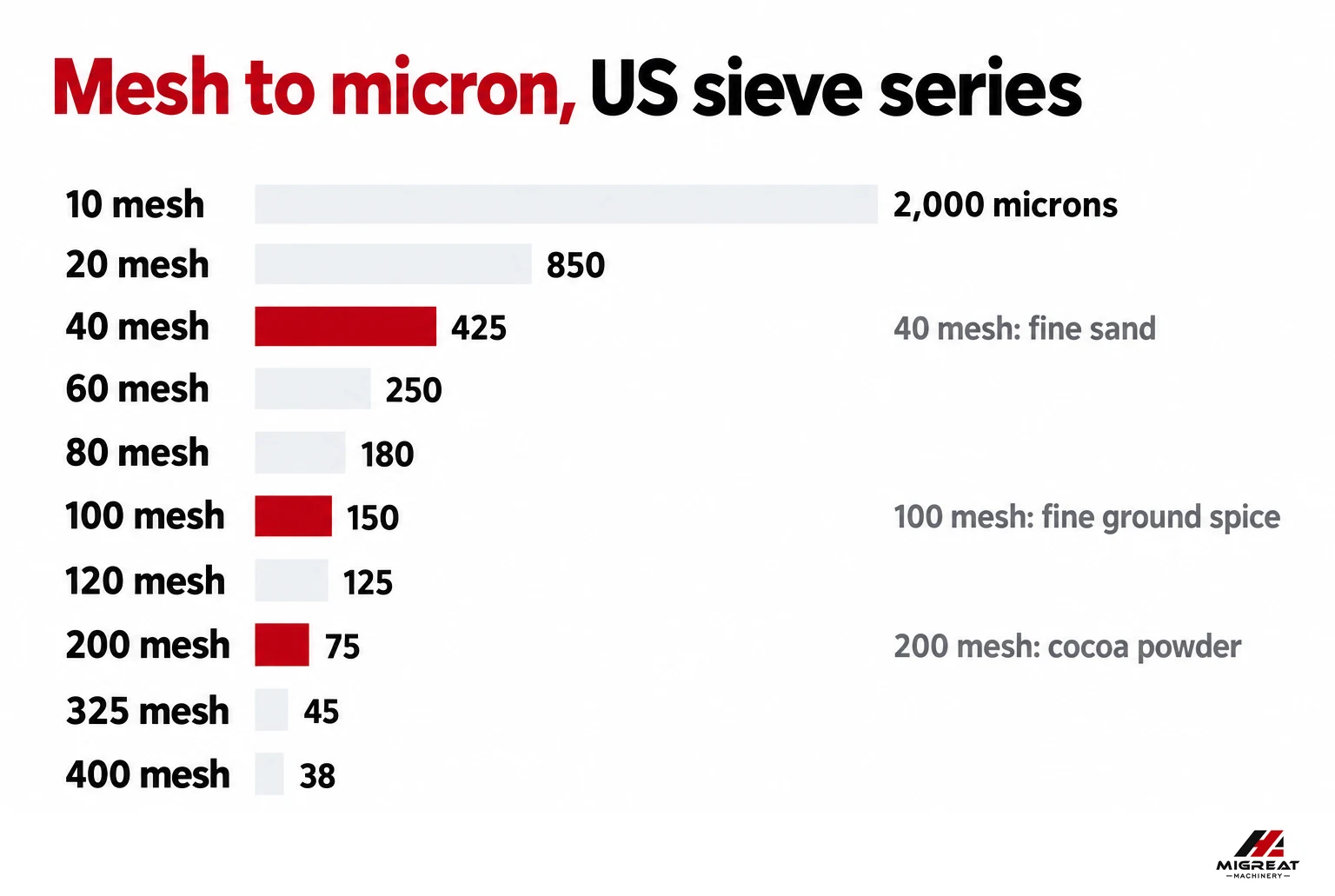
For the sizes in between, the same series runs 14 mesh at 1,400 microns, 30 mesh at 600, 50 mesh at 300, 70 mesh at 212, 140 mesh at 106, 170 mesh at 90, 230 mesh at 63 and 270 mesh at 53. The series does continue to 450 mesh at 32 microns, 500 mesh at 25 and 635 mesh at 20, but woven screens that fine are fragile and rare in production, so 400 mesh is the practical edge of the table above. Tables that list 800 mesh near 18 microns are giving nominal mesh size to micron conversion figures, useful for talking and less useful as a specification.
Three ways a mesh chart misleads
A chart misleads in three places. Different standards give slightly different openings for the same number, the wire thickness changes the opening, and the numbers above about 500 are nominal. None of these is a reason to distrust a mesh to micron table, only a reason to put the standard and the share passing in writing.
Different standards disagree a little
The US series and the older Tyler series are close, but not identical. Tyler 100 mesh is usually given as 149 microns against 150 in the US series, and a few sizes drift by several microns. Chinese and European sieve standards often name a screen by its opening in microns or millimeters instead of wires per inch. If a quotation says 200 mesh and the test is run on a screen from another series, the powder can pass on one and fail on the other.
The wire changes the opening
Mesh counts wires, not gap. Two 100 mesh screens with different wire thickness have different openings, because a thick wire leaves less room between its neighbors. Standard series fix the wire diameter for each size, and that is why the table can list one opening per mesh. A screen made to a looser tolerance may not match it.
Above 500 mesh the numbers are nominal
Woven wire stops being practical around 400 to 500 mesh, and the finest sieves in the series are delicate. Ultrafine grades are named by a nominal mesh figure and checked by particle size analysis instead of a screen. When a powder is sold as 800 mesh, the figure usually means a conversion from a measured size such as D97 in microns. Ask which one was measured.
Which Migreat mill reaches which fineness
The fineness a mill reaches depends on how the size is controlled. A hammer mill or universal grinder lets powder out through a screen, and the screen sets the top size. An air classifier mill uses a rotating grading wheel and no screen, and the wheel speed sets it. The table gives the range stated on each machine page, and the full list sits on the grinding machines page.
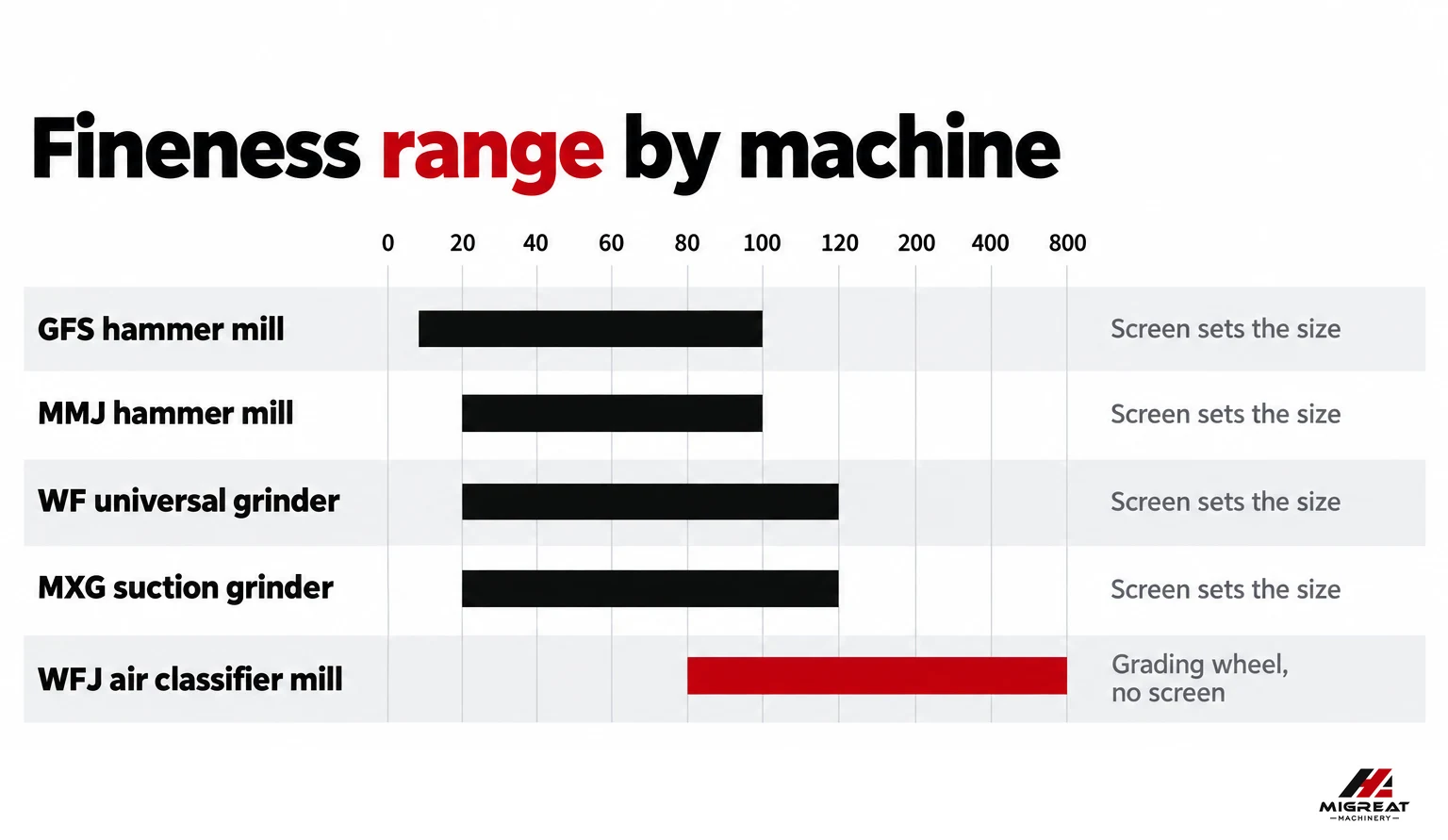
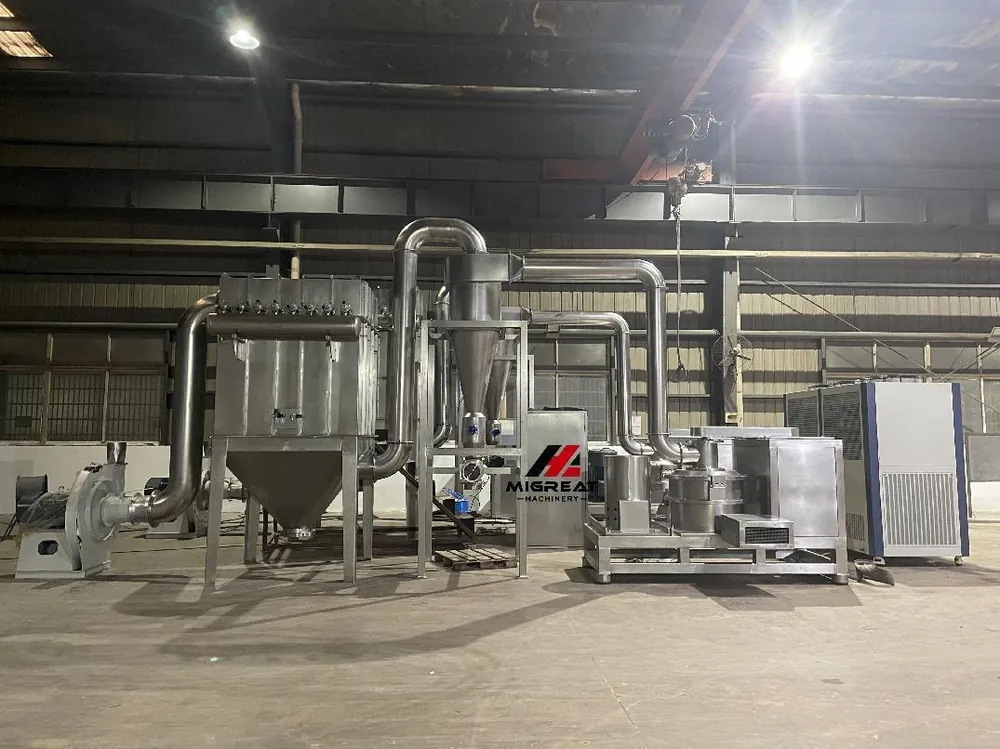
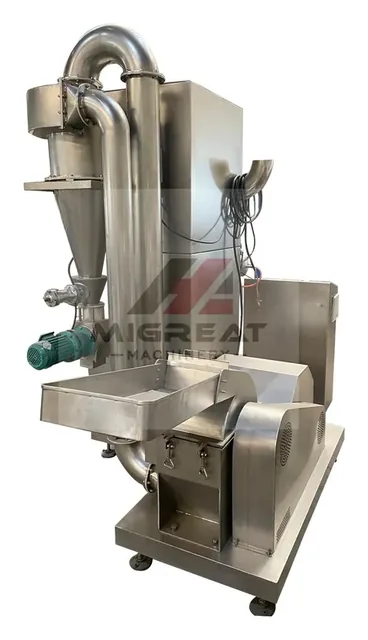
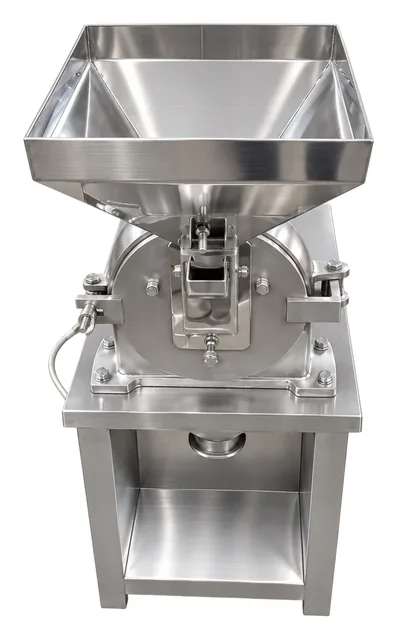
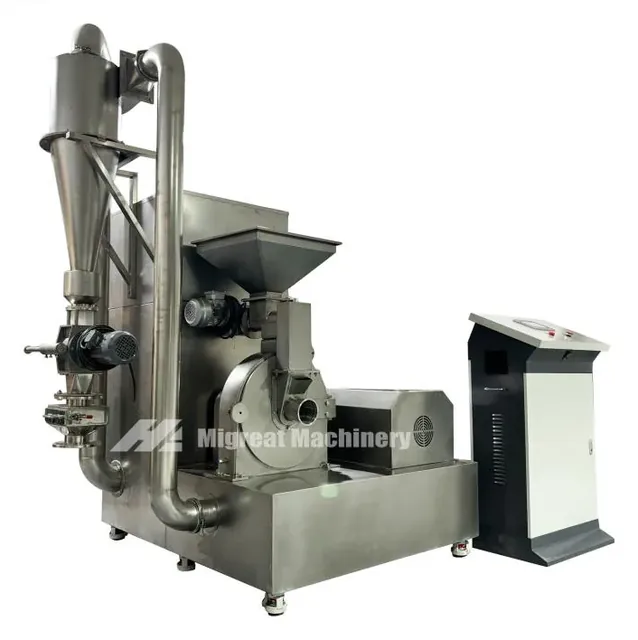
Each row hides a different way of controlling size. The PSJ coarse crusher sits at the start of a line. It breaks large pieces into particles of 0.5 to 20 mm, and the screens of 2, 3, 6 or 10 mm decide the size. It prepares material for a finer mill and is not a fine grinder. The GFS hammer mill cuts material with hammer blades and lets it out through the screen you fit, with fineness changed by swapping the screen. The version with a pulse dust collector and cyclone discharge keeps dust out of the air.
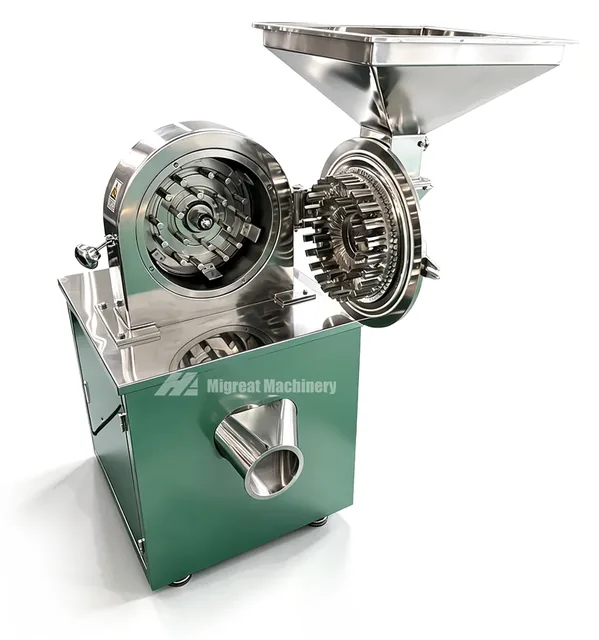
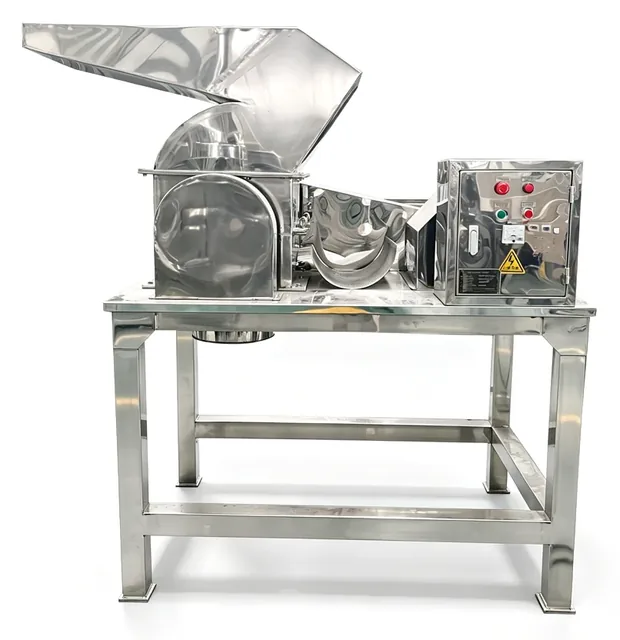
The MMJ system is made for spices with 10 to 20 percent oil, for oily material and for fiber. Its hammer blades cut fiber, and fibers do not block the screen. The WF universal grinder uses a toothed disc and a fixed knife, and the MXG adds suction discharge with a larger dust collection area, which the page rates at 20 to 30 percent more output. In every one of these, the screen is the control. The air classifier mill is the exception, and that is why it is the only machine in the table that goes above 120 mesh.
The pages for the MF and WMF universal grinders give 20 to 120 mesh as well, so for most dry spice and grain work the question is not which machine reaches 100 mesh, but which one holds it on your material at your capacity. Capacity falls as the screen gets finer. The GFS page puts it plainly, saying capacity depends on the material and the screen you fit. Quote the capacity at the fineness you need and not at the top of the range.
Why one mill never gives a single number
A grinder produces a distribution, and the mesh figure marks only its upper edge. On a screened mill, material leaves as soon as it is small enough to pass the screen. The top size is controlled and the lower end is not. On a classifier mill, the grading wheel sends coarse particles back for another pass, which narrows the spread at the fine end.
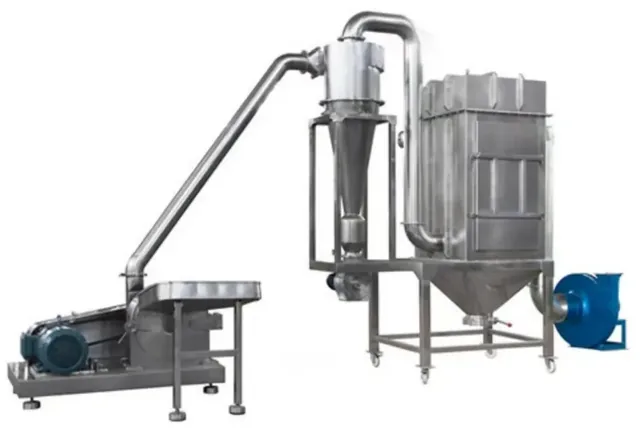
The machine pages describe this in plain terms. For the WFJ, air force and centrifugal force act on the powder at the grading wheel and only fine powder passes. Coarse powder stays in the chamber for another pass. The page also says the wheel speed sets the fineness and that oily, sugary and fibrous material does not clog the machine, because there is no screen to block. It adds that roots, stems and leaves are the kind of material a regular grinder only reduces to about 60 mesh.
That is a useful rule to carry into a quotation. If the product is dry and brittle and 100 mesh is enough, a screened hammer mill or universal grinder is simple and cheap to run. If the target is above 120 mesh, or the material is oily, sticky or fibrous, a screen will blind and the classifier route is the one to ask about. The hammer, pin and air classifier mill comparison sets the three side by side.
A worked example, from a spec to a screen
Take a buyer who writes that the powder must be 60 mesh. The first job is to turn that into a size. Sixty mesh is 250 microns, a quarter of a millimeter, about the size of fine sand. The buyer then needs to decide the share, because 250 microns is only the upper edge.
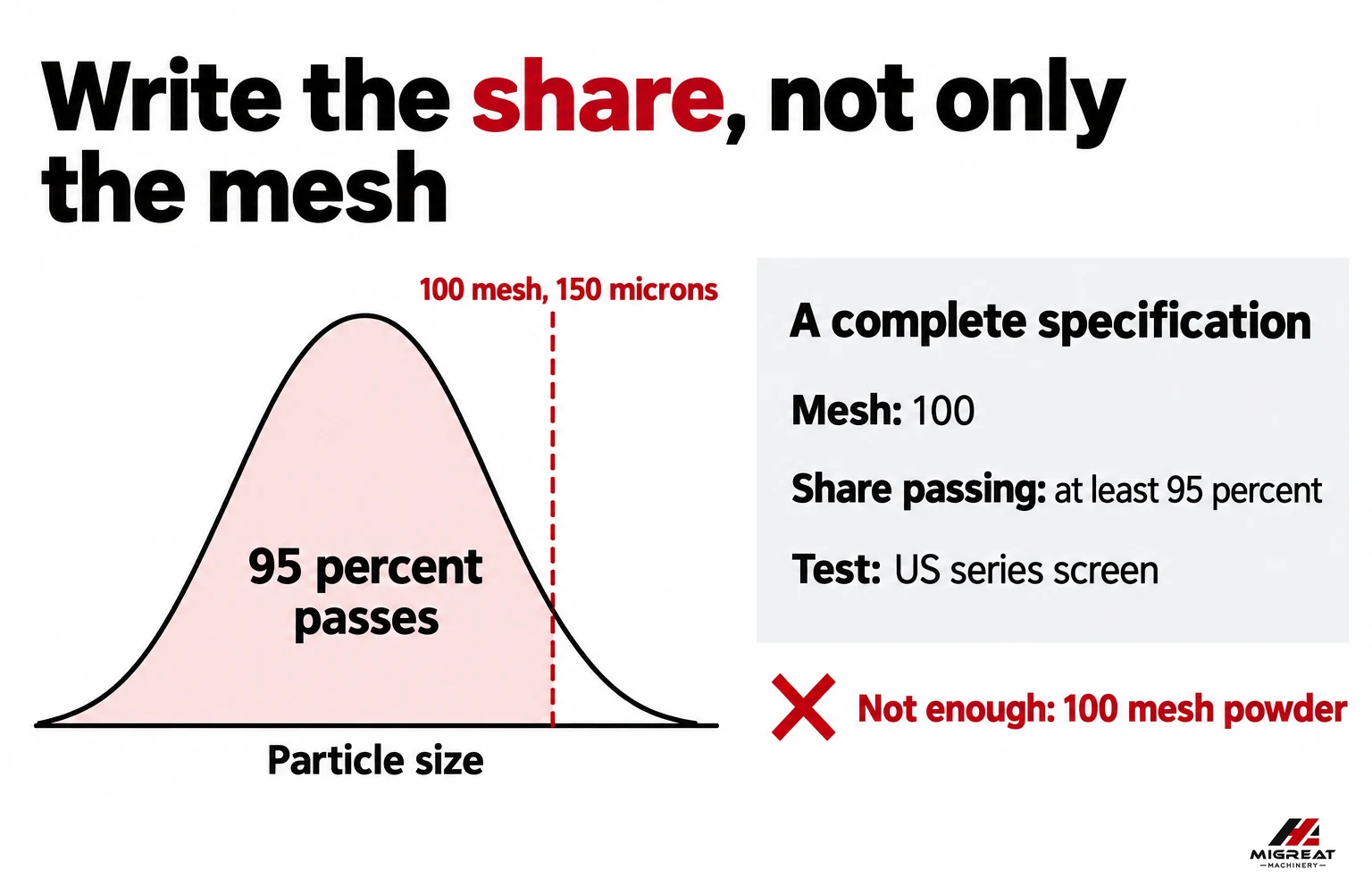
Suppose the buyer picks 95 percent through 60 mesh. That is a clear instruction. It tells the mill supplier to fit a screen of about that size, run a trial and check the result on a 250 micron sieve. It also leaves room to talk about the other 5 percent, which can be coarser but not by much, and about the fines, which no one has yet asked for. If the product is going into a filling machine, the fines are what cause dusting and caking. A second line in the spec, such as no more than a set share through 200 mesh, is worth adding.
Now the same buyer wants 300 mesh for a high value product. That is not a standard sieve size. It sits between 270 mesh at 53 microns and 325 mesh at 45 microns, and the opening is close to 48 microns. The mill choice changes at that point, because no screened hammer mill is sold for it. The air classifier mill is, and a laser size analysis is the practical way to confirm D90 or D97 in microns.
Common mistakes when buyers and mills talk mesh
Most disputes about fineness trace back to the same four mistakes. Each one is a missing line in the specification, and each is cheap to fix before the order.
- Writing the mesh without the share that must pass, then one side tests the average and the other tests the worst particle.
- Mixing standards, with the buyer using the US series and the lab using another series that numbers screens differently.
- Asking for the finest grade available when a coarser one would do, and that cuts capacity and raises power use for no gain in the product.
- Ignoring moisture and oil, since they make the same material grind to a different spread on a different day.
Matching the fineness to what the powder does
Fineness is a tool, and the right number is the coarsest one that still does the job. Finer powder costs more to make, because capacity falls and power rises, and it brings dust, caking and static. Start from what the powder must do, then choose the mesh.
Flow and dosing
Coarse powders pour and dose easily. The finer the powder, the more it tends to bridge in a hopper and pack down in a filler, and a very fine grade may need a different feeder or packing method.
Dissolving and mixing
Fine particles dissolve and disperse faster, which matters for instant drinks and seasoning blends. If a powder is only sprinkled on food, a coarser grade is often enough.
Appearance and feel
Color looks stronger as powder gets finer, because more surface reflects light, and the texture on the tongue changes. Buyers who compare samples side by side usually judge on these two.
Heat and oil
Grinding makes heat, and finer grinding makes more of it. Heat sensitive and oily materials such as spices lose aroma or smear on the screen. The page for the GFS mill notes that a cold air fan can be connected so the chamber temperature does not rise, and the low temperature grinding guide covers the idea.
How to state the fineness in a quotation
State the fineness as a mesh, the share that must pass it and the way it is checked, and keep the mesh to micron conversion in the same document so nobody converts it twice. A sentence such as at least 95 percent through 100 mesh, tested on a US series screen, is complete. A bare 100 mesh is not, because two suppliers can read it two ways.
- Name the material, its moisture and whether it is oily, sugary or fibrous.
- Give the target size as a mesh and a share passing, or as a size in microns for the top of the distribution.
- Name the standard of the test screen, because both sides must sieve on the same series.
- Give the capacity per hour at that fineness, because capacity and fineness trade against each other.
- Ask for a trial grind on your own material, and sieve the result before you order.
This is the same list an engineer needs to recommend a machine in the first reply, and it is covered in what to send before requesting a quote. The more of it you supply, the less guessing sits behind the model number.
Checking the powder after it is ground
The simplest check is a sieve. Weigh a sample, shake it through the screen of the stated mesh, weigh what stays on top, and calculate the share that passed. It is fast, it needs no instrument, and it uses the same unit as the order.
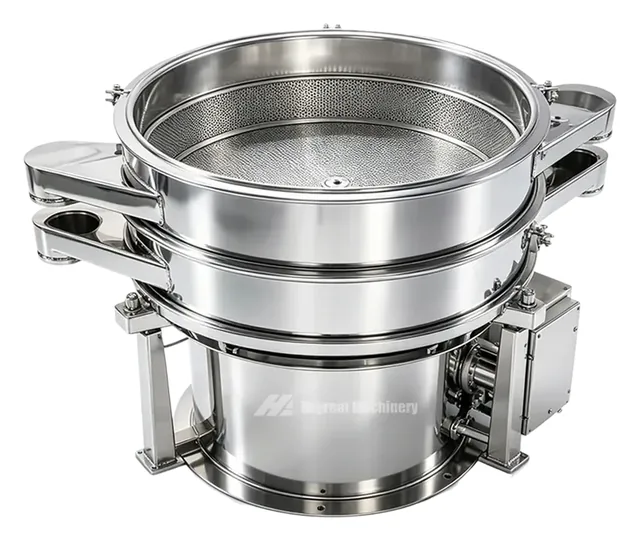
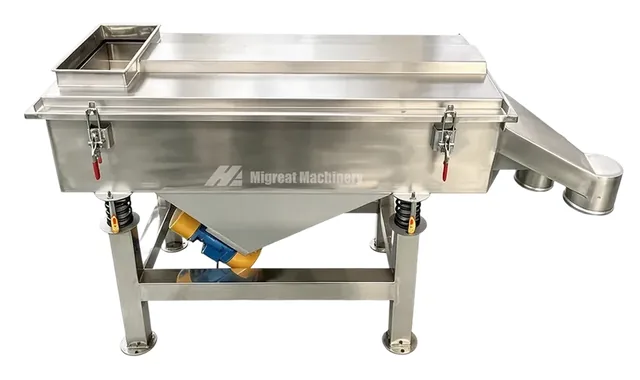
On the line, the ZS vibrating sifter does the same job at production scale. It comes with one to five decks, and one pass can give several grades, and a bouncing ball under the screen cloth keeps the mesh from clogging. The ZQ linear sieve handles particle sizes from 0.074 to 60 mm, and 0.074 mm is 74 microns, close to the 200 mesh opening in the table. After a mill, that sifter closes the loop. Coarse material goes back to the mill and fine powder goes on to packing. The vibrating sieve selection guide explains how to choose the mesh and the deck count.
Laser diffraction gives a full distribution in microns and is the usual method above about 400 mesh. If your customer specifies D50 or D90 in microns, agree with them whether the figure comes from a screen or from a laser instrument, because the two do not read the same on the same powder.
Ultrafine grinding at work
Two videos from our channel show fine grinding on the air classifier mill. The captions give the mesh named in each video title.


Choosing a mill from the chart
Use the mesh to micron table from the product backwards, not from the machine forwards. Decide the mesh and the share passing, check the material, then match them to the control method in the machine table. The result is usually one of three routes.
- Up to about 100 mesh and dry and free flowing, use a screened hammer mill or universal grinder with the screen set to the target.
- For oily, sticky or fibrous material at any fineness, look at a hammer mill built for oil and fiber with a cooling option, or at the classifier route if the target is fine.
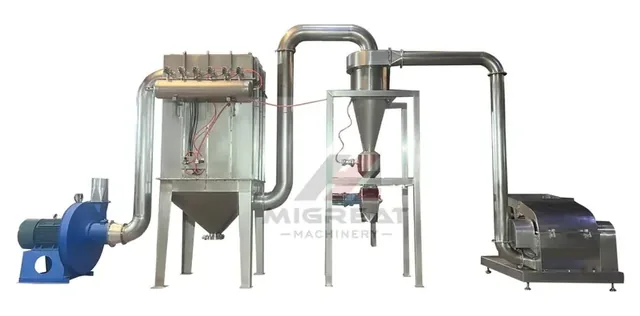
- Above 120 mesh, or where the spread must be narrow, use an air classifier mill followed by a sifter to confirm the grade.
When a quotation sits between two routes, ask for trial grinds on both and compare the sieve results. A short test costs far less than a mill that cannot hold the number on your material.
The mesh number tells you which screen. The share that passes it, and the way you test it, tell you what you bought.
Send the material, the target mesh with the share passing and the capacity you need through the contact page, and an engineer can name the grinder and screen that fits.
Mesh to micron FAQ
QHow many microns is 100 mesh in the mesh to micron table?
100 mesh is 150 microns, or 0.15 mm, on the US sieve series. On the older Tyler series the figure is given as 149 microns. That is about twice the width of a human hair, though the exact share of powder that passes depends on how it was ground and tested.
QWhat is 200 mesh in microns?
200 mesh is 75 microns, or 0.075 mm, on the US sieve series. It is about the opening of the screen used for fine cocoa and starch powders. Powder sold as 200 mesh should state the share that passes it, such as 95 percent.
QIs 40 mesh or 100 mesh finer?
100 mesh is finer. Mesh counts openings per inch, so a higher number means smaller openings. 40 mesh is about 425 microns and 100 mesh is 150 microns, so 100 mesh powder is roughly three times smaller in opening size.
QHow do I know my mesh size?
Count the wire crossings in one inch of the screen, or read the mesh stamped on the screen frame. For powder you already have, shake a weighed sample through a screen of known mesh and weigh what stays on top. The share that passes tells you how fine it is.
QCan a hammer mill reach 200 mesh?
Our hammer mill pages state 5 to 100 mesh for the GFS and 20 to 100 mesh for the MMJ, so 200 mesh is beyond what a screened hammer mill is sold for. For 80 to 800 mesh the air classifier mill uses a grading wheel and no screen.
QWhy does my powder pass a 100 mesh screen but still feel coarse?
A powder can pass a 100 mesh screen and still hold many particles just under the opening. Grinding gives a spread of sizes. If feel matters, state a second point such as the share passing 200 mesh, or ask for a trial grind and compare samples.
QWhich mesh do I need for spice powder?
It depends on how the spice is used. Many buyers work between 40 and 100 mesh for ground spice, and go finer for instant or smooth products. Send the material and target to an engineer and ask for a trial grind before you set the order.