






 +86 139 1520 0887
 info@migreatmachinery.com
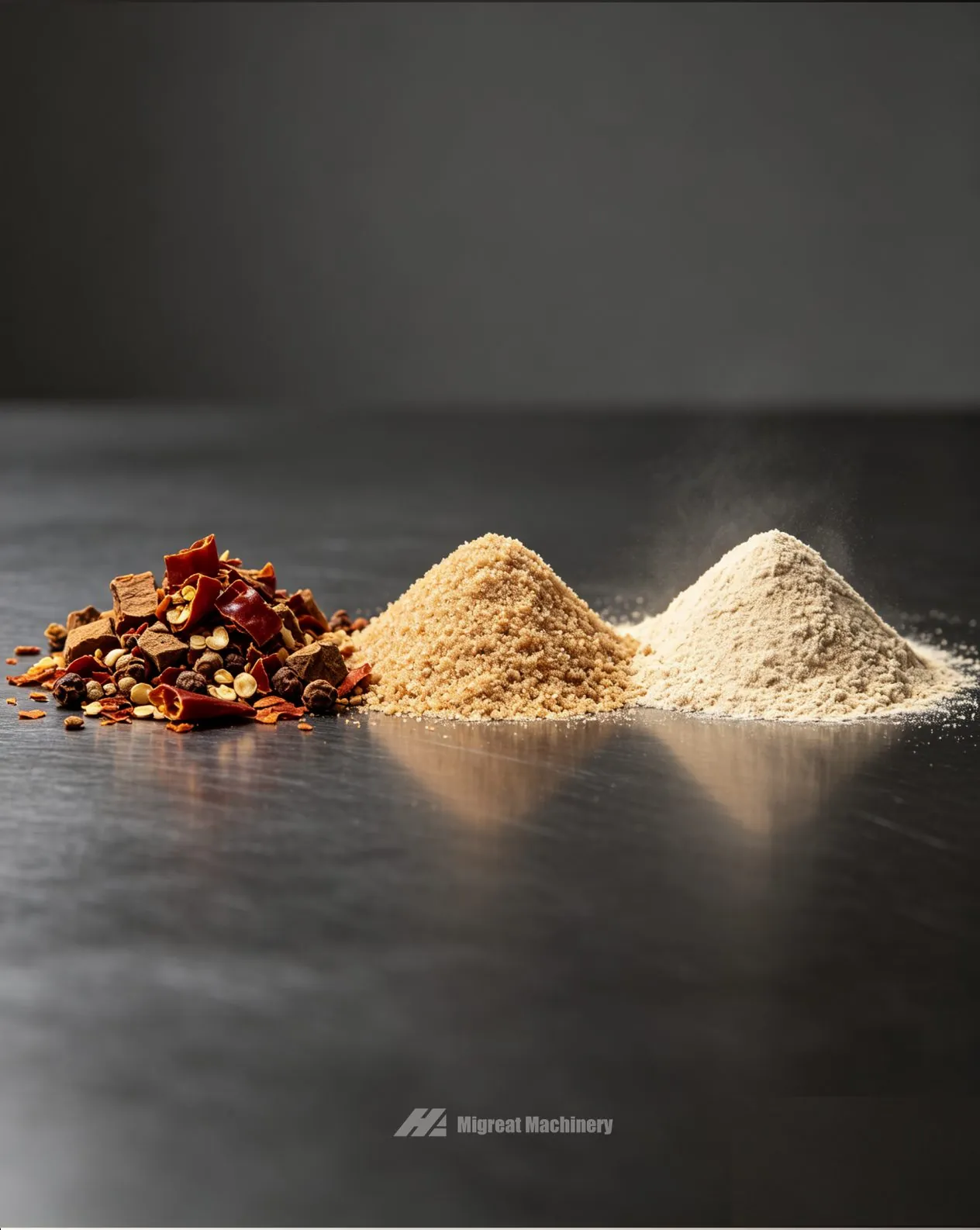
Low temperature grinding of spices means keeping the powder cool while it is ground, so the color, aroma and oil stay where they belong. Grinding turns energy into heat, and a spice with natural oils loses aroma, darkens and smears the screen when it gets too warm. The remedies run from simple airflow and cooling jackets to full cryogenic grinding with liquid nitrogen.
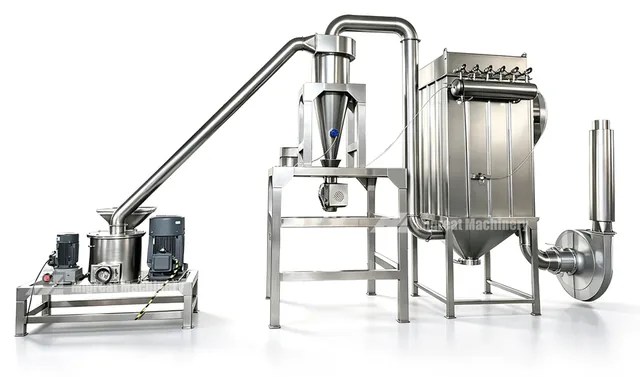
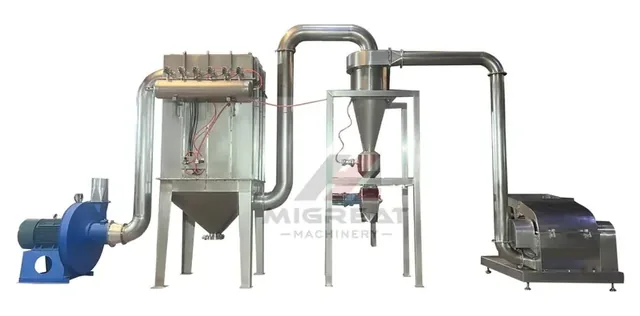
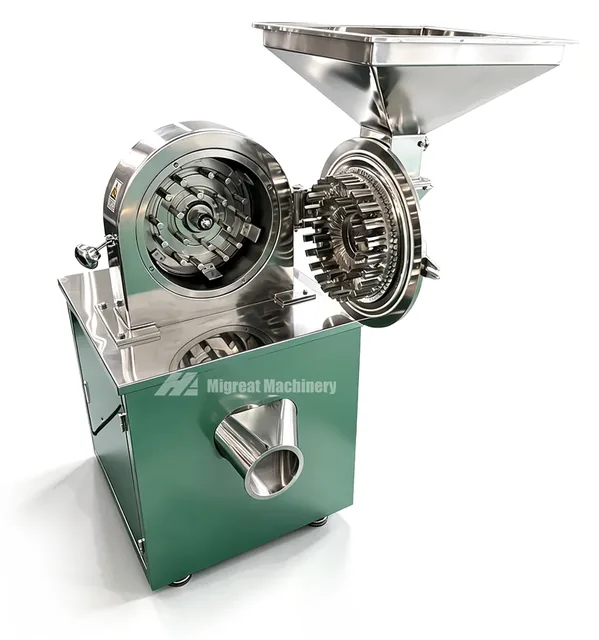
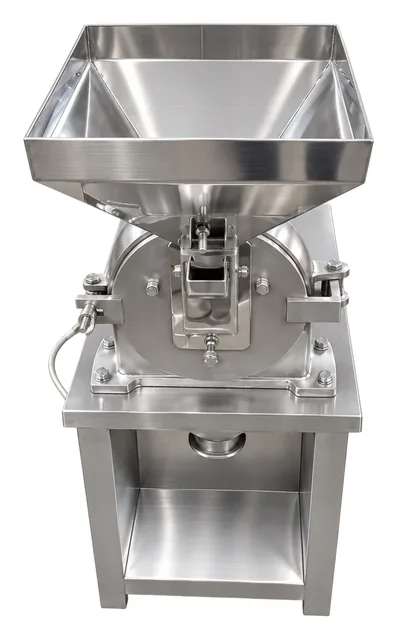
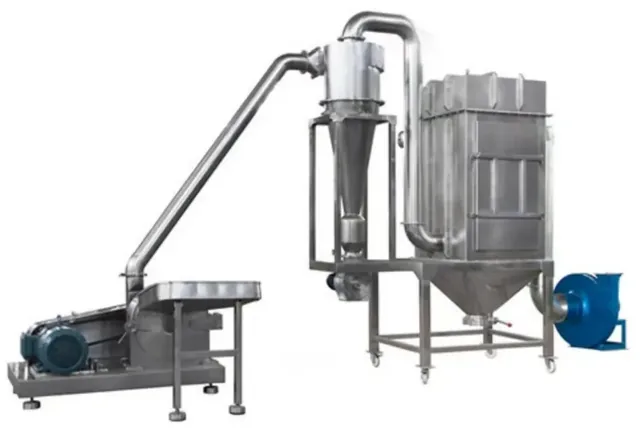
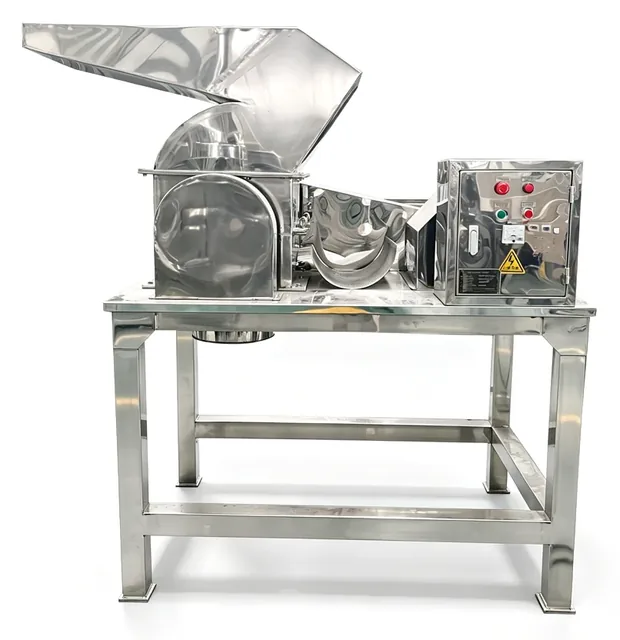
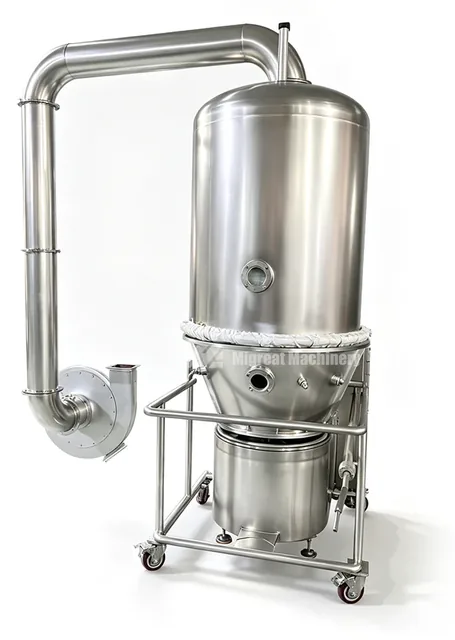
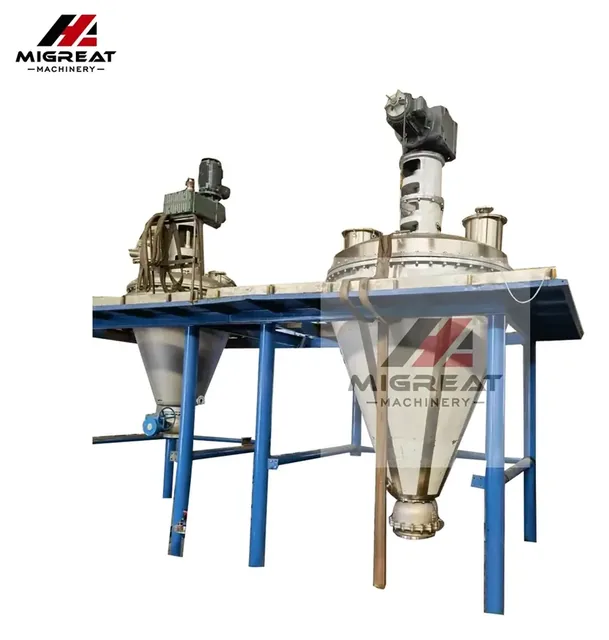
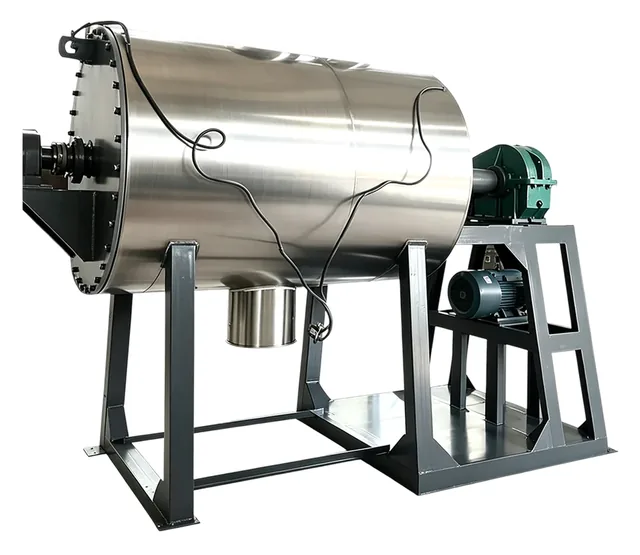
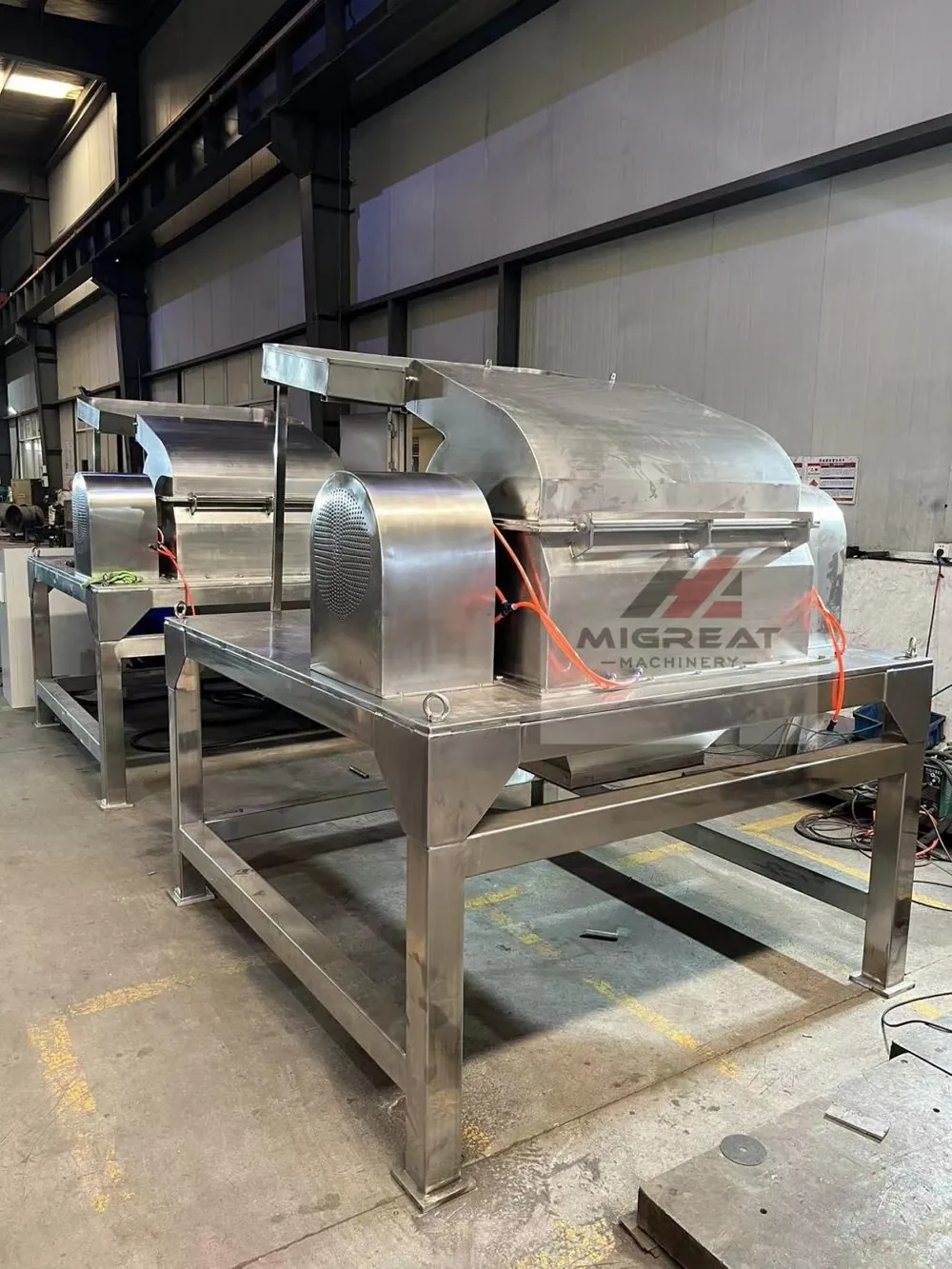
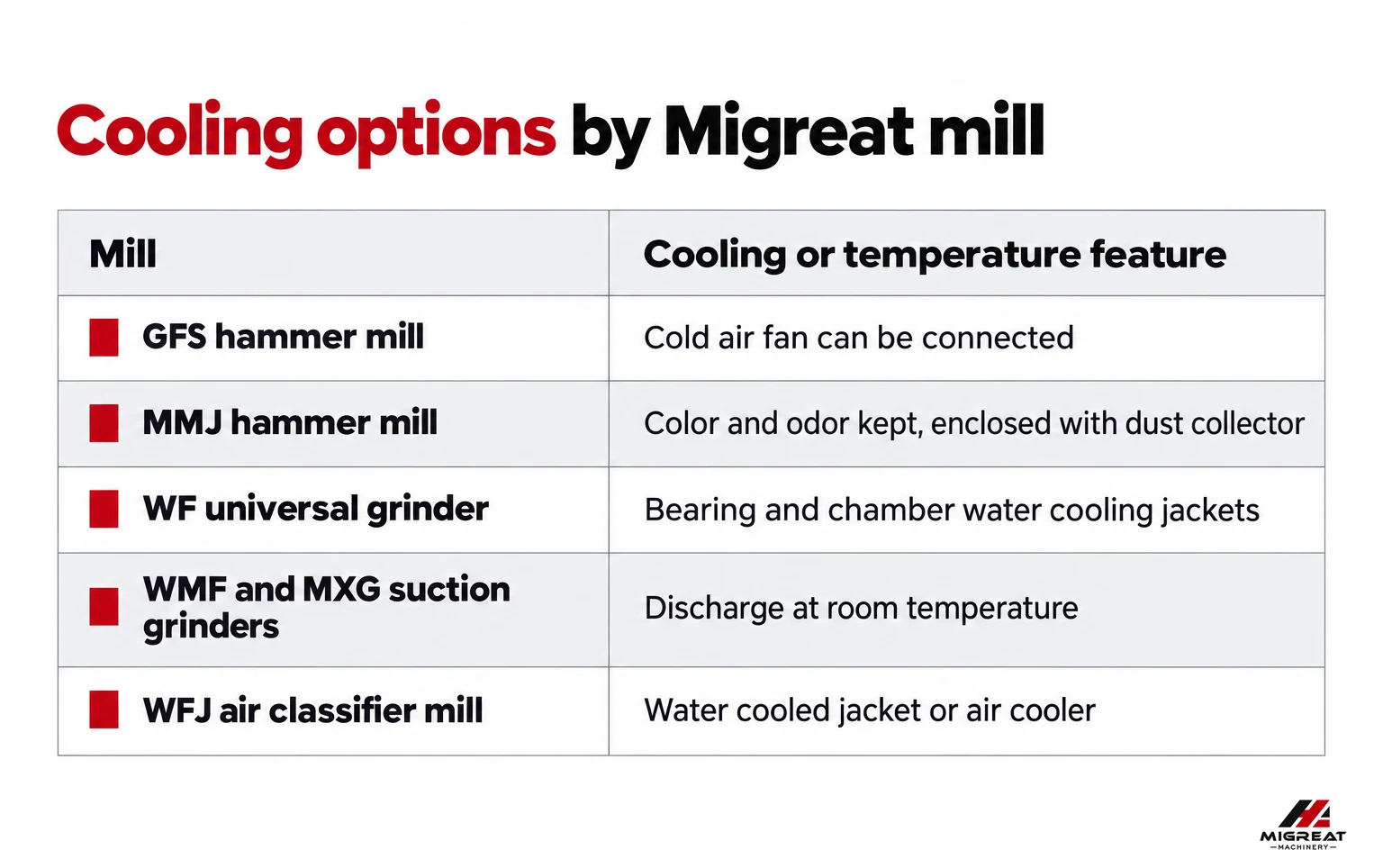
Migreat does not make cryogenic mills. The range offers the middle route. The GFS hammer mill can be fitted with a cold air fan so the chamber temperature does not rise, the WF universal grinder has water cooling jackets on the bearings and chamber, and the WFJ air classifier mill has a water cooled jacket or an air cooler.
- Heat is the problem, and the finer the grind the more of it there is
- Cold air fan on the GFS, water jackets on the WF, jacket or air cooler on the WFJ
- Cryogenic grinding uses liquid nitrogen and is a separate, costlier route
- Measure the powder temperature at the discharge, and test aroma and color against a cool sample
Searches for low temperature grinding of spices lead mostly to cryogenic grinding, because liquid nitrogen is the version that gets written about. It is also the version that most spice plants do not need. A great deal of the benefit comes from cheaper steps that keep the temperature down without a nitrogen supply.
This page explains why grinding heats a spice, what low temperature grinding can mean at three levels, what cryogenic grinding of spices is and what it costs, and which cooling options the Migreat mills offer. It adds the settings that change the heat, a worked example and the questions to ask in a quotation. It does not cover freezing, freeze drying or the roasting of spices, which are other processes.
Why grinding heats a spice
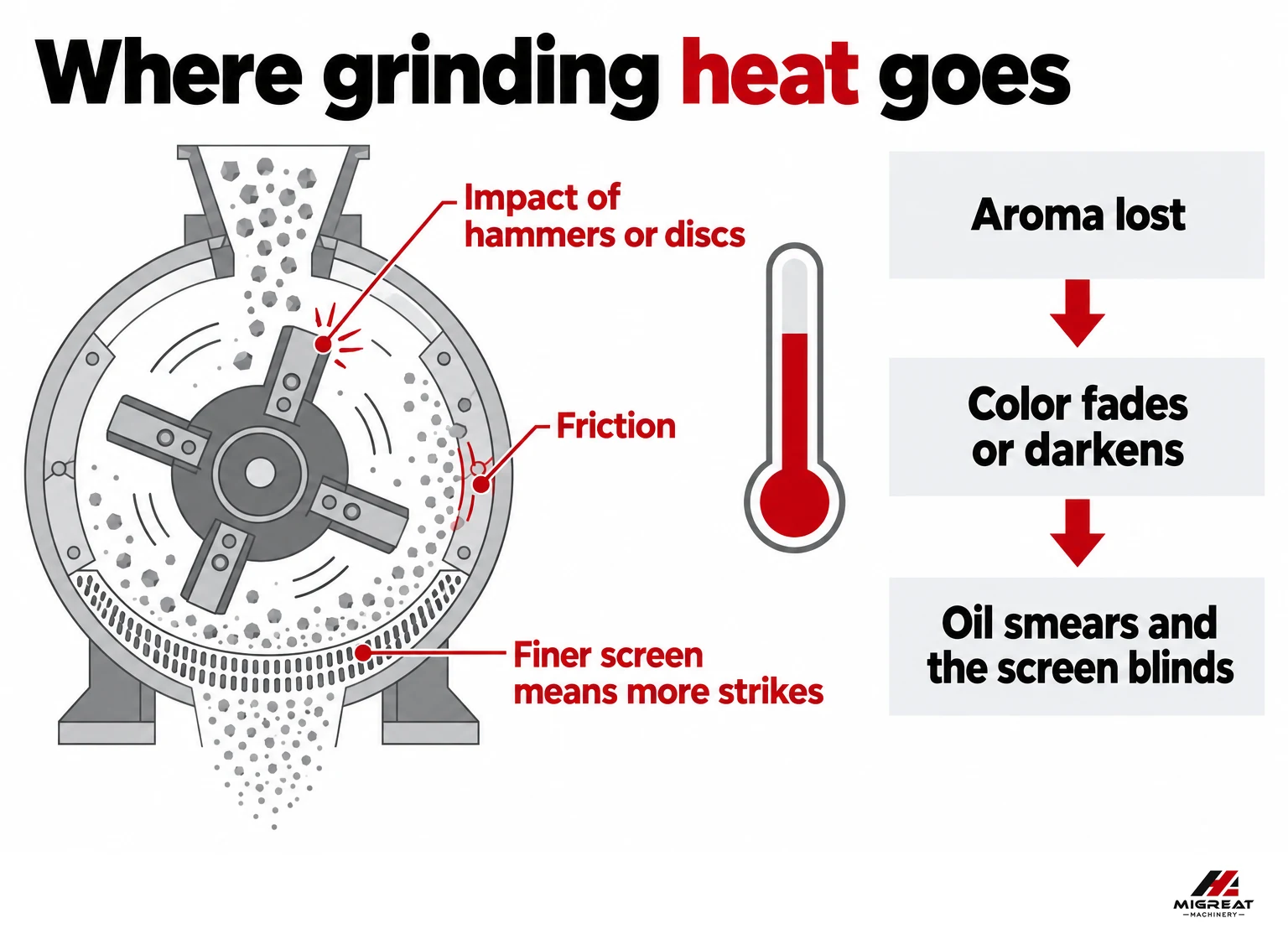
The energy that breaks a particle does not vanish. Most of it ends up as heat in the powder, in the chamber and in the air that passes through. A hammer or a toothed disc strikes thousands of times a second, friction adds more, and the finer the target the more strikes each particle takes. A spice that enters at room temperature can leave tens of degrees warmer, and the rise is larger at low capacity, when the same power heats less material.
Spices are unusually sensitive to that rise. Many contain natural oils that carry the aroma, and the oils evaporate or oxidize faster when warm. Color pigments fade or darken. Oily seeds and roots soften and smear, which coats the screen and blinds it. The WF page states that strong airflow made by the crushing carries the heat and the finished product out through the screen, and the GFS page offers a cold air fan for heat sensitive material, which shows how real the problem is.
Three levels of low temperature grinding of spices
The phrase covers a range of methods, and the cost climbs with each step. Naming the levels lets a quotation and a trial be compared.
The middle row is where most spice plants stop. It costs far less than nitrogen and gives most of the benefit for spices that are heat sensitive but not extreme. Cryogenic grinding earns its cost when the spice is very oily, when aroma is the product, or when the target fineness would otherwise cook the powder.
What cryogenic grinding of spices is
Cryogenic grinding chills the spice with liquid nitrogen, which boils far below minus 190 degrees C, until it is brittle. The brittle spice breaks cleanly and the nitrogen carries off the grinding heat. The powder stays cold, the volatile oils are held in, and oily seeds that would smear at room temperature grind like glass. The nitrogen then evaporates and leaves the powder dry.
It works, and it has costs. Liquid nitrogen has to be bought or made and stored, the plant needs insulation and a pre-cooling step, and the running cost per kilogram is high compared with air. For that reason it is common for expensive, aroma critical spices and rare for bulk chili or turmeric. If you are asking about a cryogenic spice grinding machine, the honest advice is to test the cooled route first and measure what is lost, then decide whether the extra step pays.
Cooling options on the Migreat mills
The mills offer several ways to keep the temperature down, and the pages state them plainly. The table lists them, with what each does and what to confirm.
None of the pages gives a cooling air temperature, so do not assume one. Ask the supplier what air temperature the system delivers, at what air volume, and how much it lowers the powder temperature on your spice. Then check it in a trial with a thermometer at the discharge.
Cold grinding of spices, and what the term covers
Cold grinding of spices is used loosely. Some suppliers mean cryogenic grinding with liquid nitrogen. Others mean a mill with a cooling jacket. Others mean nothing more than a mill that runs at a lower speed. When a quotation says cold grinding, ask which of these it is, and what temperature the powder reaches at the discharge. The phrase on its own does not guarantee a number.
The search results show the same confusion. Many pages that rank for the phrase belong to food brands that describe their own product, and many others describe cryogenic grinders in general. Treat them as background, and base your choice on the figures a supplier gives you for your own spice, with a trial to check them.
How cold air grinding works
Cold air grinding feeds chilled air into the grinding chamber, and the air stream that carries the powder out also carries the heat out. The GFS page puts it simply, saying a cold air fan can be connected so the temperature in the chamber does not rise. In a typical cold air system the air is cooled by a chiller or a refrigeration unit upstream of the fan and is dried, because cold humid air would put water on the spice.
The benefit depends on how much colder the air is than the powder, and on how much air flows. A small temperature difference at a low flow does little. A bigger difference at a good flow lowers the powder temperature noticeably. That is why the questions to ask are the air temperature, the air volume and the effect on the powder, not only the presence of a cooler.
Which spices are most sensitive
Spices differ in how much they suffer. The table gives a rough guide, and a trial on the real spice always settles it.
The MMJ page lists cumin, caraway seed, pepper, cardamom, chili, turmeric and dried apple among its materials, with spices of 10 to 20 percent oil as its target. The WFJ page names turmeric, pepper, ginger and herbal material, including roots, stems and leaves. Those lists are the nearest thing to a map of what each mill has been used for.
Keeping the aroma after grinding
Cool grinding protects the powder at the mill, and the rest of the line has to keep it. Ground spice loses aroma faster than whole spice, because the oils are exposed. Light, air and warmth speed the loss. Pack the powder soon after it is cooled, use bags or containers that keep out air and light, and keep the store cool and dry.
Moisture is the other enemy. A powder packed warm can sweat in the bag, and a damp powder cakes and grows mold. If the climate is humid, sift and pack in a dry room, and check the moisture of the powder at packing. A good grind can be undone in the last hour before the bag is sealed.
Grinding oily spices and the screen
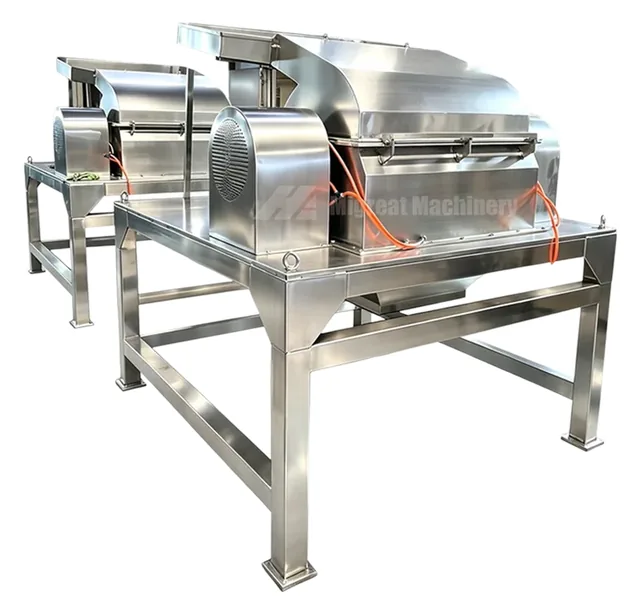
Grinding oily spices is the hardest case, and oil is the second reason heat matters. Spices with 10 to 20 percent oil, such as cumin, caraway, pepper and some seeds, release oil as they warm, and the oil sticks to the screen and the hammers. The screen blinds, the output falls, and the powder cakes. The MMJ page is made for exactly this, spices with 10 to 20 percent oil, oily material and fibrous material, and it names hammer blades that cut fiber, with no fibers left to block the screen.
When a screen cannot cope even with cooling, the screenless route is the answer. The WFJ sets the fineness with a grading wheel, and the page says oily, sugary and fibrous material does not clog it. The hammer mill vs pin mill page compares these routes on the same footing.
The settings that change the heat
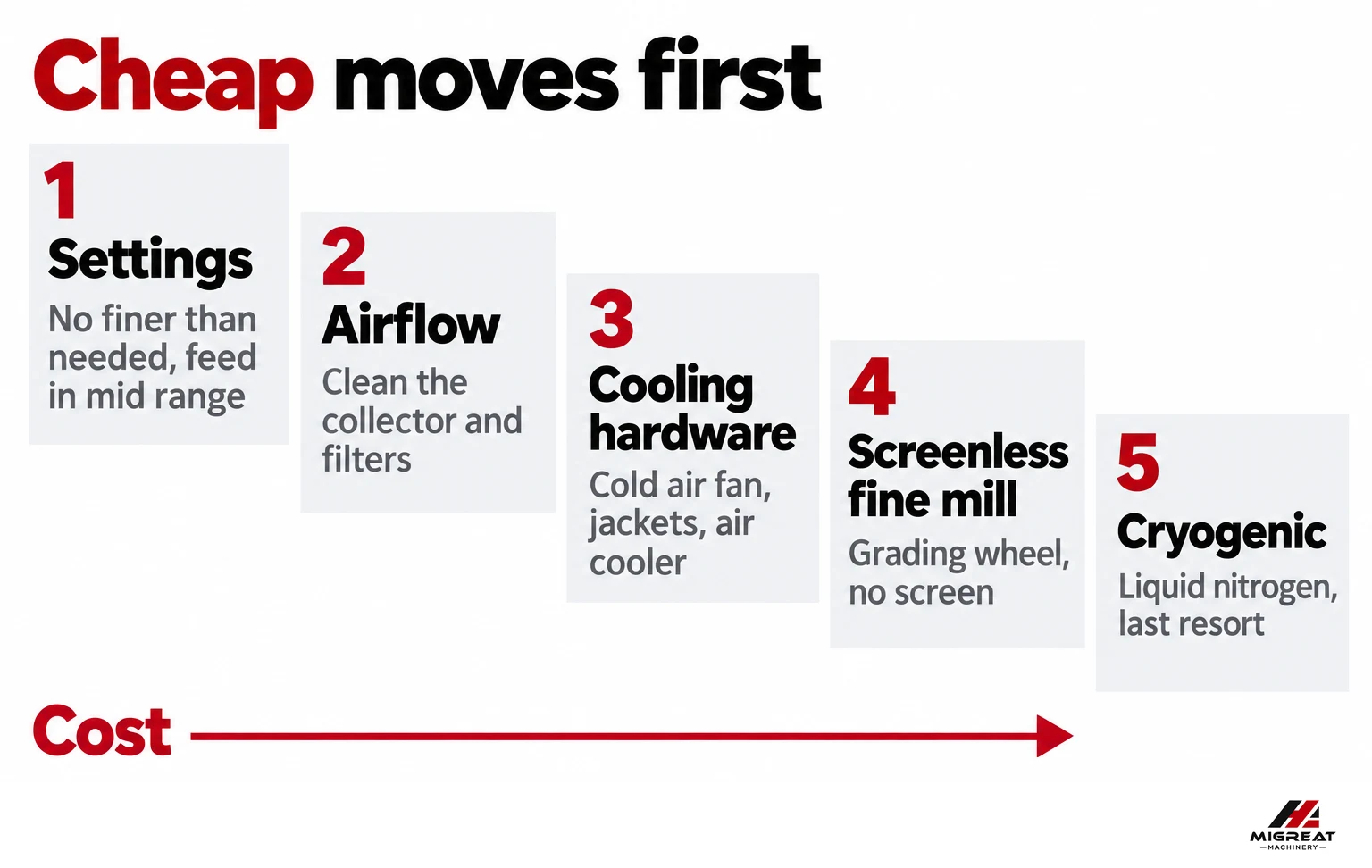
Low temperature grinding of spices is not only a matter of hardware. Cooling hardware is only one lever. Five settings change the heat in any mill, and they cost nothing to try.
- Fineness. A finer screen means more strikes and more heat, so grind no finer than the product needs.
- Feed rate. A mill fed at the low end of its range heats more per kilogram, because the same power goes into less material.
- Feed temperature. Spice stored in a cool, dry place enters the mill cooler, and a coarse crusher stage first takes some of the work off the fine mill.
- Airflow. More air through the mill carries more heat out, as the WF page says, and a blocked filter or a dirty collector cuts it.
- Run time. A long run warms the mill itself, so pauses and a cleaning schedule matter on hot days.
The particle size reduction page explains why chaining a coarse stage ahead of the fine stage lowers the total energy, and the mesh to micron chart helps you choose a target that is no finer than the use needs.
How to measure the damage and the cure
Do not trust the nose alone, since noses tire and vary from person to person. Measure the powder temperature at the discharge with a probe, and the chamber temperature if the machine has a sensor. Compare the color against a reference sample ground cool, ideally with a color meter and under the same light each time, and compare the aroma in a blind sensory test with a few people. A laboratory can measure the volatile oil content of a sample if aroma is the selling point.
Run the trial in three conditions. Ambient with no cooling, with the cooling option on, and, if you can, a small cryogenic reference from a toll processor. The difference between the first two tells you what the cooling hardware is worth. The difference between the second and the third tells you if the nitrogen route is worth considering at all. Record the temperature, the color reading and the sensory score for each run, so that the comparison is on paper and not on memory.
One more point about the plant. Cooling hardware has a running cost, in electricity for a chiller or in water for a jacket, and it is worth putting a number on it. Compare that cost with the value of the aroma and color you keep, and with the cost of the powder you now throw away because the screen blinded. In most plants the cost is small beside the product, and the argument for low temperature grinding of spices is easy to make once the trial data are on the table. Put the trial data, the running cost and the saved powder in one page for the decision, and let the people who will run the line read it.
A worked example, chili at 60 mesh
A plant grinds dried chili to 60 mesh at 150 kg/h and finds that the powder darkens and that the screen blinds after an hour. The chili is oily and heat sensitive. Several moves help in order of cost.
First the settings. Check that the feed rate is inside the middle of the range, and that the screen is no finer than 60 mesh. The MMJ-400 lists 50 to 150 kg/h, so 150 kg/h is the very top, and the MMJ-630 at 80 to 300 kg/h holds the same rate comfortably. Then the airflow, by cleaning the collector. Then cooling, with a cold air fan on a GFS or the jackets on a WF at the lower capacity, and a trial to see the temperature at the discharge.
If the powder still darkens, the chili is a case for the screenless route or for cryogenic grinding, and the trial data tell you which. Most chili plants find that the settings and a cooling option are enough, and the nitrogen route stays a reference.
Where cooling sits in the line
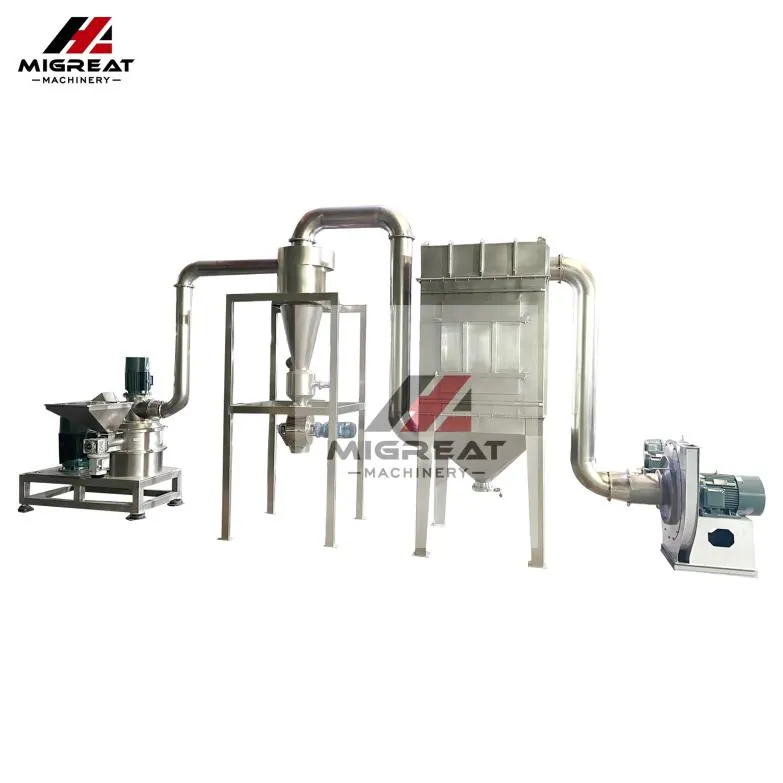
Low temperature grinding of spices only works if the whole line is cool. Cooling is a feature of the mill, and the rest of the line has to match. The coarse crusher and the conveyor ahead of the mill should not warm the spice. The cyclone and the collector behind it must pull enough air to carry the heat away. And the spice grinding line page shows the full order, from the coarse crusher to the packer.
Packing is the last place heat can hurt. A powder that leaves the mill warm and goes straight into a sealed bag can sweat inside it, and the aroma that low temperature grinding saved is lost in the store. Let it cool on the sifter or in a short hold before packing, and use a dry room if the climate is humid.
Mistakes buyers make
- Buying cryogenic equipment before testing the cheaper options.
- Believing a cooling air temperature that is not written in the quotation.
- Grinding finer than the use needs, and paying for it in heat and capacity.
- Running a big mill at the low end of its range and heating the spice.
- Judging by smell alone, with no temperature reading and no reference sample.
What to ask in the quotation
- The cooling option offered, the air or water temperature it delivers and the flow it needs.
- The powder temperature at the discharge on your spice, from a trial.
- The capacity at your mesh with the cooling on.
- The utilities, such as chilled water or compressed air, and what they cost to run.
- Whether the machine can be fitted with the option later if the first trial shows it is needed.
Cooled grinding at work
The videos show the water cooled jacket design, a hammer mill on ginger and cinnamon, and a chili mill.



Keep the grind no finer than the use needs, test the cheap cooling steps first, and measure the powder temperature at the discharge.
See the grinding machines page for the whole range. Send the spice, its oil content, the target mesh and the capacity through the contact page, and an engineer can suggest a mill and a cooling option. The GFS hammer mill, WF universal grinder and WFJ air classifier mill pages list the models.
Low temperature grinding FAQ
QWhat is low temperature grinding of spices?
It is grinding with measures that keep the powder cool, with color, aroma and oils kept. The range runs from airflow and cooling jackets to a cold air fan and cryogenic grinding with liquid nitrogen. Migreat offers the cooled route, not cryogenic mills.
QWhat is cryogenic grinding of spices?
The spice is chilled with liquid nitrogen, far below minus 190 degrees C, until it is brittle. It breaks cleanly while the nitrogen carries the heat away, and volatile oils are held in. It needs a nitrogen supply and pre-cooling, and its running cost is high.
QDoes temperature affect spice flavor?
Yes. Many spices contain natural oils and heat sensitive components, and grinding heats them. Too much heat changes the color, aroma and quality of the powder, and makes oily spices stick to the screen. Keep the grind cool and test against a cool sample.
QWhat cooling options do your grinders have?
The GFS hammer mill can take a cold air fan to stop the chamber temperature rising. The WF universal grinder has bearing and chamber water cooling jackets. The WFJ air classifier mill has a water cooled jacket or an air cooler. Ask for the powder temperature on your spice.
QHow do I grind oily spices without blocking the screen?
Keep the powder cool, use a mill built for oil such as the MMJ, which is made for spices with 10 to 20 percent oil, and avoid grinding finer than needed. If the screen still blinds, a screenless air classifier mill sets the fineness with a grading wheel instead.
QDo I need cryogenic grinding for chili or turmeric?
Usually not. Most bulk chili and turmeric plants find that sensible settings, good airflow and a cooling option are enough. Cryogenic grinding pays for aroma critical or very oily spices, and a trial with measurements tells you if yours is one.
QHow do I know the grinding is too hot?
Measure the powder temperature at the discharge, compare the color with a reference sample ground cool, and run a blind aroma test. A dark shade, a flat smell or a screen that blinds within an hour are signs. A laboratory can measure volatile oil if aroma is the selling point.