 +86 139 1520 0887
 info@migreatmachinery.com
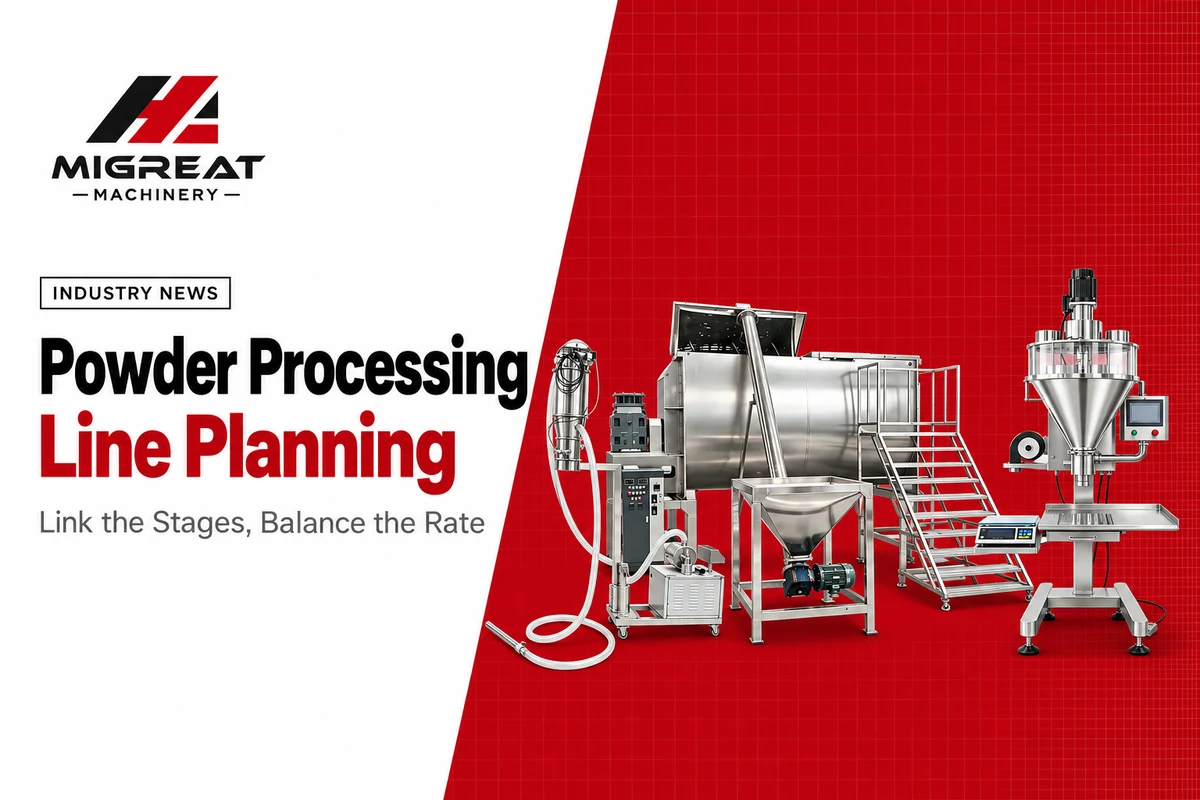
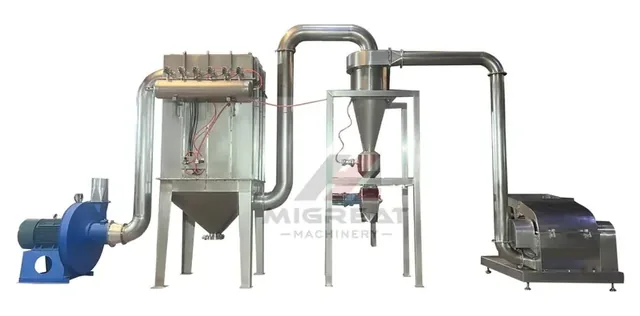
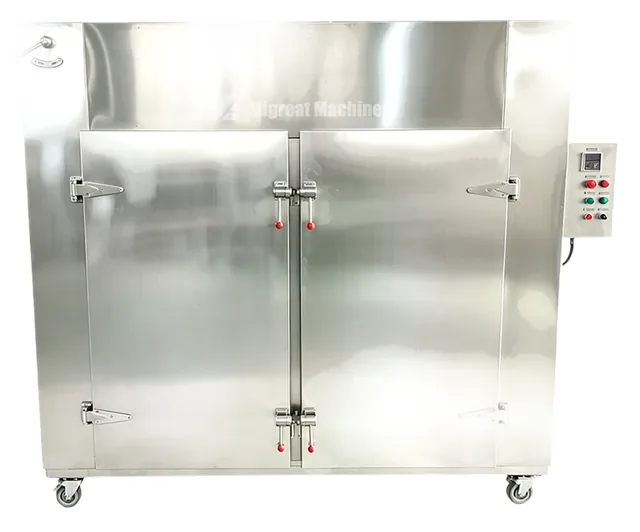
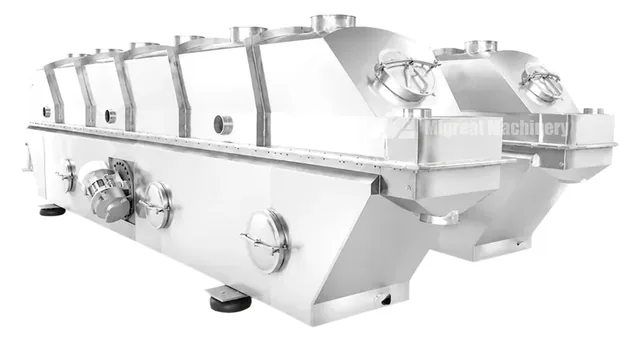
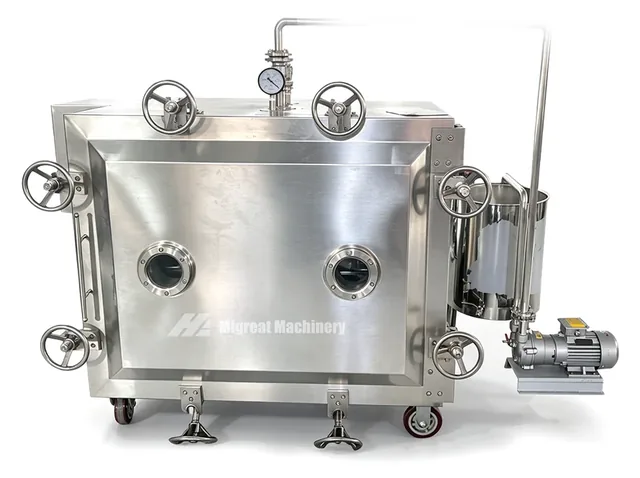
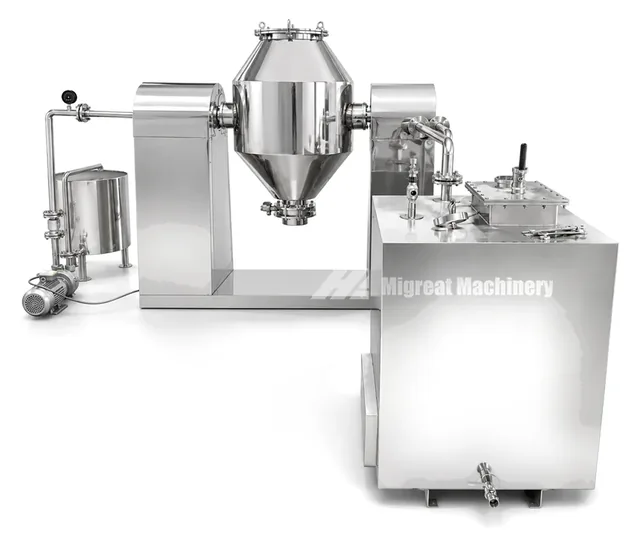
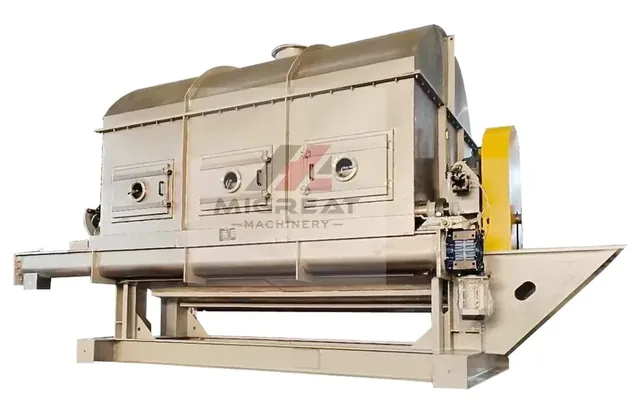
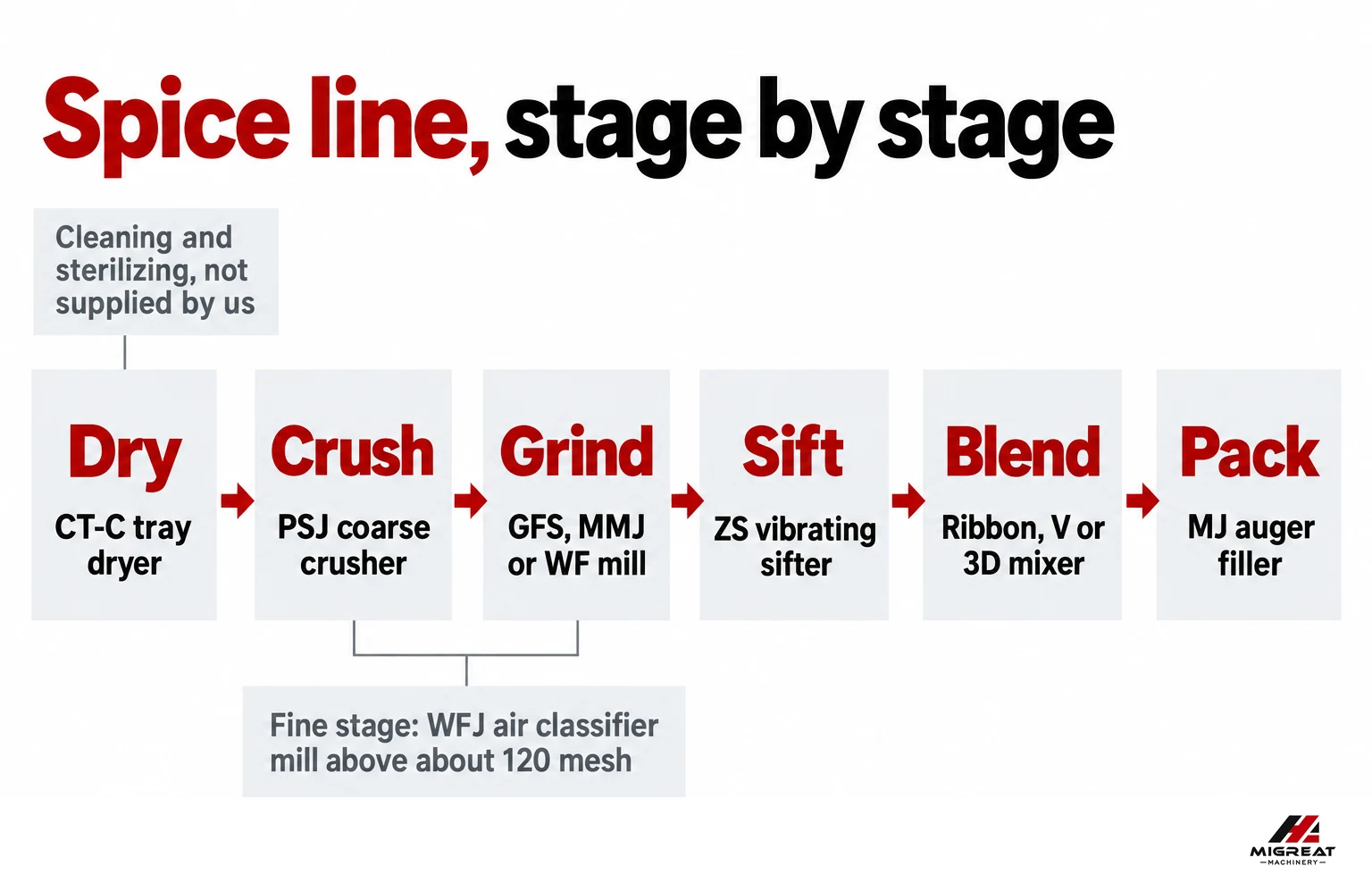
A spice powder production line runs in four main stages. Coarse crushing breaks pods, roots, bark and seeds into pieces of 0.5 to 20 mm. A main grinder reduces them to powder, a sifter grades the powder and returns the oversize, and a packer fills bags. A dryer sits in front for damp raw material, and a mixer sits in the middle when the product is a blend.
The machines are chosen by the spice and the target mesh. The Migreat PSJ coarse crusher takes the first stage. Hammer mills such as the GFS and the MMJ, or the WF universal grinder, do the main grind at about 5 to 120 mesh. The WFJ air classifier mill goes finer, to 800 mesh. The ZS sifter and the MJ packers finish the line.
- Coarse stage, PSJ crusher, 10 to 800 kg/h, output 0.5 to 20 mm
- Main grind, screened mills at 5 to 120 mesh, fine mill to 800 mesh
- Sift, then blend if needed, then pack with an auger filler
- Spice type, target mesh and capacity decide the machines
A spice powder production line is not a grinder with accessories. It is a chain of machines in which every link sets the load on the next, and a line that grinds well and packs badly is still a bad line. The best way to plan one is to start at the bag and work backward, not to start at the mill and hope.
This page walks through the line stage by stage, sorts spices by how they behave in a mill, names the Migreat machine for each stage, and gives three example lines with model numbers. It also covers dust, heat, cross contamination and the checks along the line. It does not cover washing, destemming and sterilizing of the raw spice, which are done upstream with equipment we do not supply, and the chili powder production line page covers the special case of chili.
What a spice powder production line contains
The line has up to eight stages, and not every plant needs all of them. The table lists each stage, the job it does and the Migreat machine for it. Cleaning and sterilizing come first and are not in our range.
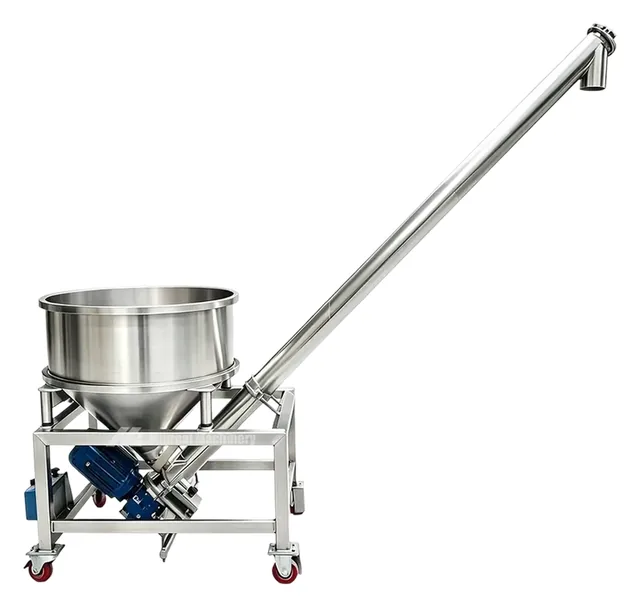
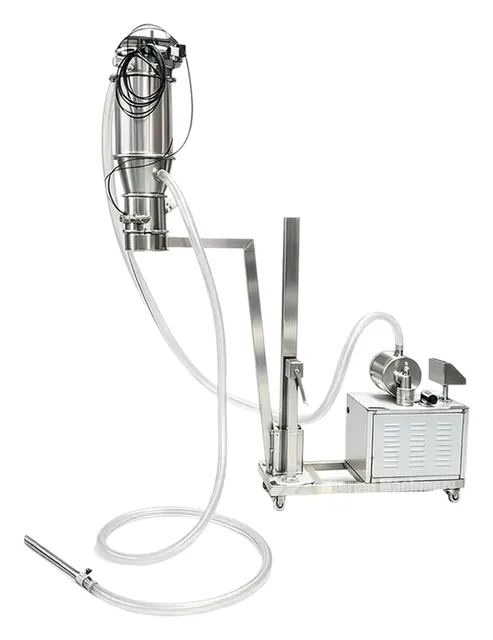
The same machines link with screw conveyors or vacuum loaders, and the conveyor page explains how to choose between them. The overall plan is covered by the integrated powder line page.
Sorting spices by how they grind
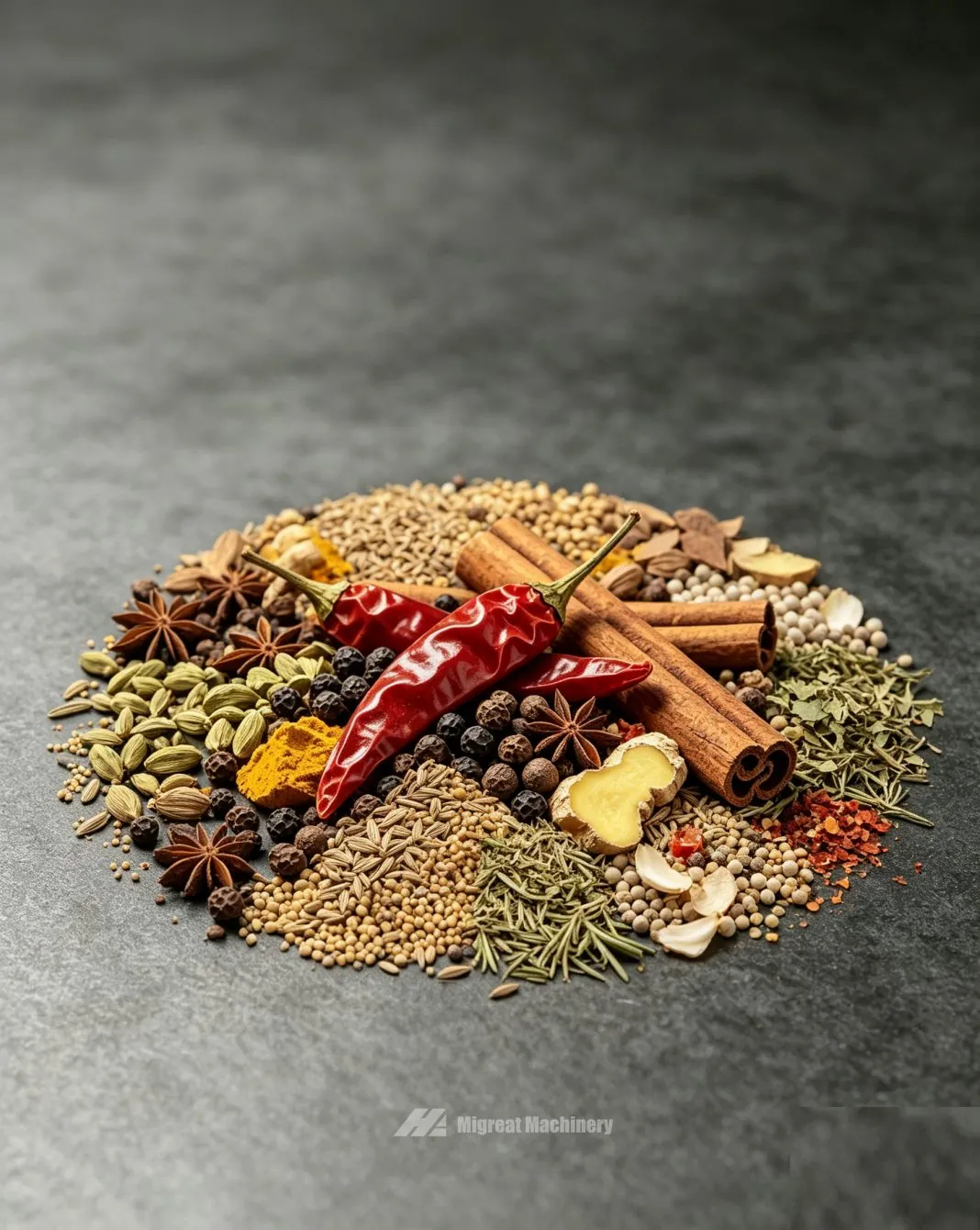
Spices do not all behave alike, and the machine should follow the group. The table sorts the common ones by what they do in a mill, with the first candidate for the main grind.
The WF page lists star anise, cinnamon, pepper, curry, ginger, tea, salt, sugar and monosodium glutamate among its materials. The MMJ page lists cumin, caraway seed, pepper, cardamom, chili, turmeric and dried apple. The WFJ page lists turmeric, pepper, ginger, salt, sugar, moringa leaf, roots, stems and leaves. Reading the three lists together gives a practical map.
Coarse crushing, the stage that protects the rest
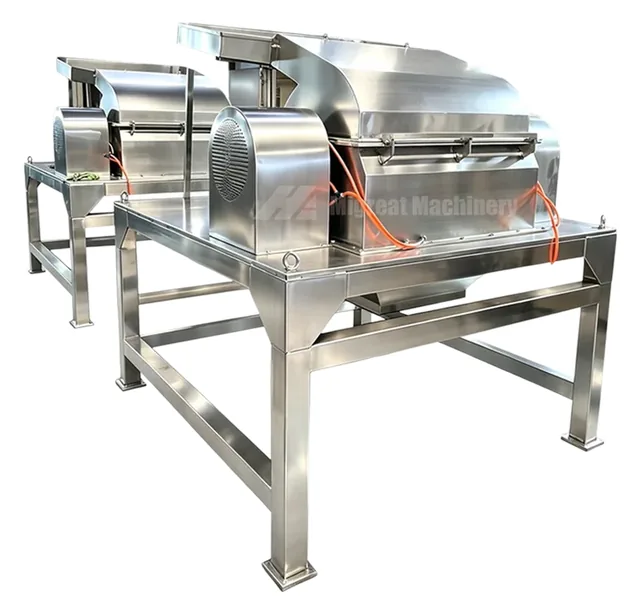
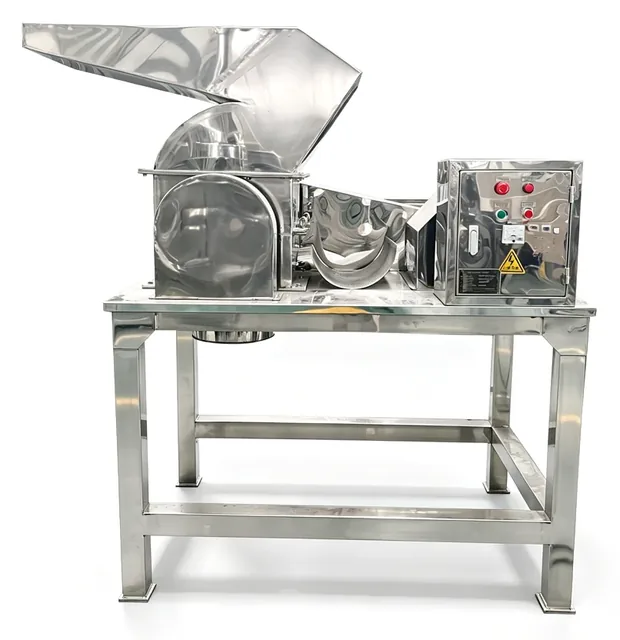
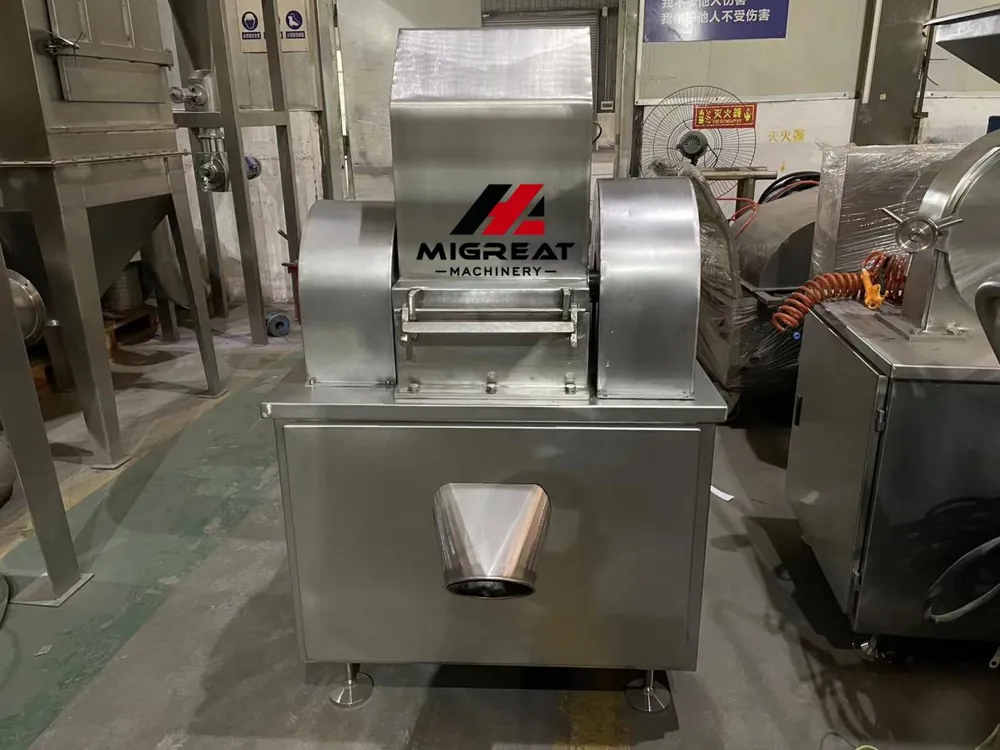
Feeding whole spice into a fine mill wastes power and makes the output uneven, because the fine mill has to do work that a cheaper machine does well. The PSJ coarse crusher breaks large pieces into particles of 0.5 to 20 mm, using a rotary knife and a fixed knife that work by impact and shear. Screens of 2, 3, 6 or 10 mm set the size, and the page says it is not limited by the viscosity, hardness, softness or fiber of the material.
The range runs from the PSJ-80 at 10 to 80 kg/h to the PSJ-1000 at 300 to 800 kg/h, with a feed size limit of 50 mm on the smallest and 150 mm on the larger models. The PSJ coarse crusher page lists all five. For roots, bark and dry herbs the crusher is not optional, and it also helps for pods, where it opens the pod and spreads the load on the main mill.
The main grind, hammer mill or universal grinder
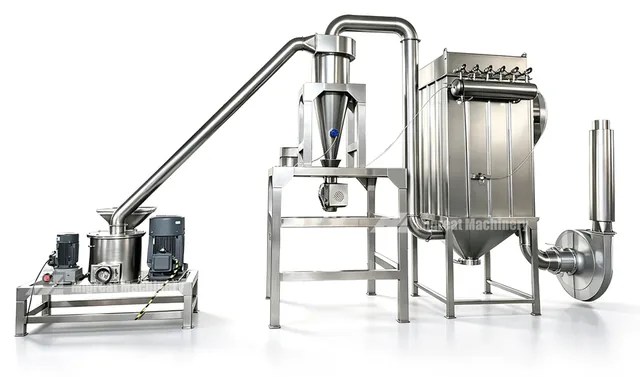
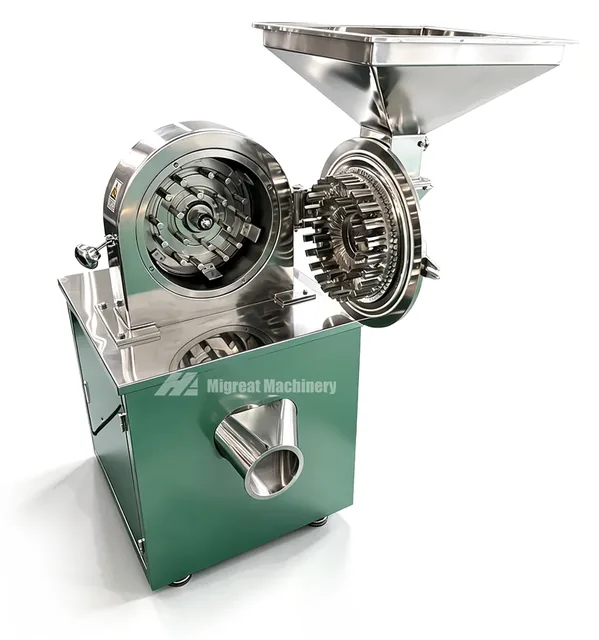
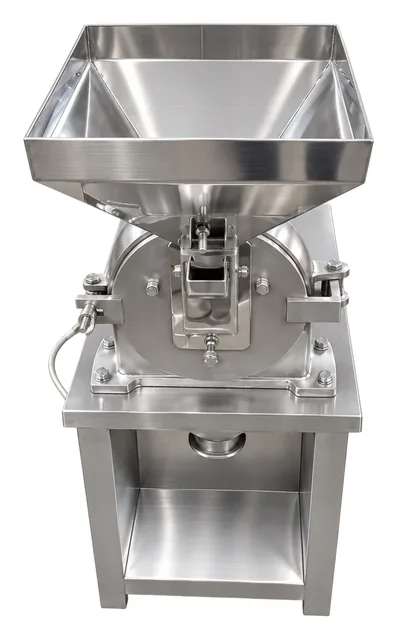
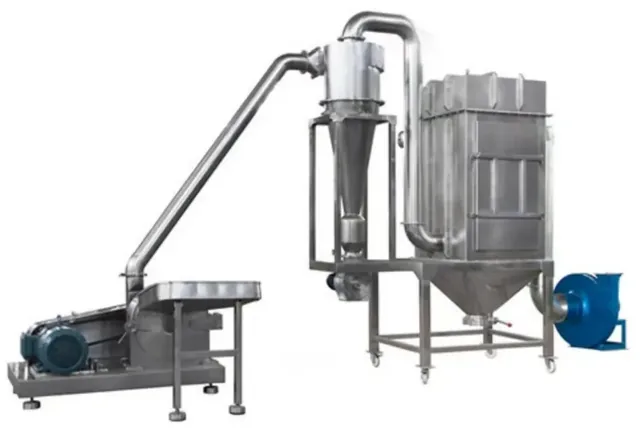
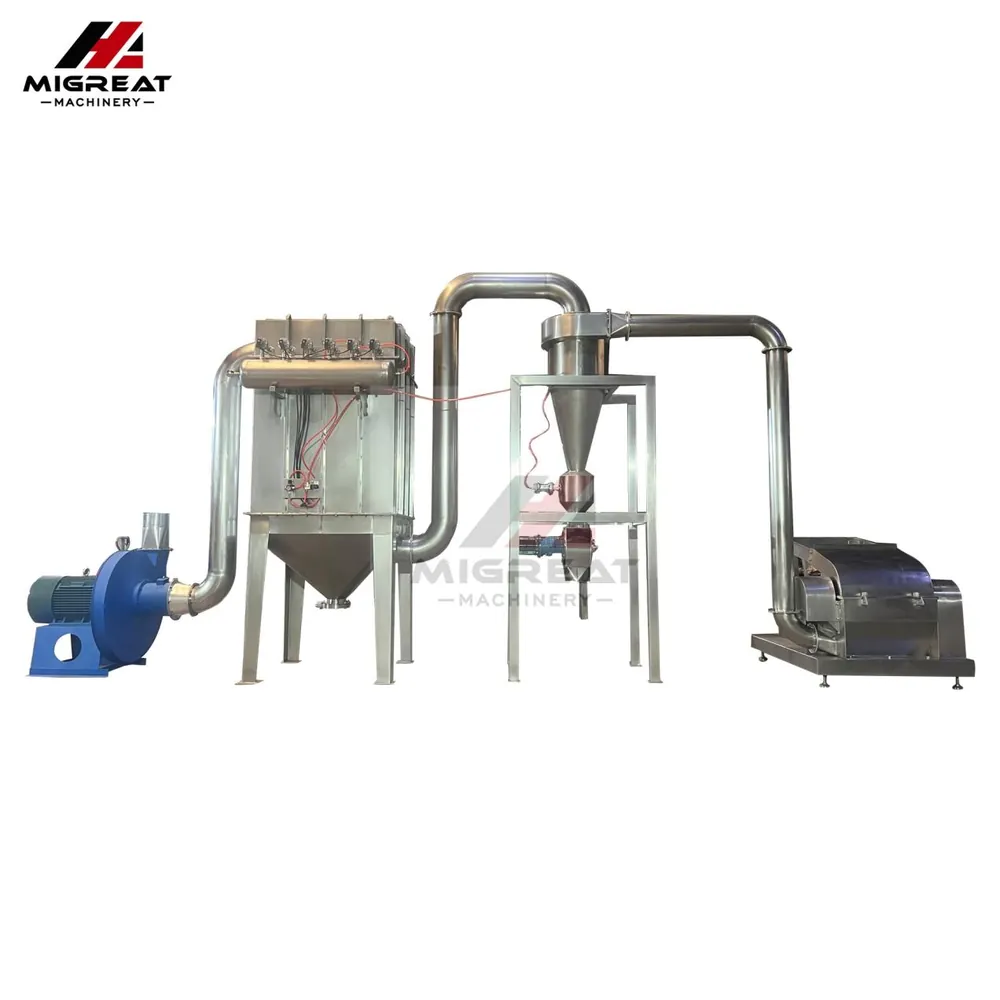
A good spice powder production line makes most of its powder on a screened mill, and the fineness follows the screen. The GFS lists screens of 10, 20, 40, 60, 80 and 100 mesh at 10 to 1,000 kg/h. The MMJ system covers 20 to 100 mesh at 50 to 500 kg/h and is made for spices with 10 to 20 percent oil and for fibrous material. The WF universal grinder reaches 20 to 120 mesh at 50 to 600 kg/h, takes little floor space, and has no dust collector unless one is added. The hammer mill working principle page explains the mechanism.
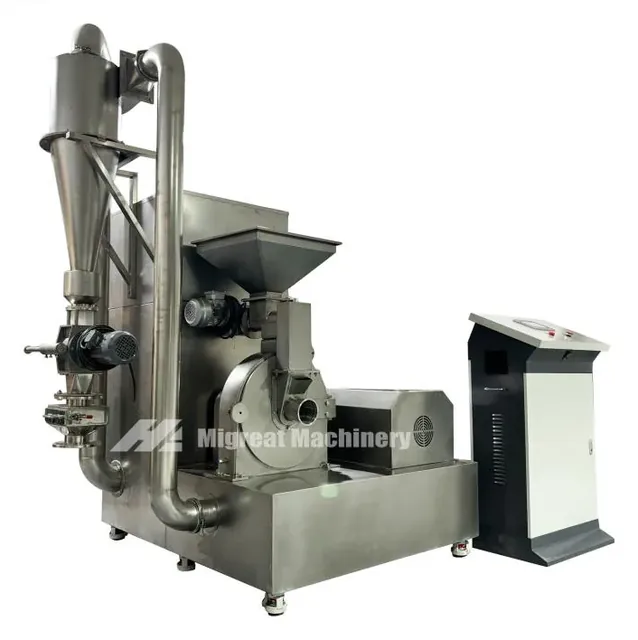
Dust control is part of the choice. The GFS has a version with a pulse collector and cyclone discharge, the MMJ is fully enclosed with a dust collector, and the WMF and MXG universal grinders use suction and pulse collection and discharge at room temperature. Choose the mill with its dust system, not alone, because a mill without one needs a separate collector in a spice plant.
Fine grinding, when 100 mesh is not enough
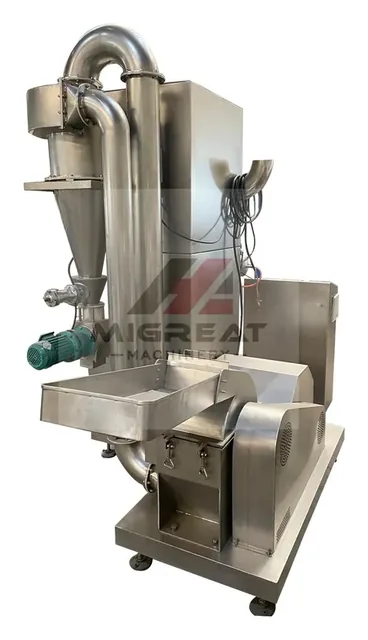
Some spice products need to be finer than a screen can deliver. Instant seasoning bases, cosmetic powders, herbal extracts and some high value spices are made at 200 mesh or finer. For those the WFJ air classifier mill reaches 80 to 800 mesh with no screen, and the page names turmeric, pepper, ginger, salt, sugar, moringa leaf, roots, stems and leaves as materials. The air classifier mill working principle page explains how the wheel sets the size.
The cost is capacity and power. The WFJ rates 10 to 800 kg/h and 14 to 124 kW, and the capacity at your mesh has to be confirmed. A plant that makes a coarse product and a fine product usually owns a hammer mill for the first and a classifier mill for the second, and shares the crusher, the sifter and the packer between them.
Sifting and grading the powder
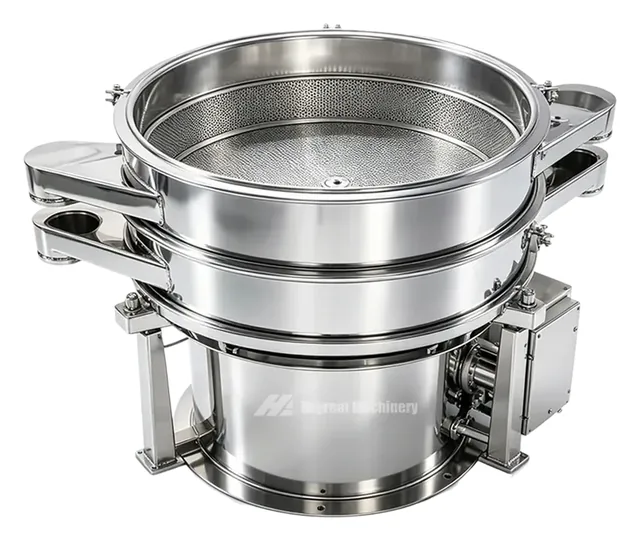
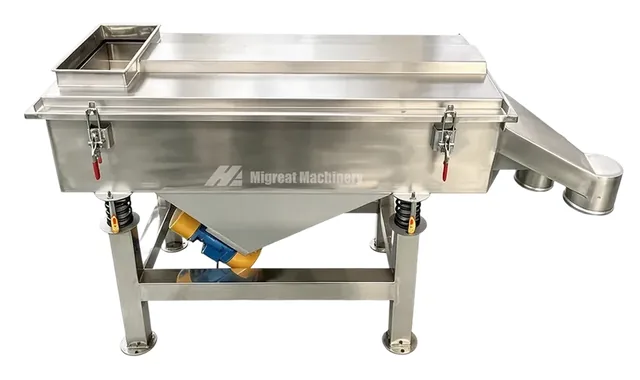
The sifter is the quality gate. It takes the mill output, passes the powder that meets the cut, and returns the oversize to the mill or the crusher. A ZS round sifter has a bouncing ball under the cloth that helps keep the mesh clear of oily spice, and a ZQ linear sieve handles higher throughput and coarser grades. The vibrating sieve page explains how to choose one.
Multi-deck sifters give several grades in one pass, which is useful for a plant that sells a coarse and a fine grade of the same spice. The oversize loop is worth planning, because a mill run too coarse sends a large share back, and the loop between mill and sifter can overload.
Blending single spices into a product
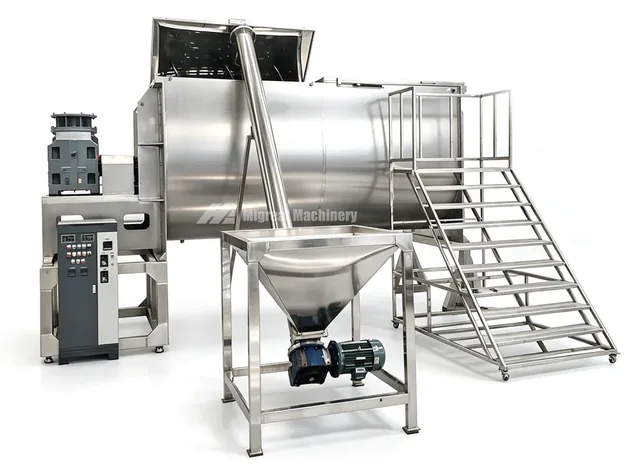
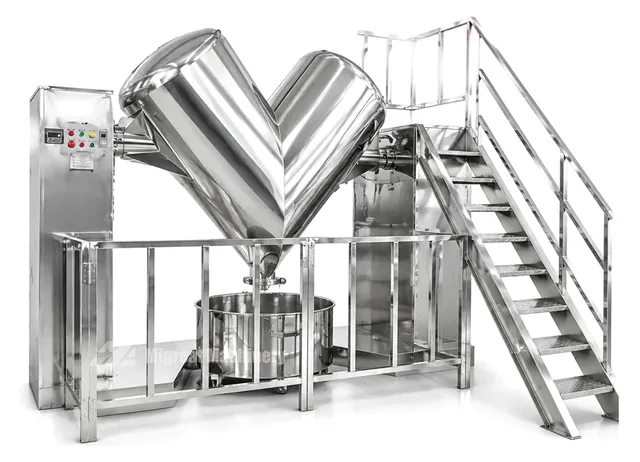
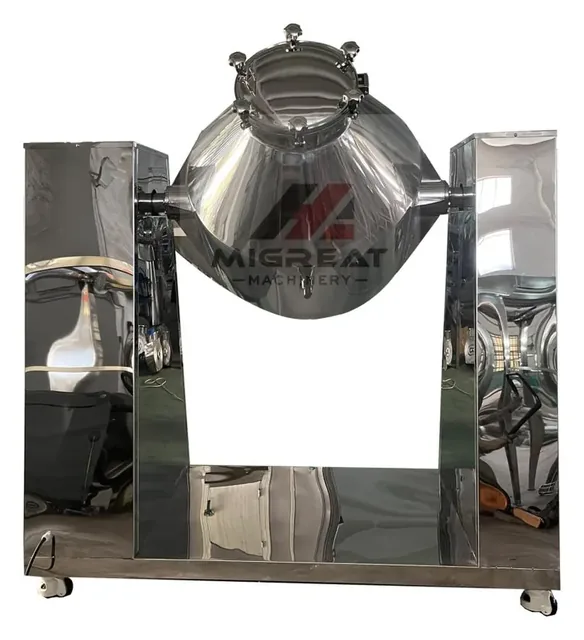
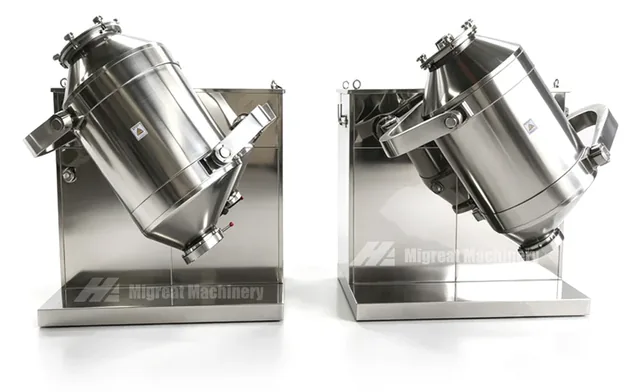
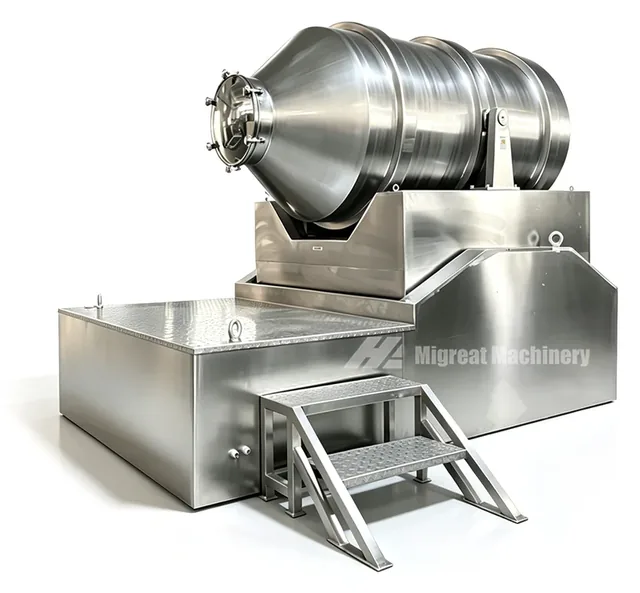
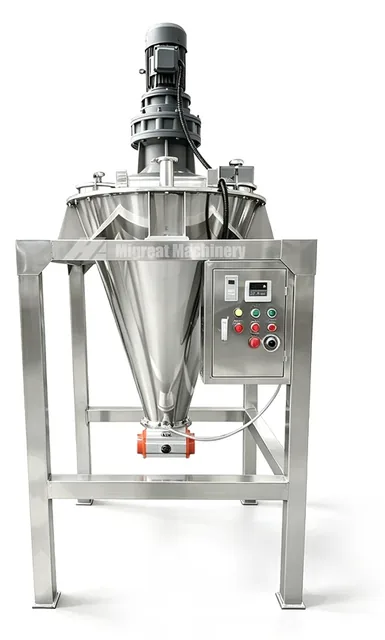
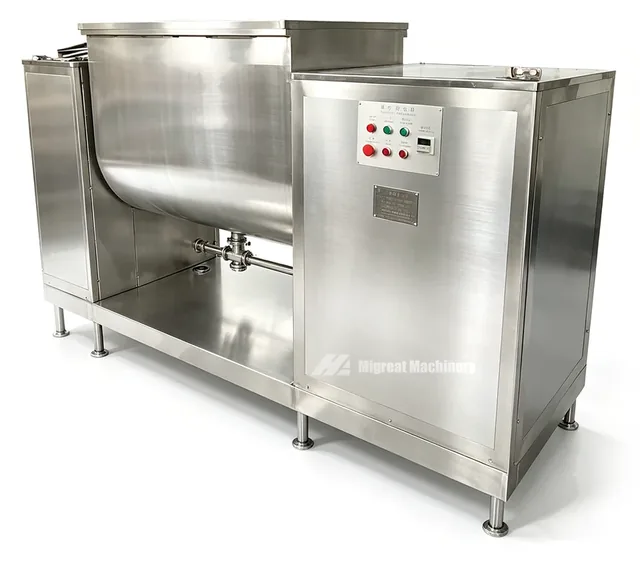
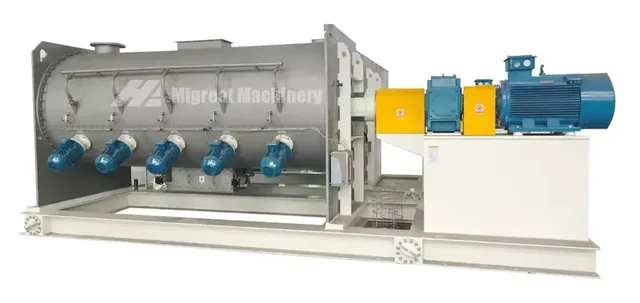
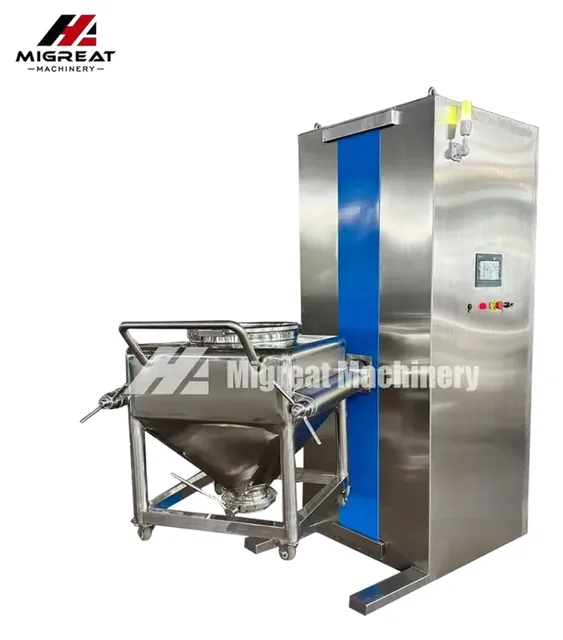
Many spice products are blends. A curry powder or a seasoning mixes several spices, salt and sometimes a carrier, and the blend has to be even. A ribbon blender suits large batches, a V blender suits a smaller batch with a small additive, and a 3D mixer suits powders of different density. The V blender vs ribbon blender page compares them.
Blend after the grind, not before, unless the spices grind alike. Grinding a blend of hard and soft spices together gives uneven fineness, since the soft one is over ground while the hard one is under ground. Grind each spice on its own settings, then blend the powders, and sample the batch after packing to check the result.
Packing the powder
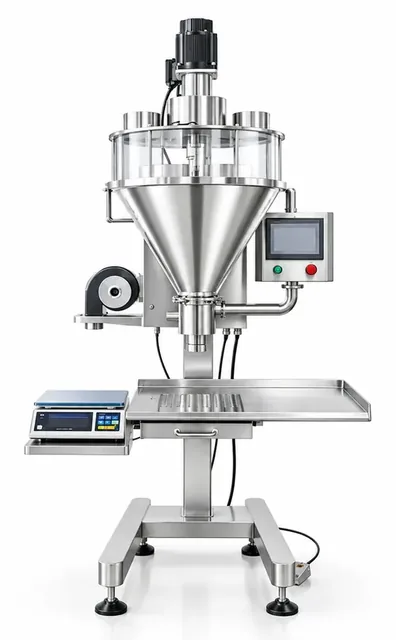
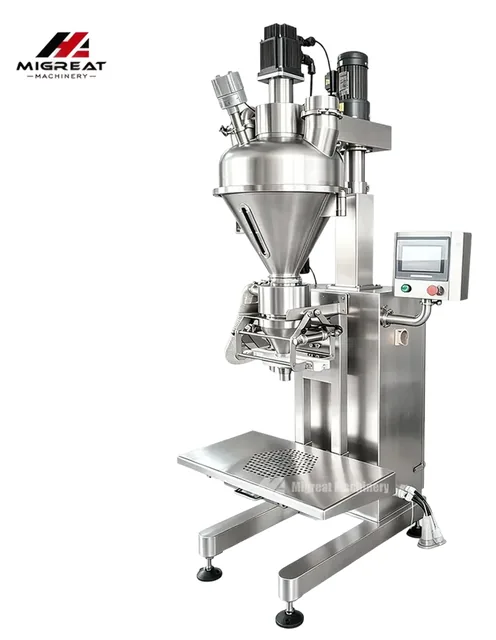
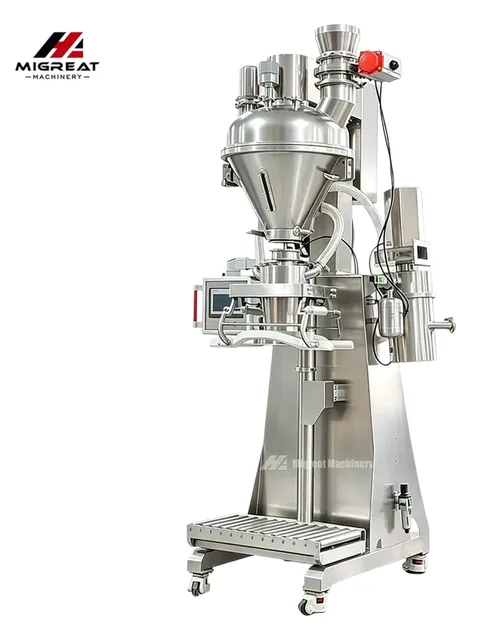
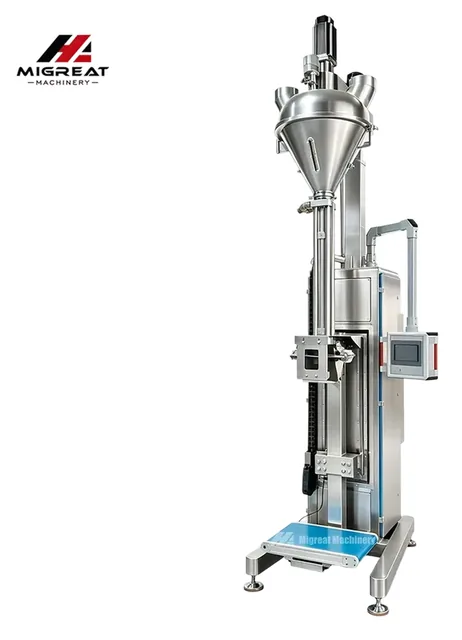
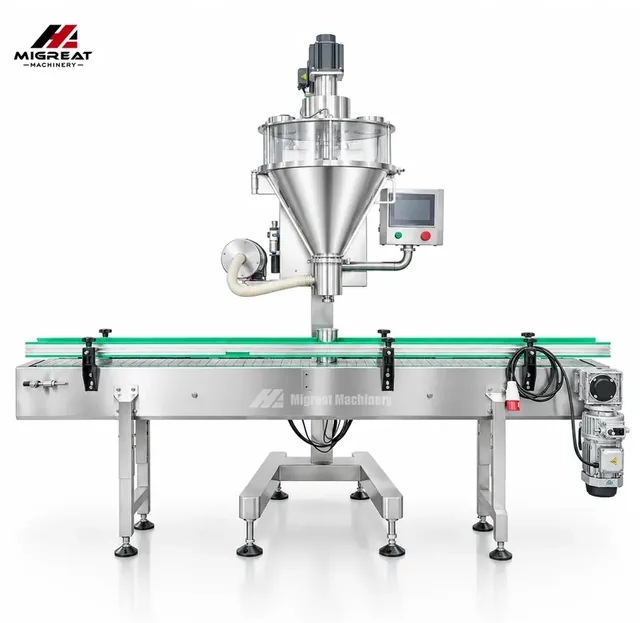
The MJ series auger fillers fill powder and granules into bags, bottles or containers. The MJ-1B3 is a semi-automatic filler for bags of 0.1 to 5 kg at 6 to 15 bags per minute with a 50 L hopper. The MJ-2B is the automatic one in the range, for bottles with target weights from 50 g to 5 kg. Spice powder is light and dusty, so the filler needs dust collection and an agitator that keeps the auger fed.
Packing is the stage where moisture and aroma are most exposed. Let the powder cool on the sifter, pack in a dry room, and use a pack that keeps out air and light. The low temperature grinding page explains why the temperature at the discharge matters.
Planning a spice processing plant around the line
A spice processing plant is more than the machines. It needs a raw store, a cleaning area, the line itself, a finished goods store and a place for dust, waste and washing. The line sets the floor area, and the floor plan sets the flow, so that raw spice moves one way and packed product moves out the other, with no crossing between them. Draw the flow before you order, and check the room height, the doors and the floor load against the machine tables.
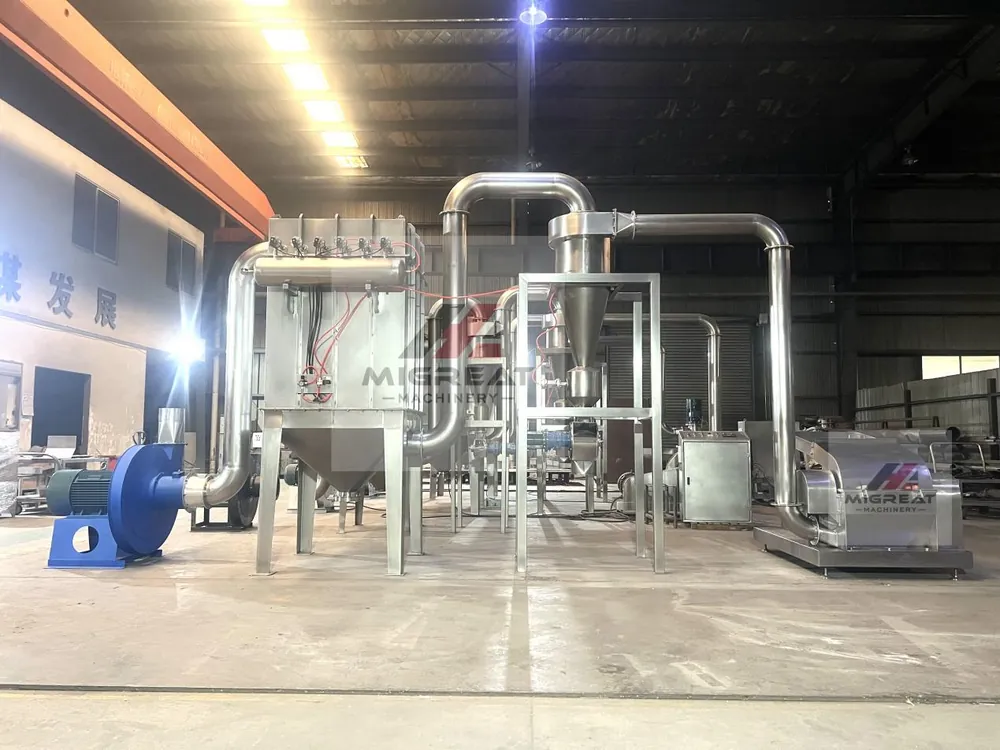
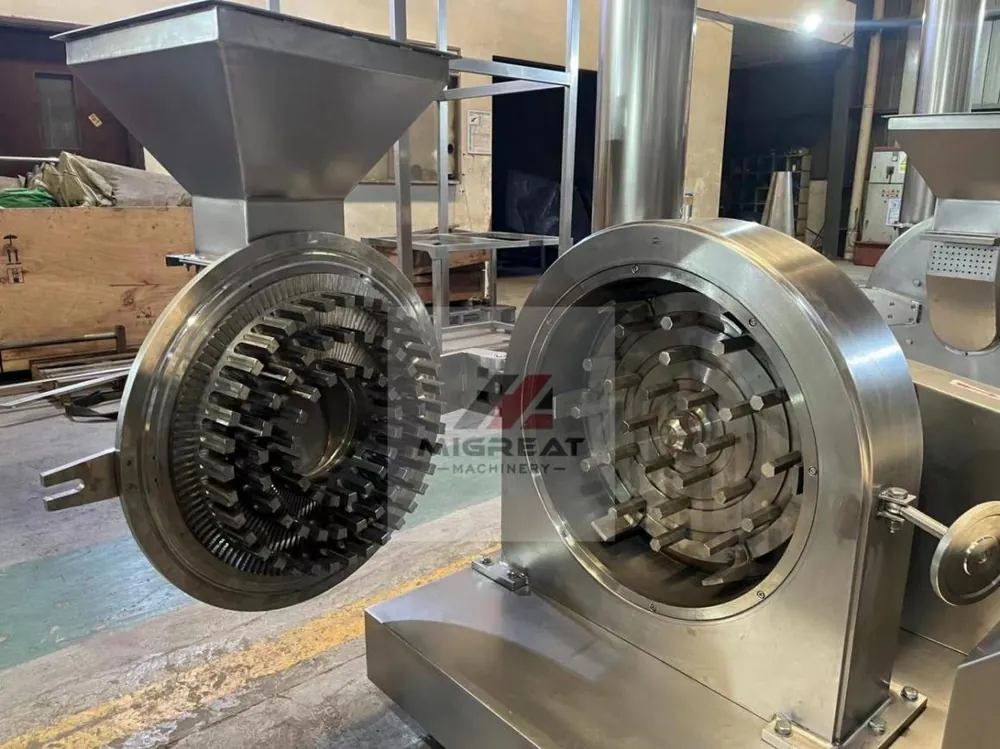
Utilities come next. The mills need electric power, from 4 kW on the smallest WF to 124 kW on the largest WFJ. The dryer needs steam, electricity or gas. The packers need compressed air in some cases, and the vacuum loaders need a pump. Add water for washdown and drainage that can take it, and ventilation that keeps the dust out of the packing room. A plant that skips this planning pays for it in the first month.
The spice grinding process in short
The spice grinding process has a simple logic. Make the pieces small enough for the next machine, grind them to the target size, remove what is too coarse, and pack the rest before it loses aroma. Each step protects the one that follows. The coarse crusher protects the mill from oversize feed, the mill protects the sifter from overload, and the sifter protects the bag from coarse pieces.
The same logic works as a diagnostic. If the powder is uneven, look at the stage before the one that shows the problem. A coarse product from the sifter may come from a worn screen on the mill, a mill fed too fast, or a crusher that lets oversize through. Walking back along the line is faster than guessing at the machine that complains.
How to start a spice factory, the first decisions
People who ask how to start a spice factory usually want a list of machines, and the list is the second step. The first step is to decide the product, the market and the volume. Which spices, in which grades, in what pack size, for which customers, and at what output per hour. Those answers fix the line, and without them any machine list is a guess.
The second step is a pilot. Buy or borrow a small line, run your own spices and measure the output, the powder temperature and the quality. Then scale up with the data. Many plants start with a line of 50 to 150 kg/h and add stages as the volume grows, which is possible if the layout leaves room and if the machines chosen can be extended. The third step is the approvals, the food safety registration and the buyers' audits, which depend on the country and the customer and take longer than the machines do.
Choosing a spice processing machine by scale
The right spice processing machine changes with the scale. A small plant at 50 to 150 kg/h can run a WF universal grinder with a coarse crusher and a small sifter, and pack by a semi-automatic filler. A medium plant at 150 to 300 kg/h moves to a hammer mill system with a dust collector, a ZS sifter and several fillers. A large plant at 300 to 500 kg/h adds the fine mill, a second sifter and an automatic packing line.
The step up in a spice powder production line is not only capacity. It is also control, since a larger plant needs a controller that runs the stages in order, with interlocks that stop the line when a stage stops. The WLDH and other pages mention controller boxes. Ask for the same on the whole line, and for a layout drawing with the machine positions, the heights and the connections.
Three example lines
The table gives three lines built from the model tables. The capacities are the rated ranges, not guarantees, and each line needs a trial on your own spice to confirm the output at your mesh.
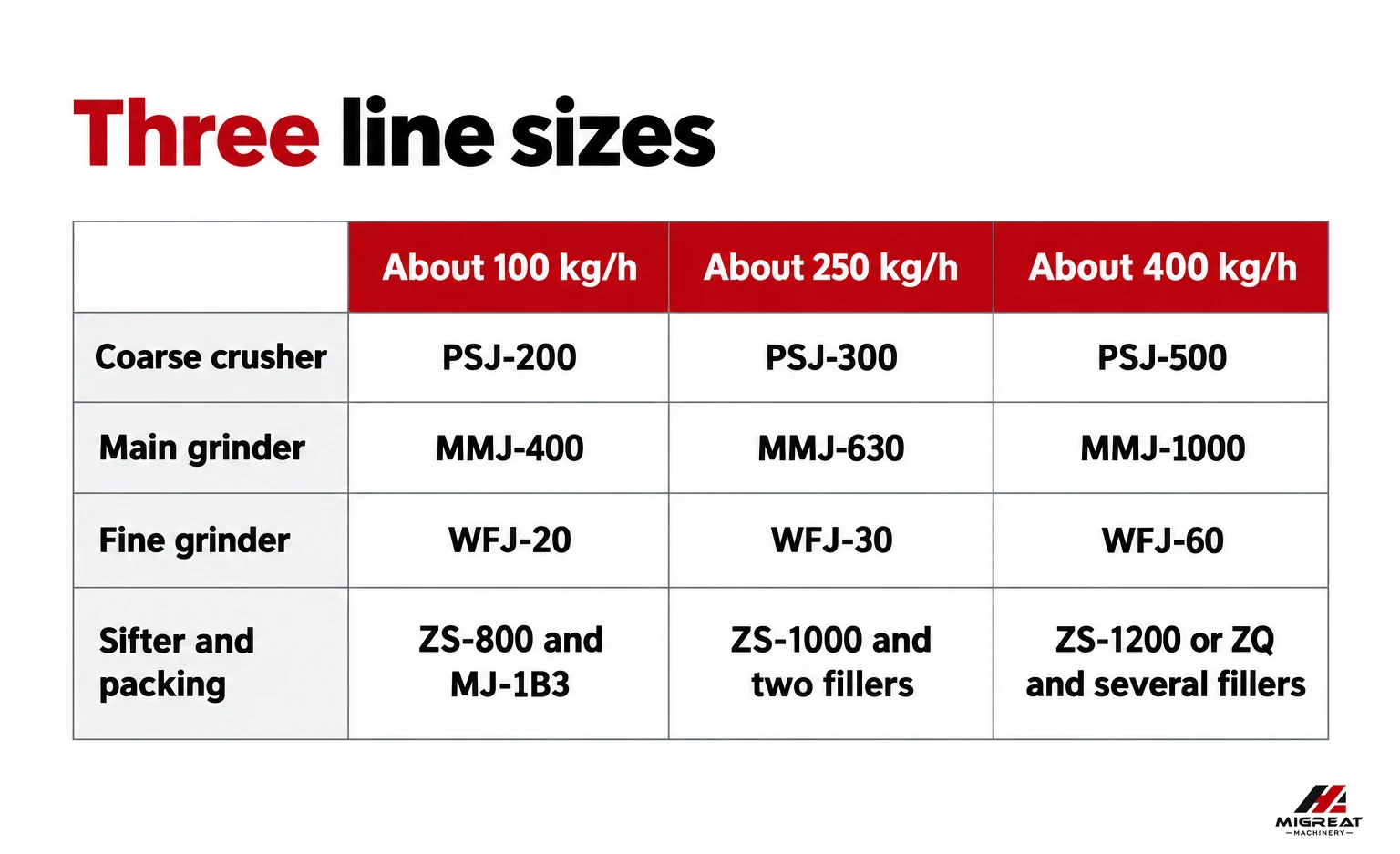
A spice grinding line is only as fast as its slowest stage. The line rate is set by the slowest stage, which is usually the fine grinder or the packer. Size the line so that the stages are within the middle of their ranges at the target output, and do not take the top of every range, because the sum of the tops is not a rate you can run.
One line for many spices
Many plants grind several spices on one line. That raises two issues, which are changeover time and cross contamination. Every spice leaves residue in the mill, the cyclone, the sifter and the filler, and a strong flavor can taint the next product. A line for many spices needs a cleaning routine, and smooth, easy to clean stainless steel machines. The PSJ page notes a simple structure and easy cleaning, and the V blender page notes no dead angle.
Allergen control is the harder side. If a product must be free of a given allergen, the line has to be cleaned and verified between runs, or a separate line has to be used. Ask each supplier how long a changeover takes, what has to be dismantled and how it is cleaned, and plan the production schedule to run mild spices before strong ones.
Quality checks along the spice powder production line
Four checks keep the line honest. The moisture of the raw spice before grinding, the powder temperature at the mill discharge, the sieve result of each batch, and the weight of the filled bags. Add a magnet or metal detector ahead of packing, since stones and metal pieces enter with the raw spice, and the WF page offers a magnetic device at the discharge.
Keep records. A log of the batch, the screen fitted, the temperature and the sieve result lets you trace a complaint back to a stage. It also shows drift, such as a slow rise in the oversize share that tells you a screen or a blade needs changing.
Mistakes buyers make
- Buying the main grinder first and finding the rest of the line does not fit it.
- Skipping the coarse crusher for roots, bark and herbs.
- Taking the top of every capacity range and expecting the line to run there.
- Ignoring dust, heat and cleaning until the first month of production.
- Blending before grinding, with spices of very different hardness.
What to ask in the quotation
- The spices, their moisture and oil content, and the target mesh with the share passing.
- The capacity of each stage at your mesh, and the line rate that follows.
- The dust control, the cooling and the metal catch.
- The cleaning routine and the changeover time between spices.
- A trial grind on your own spice, with the sieve result and the powder temperature.
Spice lines at work
The videos show a spice grinding production line, a spice mill on coriander and pepper, a ginger and turmeric mill and a coarse crusher on dry flowers.


Plan the line from the bag backward, size each stage in the middle of its range, and trial each spice before you commit.
Send the spices, the target mesh and the capacity per hour through the contact page, and an engineer can lay out the line. The MMJ hammer mill and ZS vibrating sifter pages list the models, and the grinding machines page shows the full range.
Spice line FAQ
QWhat machines are needed for spice manufacturing?
A line needs a coarse crusher, a main grinder, a sifter and a packer, with a dryer in front for damp raw spice and a mixer for blends. Washing, destemming and sterilizing come first and are not in our range. A fine grinder is added for powder above about 120 mesh.
QWhat are the stages of a spice powder production line?
Cleaning, drying, coarse crushing, main grinding, optional fine grinding, sifting, blending and packing. The coarse stage reduces whole spice to 0.5 to 20 mm, the main grind makes powder at about 5 to 120 mesh, and the sifter grades it and returns oversize.
QWhich grinder is best for spices?
It depends on the spice. A hammer mill covers most dry spices at 20 to 100 mesh. The MMJ is made for spices with 10 to 20 percent oil and for fibrous material. The WFJ air classifier mill is for fine powder up to 800 mesh and for material that blinds a screen.
QDo I need a coarse crusher for spice powder?
For roots, bark, dry herbs and large pods, yes. The PSJ crusher breaks whole pieces to 0.5 to 20 mm so the main mill works on uniform feed. Feeding whole spice into a fine mill wastes power and gives uneven powder.
QHow do I choose the capacity of a spice line?
Start from the bag and work backward. Set the output per hour, check each stage covers it in the middle of its range, and let the slowest stage, usually the fine grinder or the packer, set the line rate. Confirm the output of each machine at your mesh in a trial.
QCan one line grind several spices?
Yes, with a cleaning routine. Each spice leaves residue in the mill, cyclone, sifter and filler, and a strong flavor can taint the next product. Run mild spices before strong ones, plan the changeover time, and verify cleaning where allergens matter.
QHow do I keep spice powder fresh after grinding?
Keep the grind cool, pack soon after the powder cools, use bags or containers that keep out air and light, and store cool and dry. Ground spice loses aroma faster than whole spice, and a warm powder can sweat inside a sealed bag.