 +86 139 1520 0887
 info@migreatmachinery.com
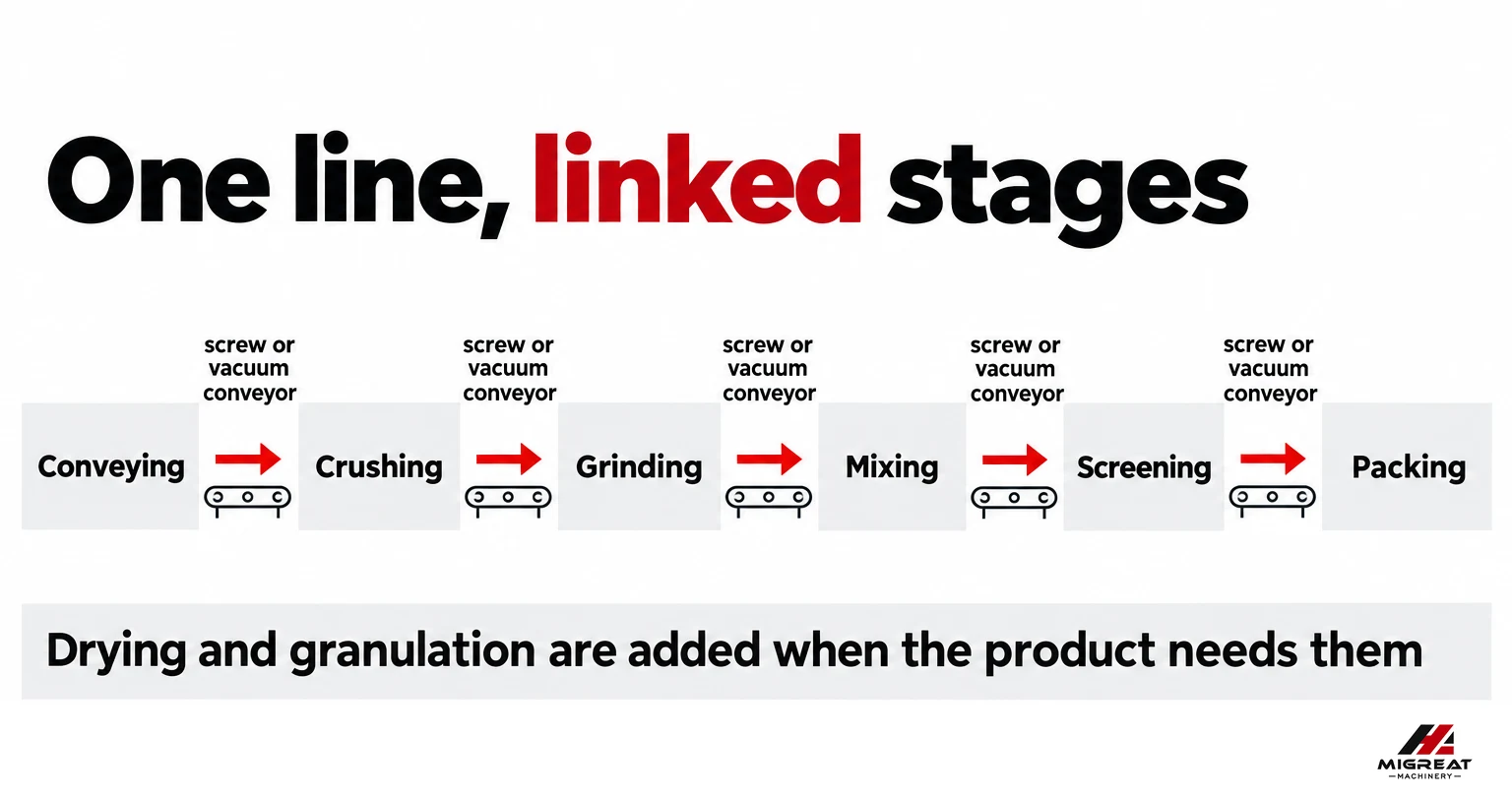
A powder processing line links the machines that feed, crush, grind, mix, dry, granulate, sieve and pack, so that material moves from stage to stage through conveyors and not by hand. The efficiency does not come from the machines alone. It comes from planning the stages together, putting the right machine at each step and joining them so that the line runs as one process.
Plan from the product backward. Set the output per hour and the form of the product, choose the stages it needs, size each machine in the middle of its range, and join them with conveyors, buffers and controls. Migreat builds the machines for every stage, from the PSJ crusher and the WFJ mill to the ZKS vacuum loader and the MJ filler.
- Stages run from conveying through crushing, grinding, mixing and sieving to packing
- Conveyors and buffer hoppers replace manual transfer and absorb differences in rate
- The slowest stage sets the line rate, so size every stage against the target
- Tell us the product, the output and the site, and the line is laid out around them
Buying machines one at a time produces a plant that works in pieces. The mill is fine, the mixer is fine, the packer is fine, and the line still runs at half the expected rate because the pieces were never planned together. A powder processing line is a system, and the system is what has to be designed.
This page explains how to plan an integrated powder processing line, from the stages and the flow to the rates, the conveyors, the controls and the cleaning. It works through a line balance example, lists the questions to answer before a quotation and shows how Migreat can supply the whole chain. It does not cover pneumatic dense phase systems or explosion protection design, which need specialist engineering for each material.
What an integrated powder processing line looks like
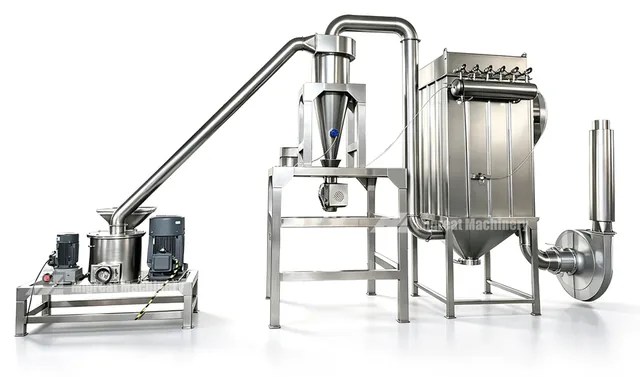
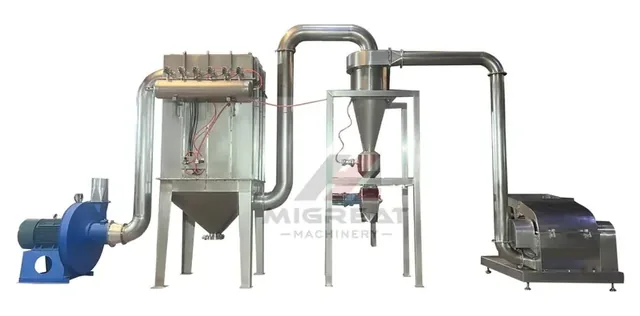
A powder processing system is a chain of stages, and each stage is chosen by what the product needs. A complete line usually has conveying, coarse crushing, fine grinding, mixing, sieving and packing. Drying and granulation are added when the product needs them. The spice line is the typical example. Raw spice goes to a coarse crusher, then by a screw conveyor to a grinder, through a sifter, and into a packer.
Stand-alone machines or an integrated production line
A stand-alone machine is cheaper to buy and easier to place, and it relies on people to carry the material between stages. An integrated line costs more at the start and removes the carrying. The trade is labor, dust, contamination and consistency. Every manual transfer is a chance for dust in the room, for a spill and for a mistake in the recipe.
The line pays for itself when the volume is steady, the product is repeated and the labor is costly. A plant that makes many products in small batches may be better served by stand-alone machines on trolleys and a good cleaning routine. Be honest about which you are. The hybrid is common, with a linked core and a few stand-alone machines at the edges.
Plan the material flow first
A line is drawn on paper before it is built. Draw the flow of the raw material from the store to the first machine, and the flow of the packed product from the packer to the store. Mark where each stream enters and leaves, where waste goes and where people walk. Raw and finished flows should not cross, and the layout should leave room to clean and to maintain each machine.
Gravity is the cheapest conveyor. A line that runs from a high floor to a low one lets material fall from one machine to the next, with fewer conveyors and less dust. It needs room height and a building that allows it. A single floor line needs conveyors and loaders at every joint, and it suits a plant in an existing hall. Choose by the building, not by habit.
Size every stage against one number
The line rate is the kilograms per hour of finished product that leaves the packer. Every stage must carry that rate, or more if material is returned. The slowest stage sets the line rate, and the usual culprits are the fine grinder and the packer. If one stage is oversized, you waste money, and if one is undersized, you waste all the others.
Use the middle of each machine's rated range, not the top. The model tables give ranges because capacity depends on the material and the setting, and a machine run at the top of its range has no margin for a harder spice or a finer cut. The particle size reduction page explains how stages share the work, and the mesh to micron chart helps set the target.
A worked line balance, a mixing and packing line
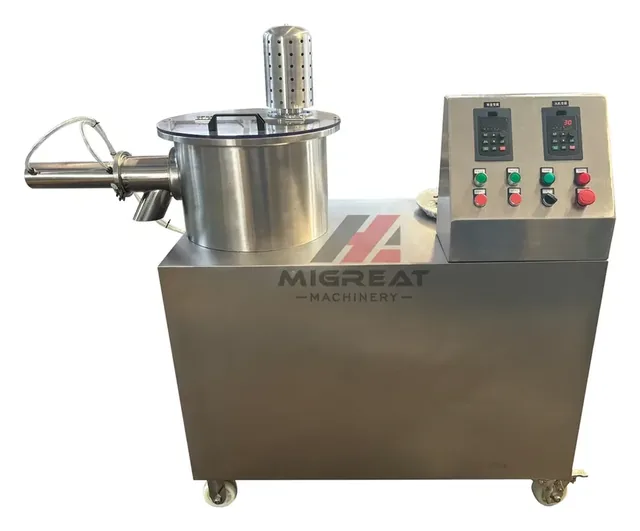
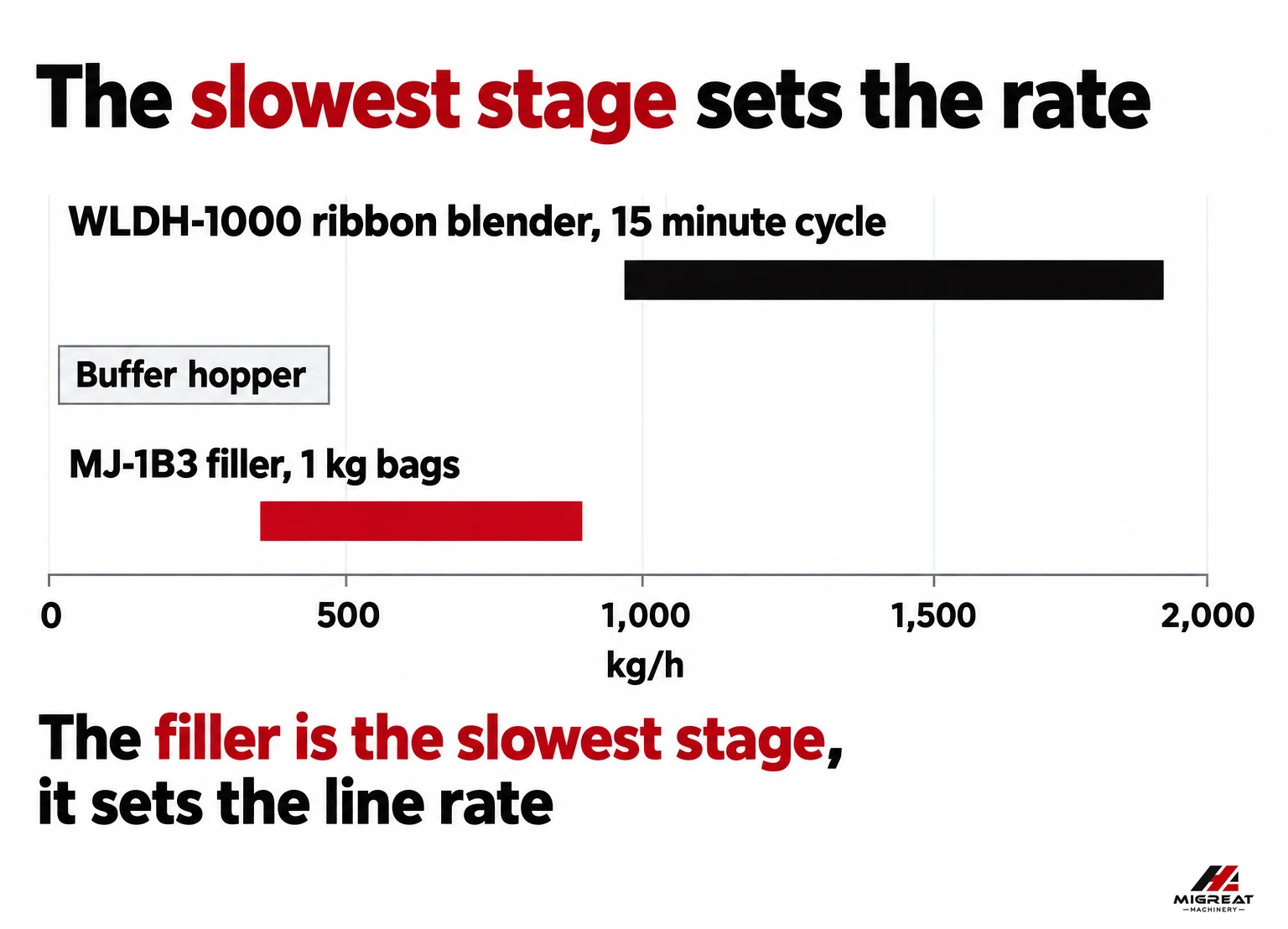
Take a plant that blends a seasoning and packs it in 1 kg bags. It uses a WLDH-1000 ribbon blender with a working volume of 400 to 800 L. At a bulk density of 0.6 kg per liter that is 240 to 480 kg per batch. If a batch takes 15 minutes including loading and discharge, the blender can deliver 960 to 1,920 kg an hour.
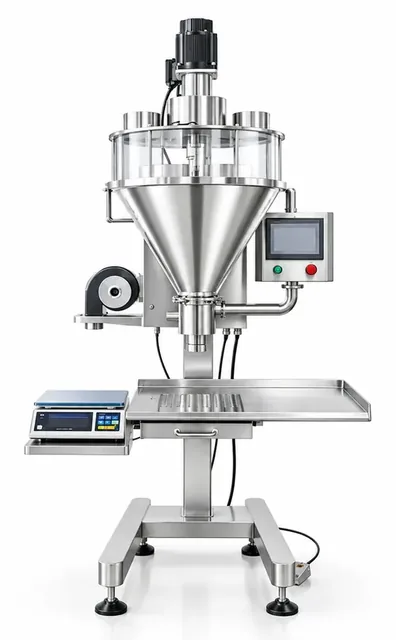
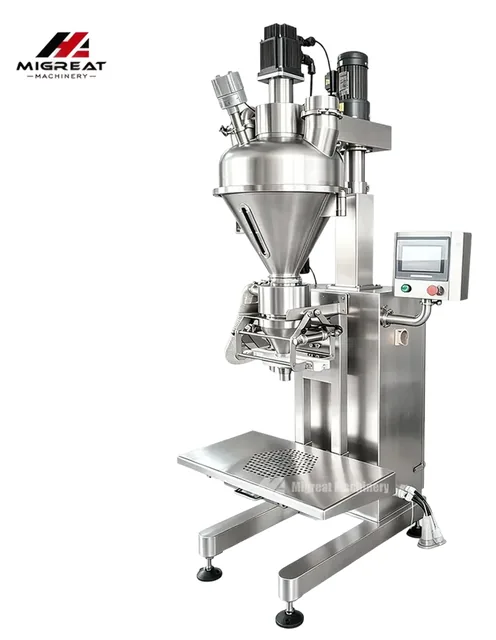
The packer is the MJ-1B3, a semi-automatic filler rated at 6 to 15 bags per minute of up to 5 kg. At 1 kg bags that is 6 to 15 kg per minute, or 360 to 900 kg an hour. The blender is faster than the packer at every point of both ranges, since the slowest blender rate of 960 kg an hour still beats the fastest packer rate of 900. The packer sets the line rate, and a buffer hopper is needed between them so that the blender can finish a batch and move on while the packer works through it.
Three fixes are possible. Add a second packer to double the packing rate, run the blender in fewer, larger batches and let it rest, or accept the packer rate and use a smaller blender. The right choice depends on cost and floor space. The point is that the numbers show the problem before the money is spent.
Buffers between batch and continuous stages
Batch machines and continuous machines do not run at the same rhythm. A blender releases a batch every quarter of an hour, a sifter and a packer run all the time. A buffer hopper between them takes the batch when it comes and feeds the next stage at a steady rate. The hopper should hold at least one batch, so that the blender is never waiting for the packer.
Buffers also protect the product. A hopper with a poor shape lets powder bridge, rat-hole or segregate, and a good one with the right slope, a vibrator or an agitator keeps it flowing. Ask for the hopper design as part of the line, and check how it is emptied for cleaning.
Joining the stages with conveyors
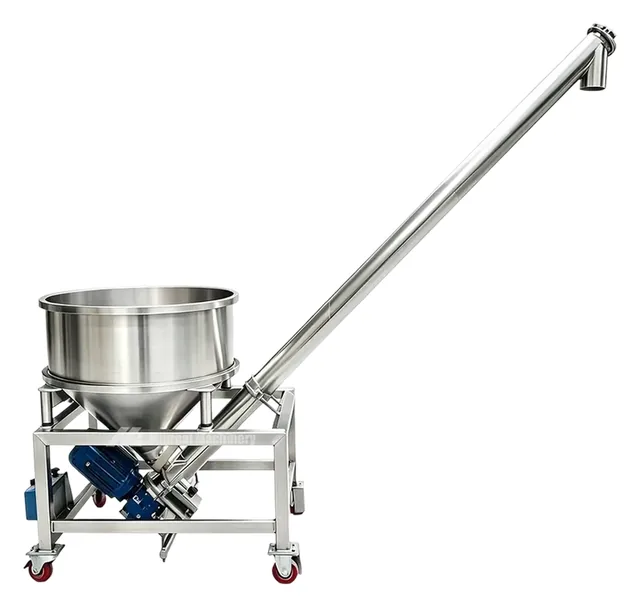
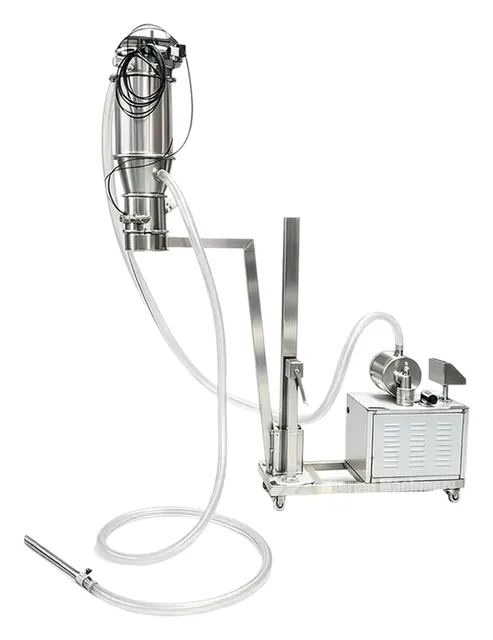
Conveyors are the joints of the line. A screw conveyor feeds a mixer or a grinder from a hopper at a fixed position, and the MJ-S moves 1 to 15 m3/h on an incline. A vacuum loader feeds a mixer or a packer through a closed pipe at 400 to 6,000 kg/h up to 20 m, and the ZKS has automatic level control. The choice follows dust, layout and cleaning, and the conveyor page compares the options.
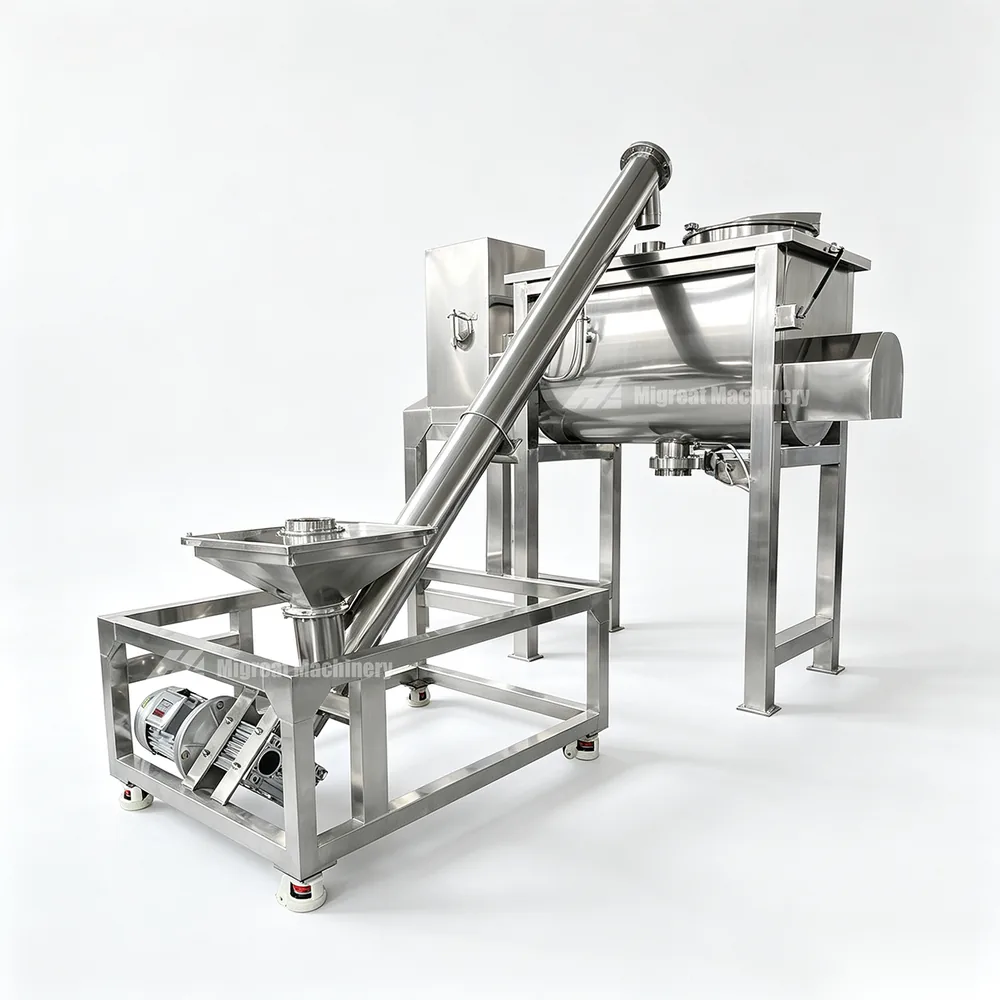
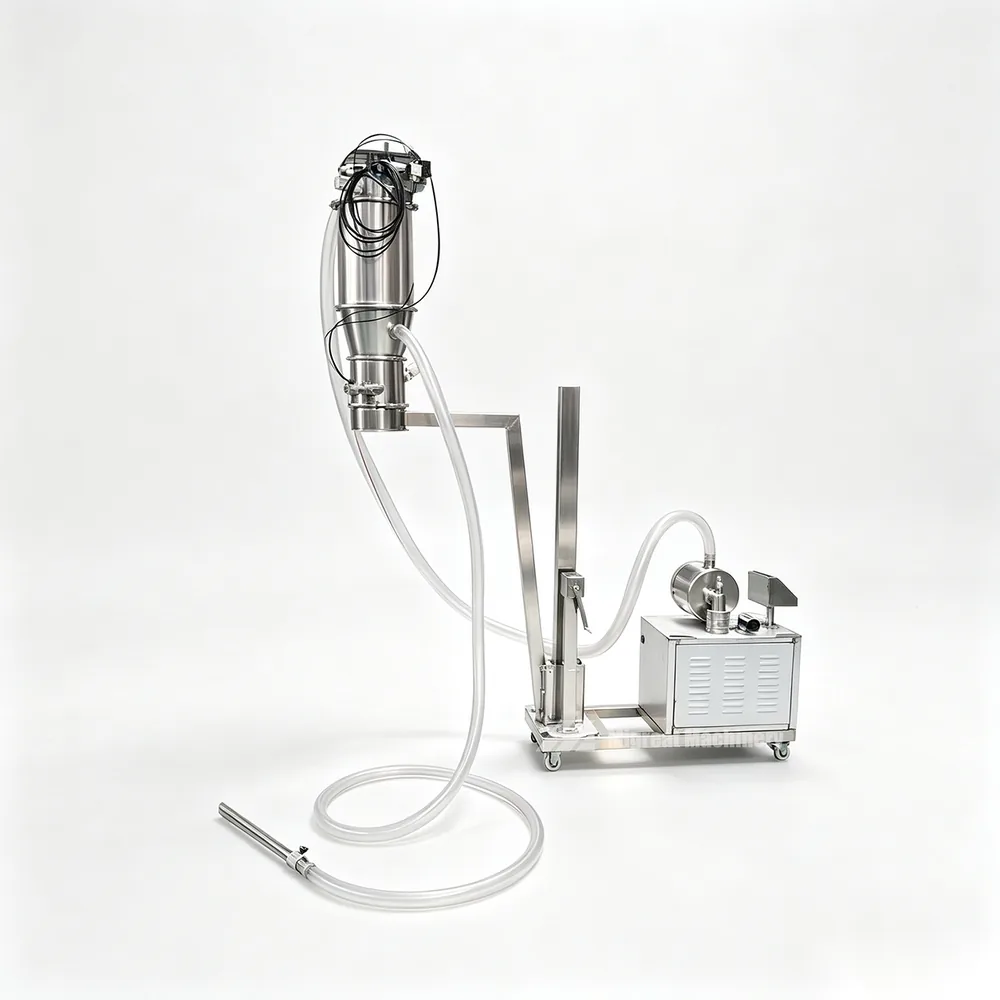
How material is passed from machine to machine matters for the product. Short, gentle transfers keep a blend from separating, and long drops and fast belts break fragile granules. Where you can, use a closed connection with a flexible sleeve between machines, so that the dust stays inside.
Controls and the level of automation
Automation comes in levels, and each level costs more. At the lowest level every machine has its own switch and a person decides when to start the next one. At the middle level each machine has a controller with a timer and interlocks, and the person only sets the recipe. At the highest level a central controller runs the whole line in sequence, records the batch and raises alarms.
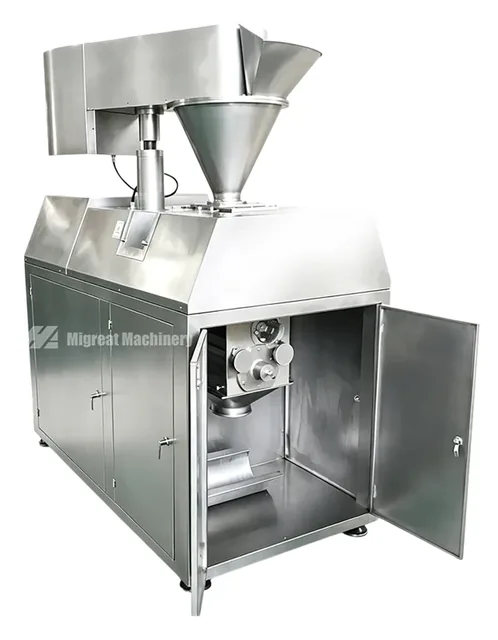
The Migreat machines already carry some of it. The ZKS runs suction, conveying and filter cleaning in one automatic cycle and stops feeding when the receiver is full. The MJ-1B3 filler has a PLC with a color touch screen and recipe storage. The GK roller granulator can take a PLC and touch screen, and the FL fluid bed granulator offers terminal control and data recording. Ask what each machine gives you and how they can be linked.
Dust, hygiene and safety on a line
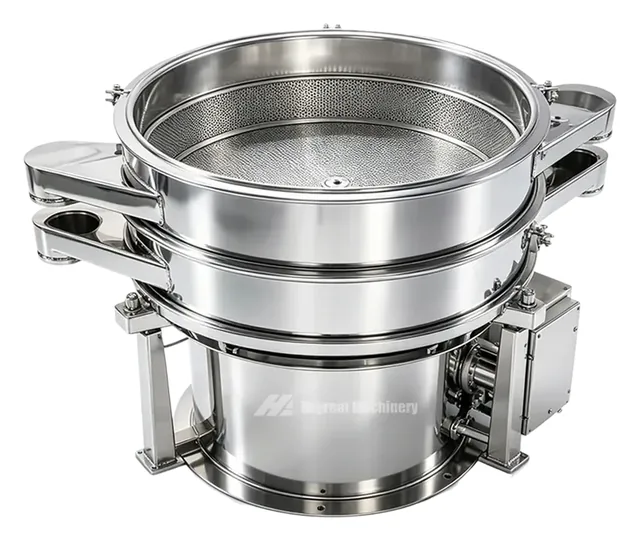
Dust is the line's chief nuisance. Every open transfer, every loading hopper and every sifter lid is a source. Closed conveyors, dust collectors on the mills and an enclosed sifter keep it inside the machines, and a general ventilation system handles the rest. The pages state dust collection on the MMJ, the WFJ, the WMF and the MXG, a pulse collector on several of them, and a sealed, fully closed body on the ZS.
Fine organic powder in the air can ignite under the right conditions, so a line for such powder needs a dust hazard review, the right electrical equipment and venting. This is a specialist subject, and the supplier and a safety engineer should be involved from the layout stage. Hygiene is the other side, and smooth stainless steel, no dead angles and easy cleaning are the points to ask about for food and pharmaceutical lines.
Cleaning and changeovers on a line
A line is cleaned stage by stage, and the changeover time is the time to clean the slowest stage. Ask how each machine is cleaned, how long it takes, what has to be dismantled and whether the contact surfaces can be washed in place. Where products change often, choose machines that are simple to clean, and where allergens matter, plan a verified cleaning step.
The cleaning plan also shapes the layout. Drains, wash points and drying space are part of it, and so is access around each machine. A line that is hard to clean gets cleaned badly, and the product pays for it.
Building the line in phases
A powder processing line does not have to be bought in one go. Many plants build it in phases, starting with the stages that cost them most labor or give them most quality, and adding the rest as volume grows. The condition is that the layout is drawn for the full line from the start, with room left for the stages that come later and with connections that fit them.
A common order is the grinder and the sifter first, then the packer, then the conveyors that join them, and the mixer and granulator last. Each phase should work on its own, so that the plant can produce while the next phase is built. Ask the supplier to show the phases on one drawing, with the cost of each, and to confirm that the early machines will match the later ones.
Commissioning, training and handover
A line is not finished when the last machine is bolted down. It is finished when it runs at the target rate on your material with your people. Commissioning means running each machine alone, then the stages together, then the whole line, and fixing what the runs show. Training means that the operators know how to start, stop, clean and adjust each machine, and what the alarms mean.
Write down the scope before the order. Who installs the machines, who connects the power, air and water, how many days of help are included, and what the acceptance test is. An acceptance test with a rate, a quality figure and a duration, agreed in advance, ends arguments later. Keep the drawings, the manuals and the spare parts list in one folder at handover.
A worked layout, a small line for one product
Take a plant that makes a dry seasoning at 150 kg/h and has a hall 12 meters long and 6 meters wide. The line has a coarse crusher, a hammer mill, a sifter, a ribbon blender and a filler, and the hall allows one row of machines along the long wall.
Raw material is loaded by hand into the crusher hopper at the left end. A screw conveyor lifts it to the mill, a second one to the sifter, and the sifted powder falls into the blender through a short chute. A vacuum loader takes the blended powder to the filler hopper, and the filler sits at the right end next to the store. The row is about 11 meters long, which fits, and the flow runs one way along the wall with the finished goods at the exit.
The check is the line rate. The mill is the slowest at about 150 kg/h, the sifter and the blender have margin, and the filler at 6 to 15 bags of 1 kg per minute is faster than the mill. The plant can run at 150 kg/h, and the buffer is the blender, which holds the powder while the filler works through it. The drawing shows the heights, the connections and the room for cleaning behind each machine.
What to plan first
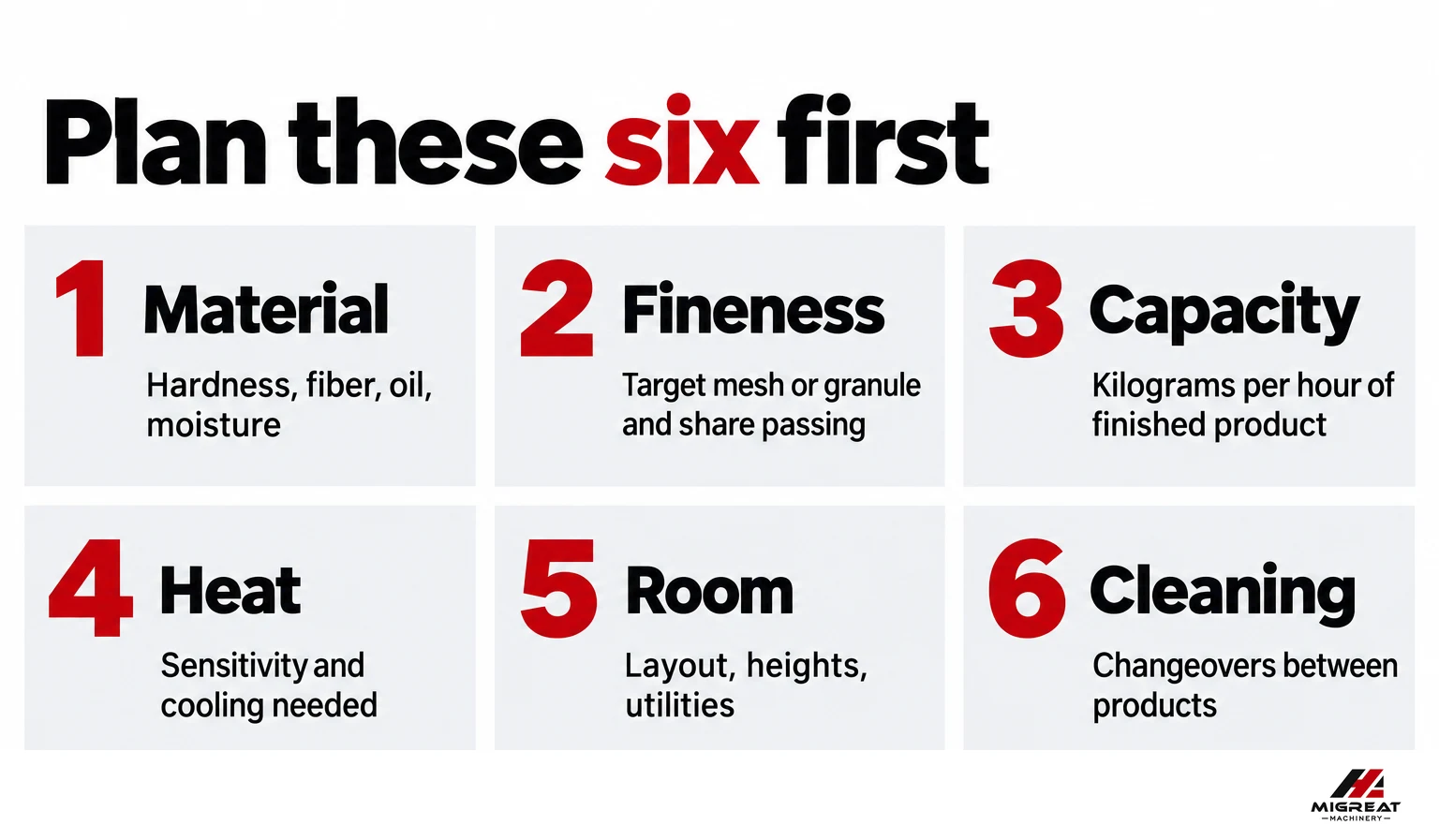
- The material and its behavior, including hardness, fiber, oil and moisture.
- The target fineness or granule, and the share that must meet it.
- The capacity per hour of finished product.
- The heat sensitivity of the material and the cooling it needs.
- The layout of the room, the heights and the utilities.
- The cleaning needs between products.
Tell us what you want to make, and the line is designed around the powder. The list of what to send before a quote gives the details an engineer needs.
Mistakes buyers make with lines
- Choosing machines one by one and finding the line does not balance.
- Sizing every stage at the top of its range and expecting that rate every day.
- Leaving out the buffer hopper between a batch stage and a continuous one.
- Ignoring dust, cleaning and floor space until after the order.
- Skipping a trial on the real material for the stage that matters most.
What to ask in a line quotation
- A layout drawing with the machine positions, heights and connections.
- A line balance table with the rated rate of each stage at your product.
- The conveyors, hoppers and buffers included, and the dust control.
- The controls supplied, the interlocks and how the stages are linked.
- The scope of installation help, the commissioning and the training.
A line in motion
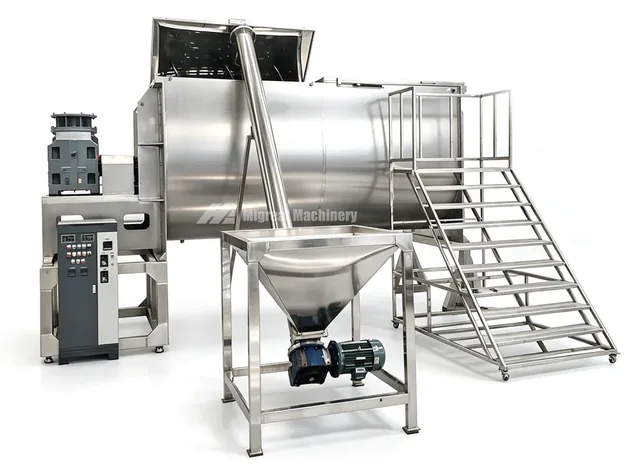
The video shows a ribbon mixer connected to a silo and a screw conveyor, a small example of a linked line.

Plan the whole line first, then size each machine, and let the slowest stage and a good buffer set the rate.
Send the product, the capacity and the room through the contact page, and an engineer can lay out the line. The ZKS vacuum loader, WLDH ribbon mixer and grinding machines pages list the machines, and the spice powder production line page shows a full example.
Powder line FAQ
QWhat is a powder processing line?
A powder processing line is a chain of machines that feed, crush, grind, mix, dry, granulate, sieve and pack a powder, linked by conveyors and controls. A complete one has conveying, coarse crushing, fine grinding, screening and packing, and the slowest stage sets the rate.
QWhat are the main processes used in powder production?
A complete line usually has conveying, coarse crushing, fine grinding, screening and packing. Mixing, drying and granulation are added when the product needs them. Each stage hands the next one a feed it can take, and the slowest stage sets the line rate.
QWhat are automated production lines?
On a powder line it means several machines linked by conveyors and controls, so material moves from feeding through grinding and screening to packing as one process with less manual handling. The level of automation runs from separate switches to a central controller.
QHow does a powder transfer system work?
Conveyors replace manual transfer between machines. A screw conveyor moves powder along an enclosed tube, and a vacuum loader sucks it through a closed pipe into a hopper that drops it into the next machine. The type depends on dust, layout and what is at each end.
QDo I need every stage in a line?
No. Lines are built around the product, so you might need only crushing, grinding and screening. Mixing, drying, granulation and packing are added when the product needs them. Start from the product and the output and add stages only if they have a job.
QHow do I balance the stages of a powder line?
Set the finished output per hour, then check that every stage covers it in the middle of its rated range. The slowest stage sets the line rate. Use buffer hoppers between batch machines and continuous ones so that a fast stage does not wait for a slow one.
QIs an integrated line better than stand-alone machines?
It depends on volume and labor. A line removes manual transfers, dust and recipe mistakes, and it pays back when the volume is steady. A plant with many products in small batches may do better with stand-alone machines and a good cleaning routine.
QWhat should I send to get a powder line designed?
The material and its behavior, the target fineness or granule, the capacity per hour, the heat sensitivity, the room layout and the cleaning needs. A sample description or a photo helps if you have no datasheet. Approximate numbers are enough to start.